Situation Summary
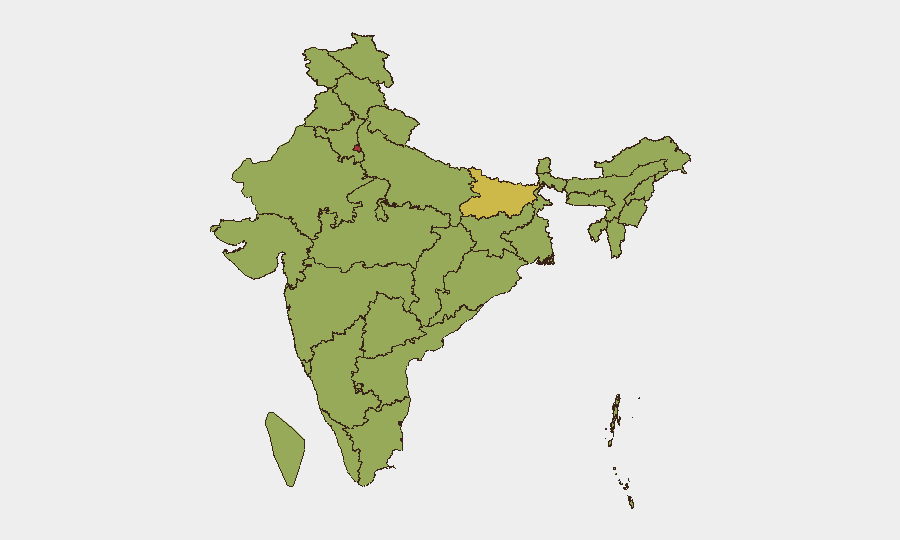
India remains at moderate global threat rank (#16, composite score 69) with 666 tracked events, reflecting endemic subnational volatility across political, civil unrest, and maritime-security domains. The country's threat profile is concentrated geographically: Delhi (78.3) and Bihar (63.3) drive the highest risk scores, while education-sector protests and farmer-police tensions in late July signal episodic flashpoints rather than systemic escalation. International maritime incidents involving Indian nationals—most recently the LPG tanker *Disha* in Iranian waters (2026-07-30)—add a secondary risk layer for corporate shipping and personnel overseas.
Key Developments
- Iranian territorial waters (near Formos state), 2026-07-30: LPG tanker *Disha* (Mozambique-flagged, 28 Indian crew) came under attack in Iranian waters. India's Embassy in Tehran confirmed all crew safe; Ministry of External Affairs is monitoring. Signals heightened maritime-security risk in the Gulf region for Indian-crewed vessels.
- Education ministry protests, Delhi, 2026-07-28: Student demonstrations against the Ministry of Education, coupled with ministry demands and police disapproval; concurrent government investigations underway. Reflects recurring civil-unrest friction in the capital and education sector.
- Police-farmer tensions, unspecified location, 2026-07-28: Military mobilization by police force reported in confrontation with farmers; coupled with police disapproval signals. Consistent with ongoing agrarian-sector grievances and state-police response patterns.
- Government and police investigations, Delhi, 2026-07-29: Broad investigation activity by government and police agencies; public administration statements issued. Suggests responses to the education and civil-order incidents noted above; specific focus areas not yet detailed in open reporting.
- Prime Minister-level demonstrations, Delhi, 2026-07-29: Rally or demonstration activity involving the PM's office. Indicates high-level political engagement or counter-messaging related to concurrent civil events.
- Black Sea incident (diplomatic restatement, 2026-07-28 reporting window): Ministry of External Affairs reiterated statement on commercial vessel *MBRE* attack in Russian waters (original incident 2026-07-18); one Indian national killed, two endangered. Underscores ongoing maritime-security risk and diplomatic attention to Indian nationals abroad.
Highest-Risk Areas
Delhi's dominance (78.3) reflects density of political activity, education-sector unrest, and administrative flashpoints; Bihar (63.3) and Uttar Pradesh (56.7) carry elevated risk from civil disorder, agricultural grievances, and governance strain. Maharashtra and Jammu & Kashmir (both ~54) round the top tier, driven by medical/health-sector tensions and ongoing border-related security postures respectively. The clustering of moderate-to-high risk across the northern states and major metros suggests geographically dispersed rather than singular acute threats, with education, agriculture, and police-civil friction as the primary drivers.
How GeoBit Would Assist
Security teams should deploy AOI Monitoring & Early Warning on high-risk metros (Delhi, Mumbai, Bangalore) to track protest activity and civil unrest in real time with alerting. OSINT Fusion (X/Twitter, Telegram, local media intelligence) combined with temporal and sentiment analysis would flag escalation in education, agricultural, and student-led movements 24–48 hours before physical mobilization. For international risk, maritime tracking and regime-stability monitoring provide continuous watch on Gulf shipping corridors and Indian crew safety.
7-Day Outlook
Education-sector protests and farmer-police tensions are likely to persist at low-to-moderate frequency through early August absent major political resolution. Maritime incidents in the Gulf remain a secondary but persistent concern; no indication of systemic maritime escalation, but isolated attacks on Indian-crewed vessels should be expected in line with regional patterns. Monsoon-season natural hazards (flooding, landslides) in coastal and hill states warrant parallel monitoring.
Highest-Risk Areas — Ranked
| # | State / Region | Risk |
|---|---|---|
| 1 | Delhi | 78.3 |
| 2 | Bihar | 63.3 |
| 3 | Uttar Pradesh | 56.7 |
| 4 | Maharashtra | 54.7 |
| 5 | Jammu and Kashmir | 53.9 |
| 6 | Odisha | 53.2 |
| 7 | Karnataka | 53 |
| 8 | Assam | 52.7 |
| 9 | Gujarat | 52.2 |
| 10 | Haryana | 51.8 |
| 11 | West Bengal | 51.6 |
| 12 | Madhya Pradesh | 51.6 |
Sources
Previous Daily Briefs
A new India brief is written every day — each with its own risk map and downloadable CSV. Here's the last week; use the calendar to go further back.
📅 Browse every day by calendar →
Highlighted days have a brief. Tap a day for that day's map & analysis, or “csv” for that day's dataset ($5).
Atlas — our AI intelligence desk — emails them this snapshot personally. Nothing else, no list.