Situation Summary
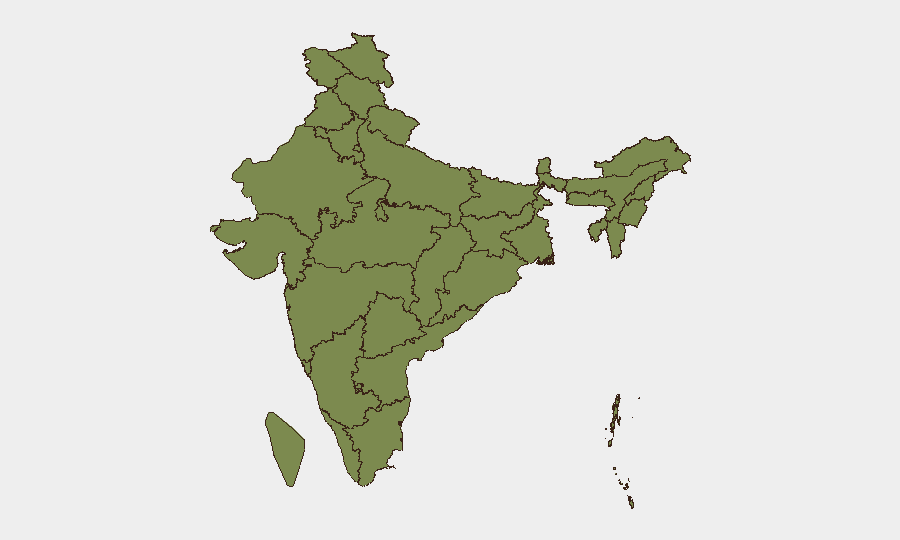
India's composite threat score of 21 places it at rank #62 globally, with 472 tracked events reflecting moderate but persistent security pressure. The last 24–48 hours show a concentration of law-enforcement activity (counternarcotics, terror-finance investigations, border smuggling interdiction) alongside infrastructure disruption from monsoon flooding and elevated cyber-threat reporting. Delhi remains the primary epicenter of risk, followed by Bihar and Odisha; the security environment is stable but operationally active.
Key Developments
- New Delhi, Delhi – 31 July 2026: Delhi Police and the Drugs Control Department dismantled an illegal counterfeit medicine racket in Narela, seizing large quantities of fake pharmaceuticals and detaining suspects; this reflects organized pharmaceutical fraud affecting supply-chain integrity and public-health risk across the region.
- New Delhi, Delhi – 31 July 2026: NIA-supported raids linked to terror and narco-terror financing networks resulted in searches of multiple premises and seizure of financial documents; follow-on enforcement tied to earlier ED actions in Punjab and Jammu & Kashmir indicates active investigation of cross-border illicit-finance flows.
- New Delhi, Delhi – 31 July 2026: Heavy monsoon rains over 24 hours caused waterlogging and significant infrastructure disruption; Delhi PWD deployed pumps and traffic diversions from the 24×7 Monsoon Control Room, creating near-term transport and accessibility risks for commuters and supply chains.
- Siliguri, West Bengal (India–Nepal border) – 31 July 2026: SSB border security forces seized a large quantity of Indian currency near Siliguri, disrupting suspected smuggling and illicit financial flows; the action underscores continued cross-border contraband activity in the northeastern corridor.
- Bilaspur district, Himachal Pradesh – 31 July 2026: A private bus carrying pilgrims from Amritsar overturned near Shahtalai, killing two and injuring seven; while primarily a traffic accident, it signals road-safety risks on pilgrimage routes in the region.
- Nationwide – 30–31 July 2026: India's Ministry of Communications revoked its mandate requiring pre-installation of the Sanchar Saathi security app on new smartphones, citing privacy and surveillance concerns; this reduces regulatory friction for device users but may reflect broader civil-liberties tensions.
- Nationwide/Cyber – 30–31 July 2026: Cybersecurity analysts reported a sustained surge in cyberattacks targeting Indian networks, with significant attribution to actors based in China and Pakistan; critical infrastructure and corporate networks face heightened digital-security pressure.
Highest-Risk Areas
Delhi dominates the sub-national ranking at 33.6, driven by concentrated government activity, large population, and enforcement operations (narcotics, terror-finance, border security). Bihar (15.9) and Odisha (11.6) follow, reflecting underlying organized-crime and communal-violence risk. Maharashtra, Rajasthan, and Gujarat (10.8, 8.7, 7.9 respectively) carry moderate to lower institutional risk. The clustering of July 29–31 signal events (demonstrations, investigations, arrests, statements) in and around Delhi confirms the capital as the primary operational and administrative flashpoint; business continuity and travel risk are highest there.
How GeoBit Would Assist
Security teams would use Intel Sweep and multi-language OSINT to track emerging enforcement actions, cross-border financing networks, and cyber-threat attribution in near real-time. AOI Monitoring & Early Warning on high-risk states (Delhi, Bihar, Odisha) with persistent alerting on demonstrations, arrests, and infrastructure disruptions would enable early duty-of-care escalation. Routing & Network Analysis and cyber-threat feeds (China/Pakistan attribution) would allow rapid identification of alternative supply routes and digital-security vulnerabilities before operational impact.
7-Day Outlook
Enforcement intensity (narcotics, terror-finance, border control) is likely to remain elevated as investigations continue. Monsoon-related infrastructure disruption will persist through early August, affecting transport and logistics. Cyber-threat activity targeting critical sectors is expected to remain sustained; no major escalation in political or civil unrest is evident, but Delhi's operational tempo warrants continuous monitoring.
Highest-Risk Areas — Ranked
| # | State / Region | Risk |
|---|---|---|
| 1 | Delhi | 33.6 |
| 2 | Bihar | 15.9 |
| 3 | Odisha | 11.6 |
| 4 | Maharashtra | 10.8 |
| 5 | Rajasthan | 8.7 |
| 6 | Gujarat | 7.9 |
| 7 | Uttar Pradesh | 7.6 |
| 8 | Haryana | 6.6 |
| 9 | Tamil Nadu | 6.4 |
| 10 | Madhya Pradesh | 6.2 |
| 11 | Jharkhand | 5.7 |
| 12 | Jammu and Kashmir | 5.2 |
Sources
- geobit.ai
- reuters.com
- ciso.economictimes.indiatimes.com
- ians.in
- war-tracker.com
- geobit.ai
- uniindia.com
- economictimes.indiatimes.com
- cbsnews.com
- economictimes.indiatimes.com
- timesofindia.indiatimes.com
- telanganatoday.com
- news.webindia123.com
- cfr.org
- instagram.com
- youtube.com
- economictimes.indiatimes.com
- thehackernews.com
Previous Daily Briefs
A new India brief is written every day — each with its own risk map and downloadable CSV. Here's the last week; use the calendar to go further back.
📅 Browse every day by calendar →
Highlighted days have a brief. Tap a day for that day's map & analysis, or “csv” for that day's dataset ($5).
Atlas — our AI intelligence desk — emails them this snapshot personally. Nothing else, no list.