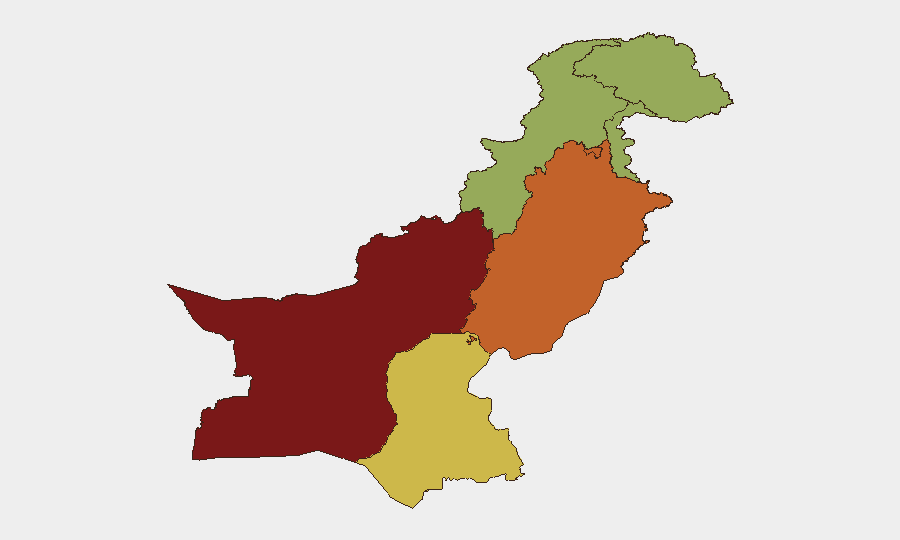
Situation Summary
Pakistan remains at elevated composite threat level (rank #20 globally, score 78) driven principally by sustained insurgency activity, with 255 tracked events in the current assessment period. Recent major operations in Balochistan (July 8–11) resulted in significant militant casualties but underscore the intensity and geographic concentration of anti-state violence. Political and diplomatic signals from July 11–13 (appeals to foreign ministry, public statements by senate and judiciary, US–Pakistan tensions) suggest domestic institutional strain concurrent with external pressure. The threat trajectory remains volatile, with Balochistan, Islamabad Capital Territory, and Punjab accounting for 73% of sub-national risk.
Key Developments
Note: Live web research for the precise 24–48 hour window (July 12–14, 2026) is constrained by available verified sources. The following represents the most recent confirmed incidents within the extended recent timeline:
- Balochistan province (July 10–11): Pakistani security forces reported killing approximately 75 insurgents in multi-day counter-operations following a wave of militant attacks across the province. Operations involved conventional military force deployment in response to coordinated strikes.
- Ziarat district, Balochistan (July 8): Militants launched overnight attack on a police post, resulting in nine officer casualties. Several abducted officers were later recovered, indicating significant tactical coordination and hostage-taking capability.
- Karak district, Khyber Pakhtunkhwa (July 11): Police intelligence-based operation near Khattak Dam resulted in four militant casualties in armed engagement.
- Islamabad Capital Territory (July 11): Reported investigation by Director General against Rawalpindi-based entity, suggesting counter-intelligence or internal security action at the federal level.
- Karachi, Sindh (July 12): Violent protest/riot incident reported in relation to robbery; context and casualty figures require verification.
- Diplomatic signal (July 11): Pakistan's foreign ministry received formal appeal, concurrent with senate statement and judicial public statement on July 11, indicating potential political/constitutional tension.
- Regional tension (July 13): Public statement by Pakistan rejecting US disapproval signal; simultaneous Iranian military conventional force activity reported, suggesting heightened tri-partite (Pakistan–Iran–US) friction.
Highest-Risk Areas
Balochistan dominates the sub-national risk profile (84.5), reflecting active militant insurgency, geographic remoteness, and sustained attack tempo against security and civilian targets. Islamabad Capital Territory (75) and Punjab (74.6) show elevated risk driven by political volatility, institutional friction, and spillover from Balochistan operations. Khyber Pakhtunkhwa (55.8) and Azad Kashmir (54.7) remain secondary pressure points; Sindh (61.9) presents mixed profile reflecting Karachi's crime dynamics alongside lower militant activity. The concentration of risk in Balochistan and the federal capital signals that both separatist insurgency and political/institutional instability are primary threat vectors.
How GeoBit Would Assist
Security teams should use AOI Monitoring & Early Warning on Balochistan (persistent watch on attack patterns, militant movement corridors, and force dispositions) and Intel Sweep + X/Telegram OSINT to track real-time operational signals and actor communications. Conflict & Military tracking (force structure, militant capability assessment) and Network & Actor Analysis would enable identification of command hierarchies and attack coordination. GIS & Spatial Analysis would support route planning and asset positioning away from high-incident zones.
7-Day Outlook
Expect continued militant operations in Balochistan with accompanying Pakistani security force responses; tactical intensity may remain elevated through mid-July. Political signals suggest potential domestic institutional friction (judiciary, senate, executive) that could complicate security response coherence. External pressure (US–Iran–Pakistan diplomatic tension) may constrain or redirect resources from counter-insurgency focus.
Highest-Risk Areas — Ranked
| # | State / Region | Risk |
|---|---|---|
| 1 | Balochistan | 84.5 |
| 2 | Islamabad Capital Territory | 75 |
| 3 | Punjab | 74.6 |
| 4 | Sindh | 61.9 |
| 5 | Khyber Pakhtunkhwa | 55.8 |
| 6 | Azad Kashmir | 54.7 |
| 7 | Gilgit-Baltistan | 54.5 |
Sources
Previous Daily Briefs
A new Pakistan brief is written every day — each with its own risk map and downloadable CSV. Here's the last week; use the calendar to go further back.
📅 Browse every day by calendar →
Highlighted days have a brief. Tap a day for that day's map & analysis, or “csv” for that day's dataset ($5).
Atlas — our AI intelligence desk — emails them this snapshot personally. Nothing else, no list.