Situation Summary
Pakistan faces an elevated and sustained militant threat across its northwest and southwestern provinces, driven by coordinated attacks on security forces and infrastructure over the past 72 hours. Large-scale counter-terror operations launched on 17 July have killed 24 militants but have not yet arrested the operational tempo of attacks. Concurrent economic policy changes (fuel-price adjustment on 18 July) introduce secondary risk of civil unrest in urban centers. The overall security environment remains at composite threat score 70 (rank 31 globally), with sub-national concentrations in Punjab, Islamabad, Sindh, and critically, Balochistan and Khyber Pakhtunkhwa.
Key Developments
- Bannu District, Khyber Pakhtunkhwa – 17 July 2026: Pakistani military conducted intelligence-based raids across Bannu and adjoining areas, killing 24 militants linked to TTP and Baloch separatist groups; operations included seizure of weapons and explosives caches. ISPR statement framed the action as response to escalating militant activity in the northwest region near the Afghanistan border.
- Miryab Police Station, Bannu, Khyber Pakhtunkhwa – 15–16 July 2026: Vehicle-borne suicide attack on Miryab Police Station killed at least 2 officers and wounded 10+ personnel and civilians; this incident directly precipitated the 17 July counter-terror sweep and indicates ongoing use of vehicle-borne explosives against police infrastructure.
- Upper Dir, Khyber Pakhtunkhwa – 15 July 2026 (ongoing operations through 17 July): Militants ambushed a security convoy, killing 3 police officers and wounding 15; attack reflects broader escalation in the northwest and is part of the operational context for subsequent large-scale security responses.
- N-25 Highway, Mastung Area, Balochistan – 16 July 2026: Frontier Corps convoy was attacked near Mastung; FC bus destroyed, 3 security personnel killed and 29 wounded. This incident on a key inter-provincial artery confirms active militant threat to overland movement through Balochistan.
- Nationwide fuel-price adjustment – 18 July 2026: Federal government shifted to daily fuel pricing with sharp increases in petrol and diesel costs. While no large-scale protests are yet reported, historical patterns suggest localized demonstrations and traffic disruptions in major urban centers are likely within 7–14 days.
- Elevated national security advisory – 16–18 July 2026: Pakistan security briefings explicitly flag Balochistan and Khyber Pakhtunkhwa, including major routes (N-25 highway) and border-adjacent districts, following coordinated attacks. Expect increased checkpoints, possible road closures, and short-notice security measures across both provinces.
Highest-Risk Areas
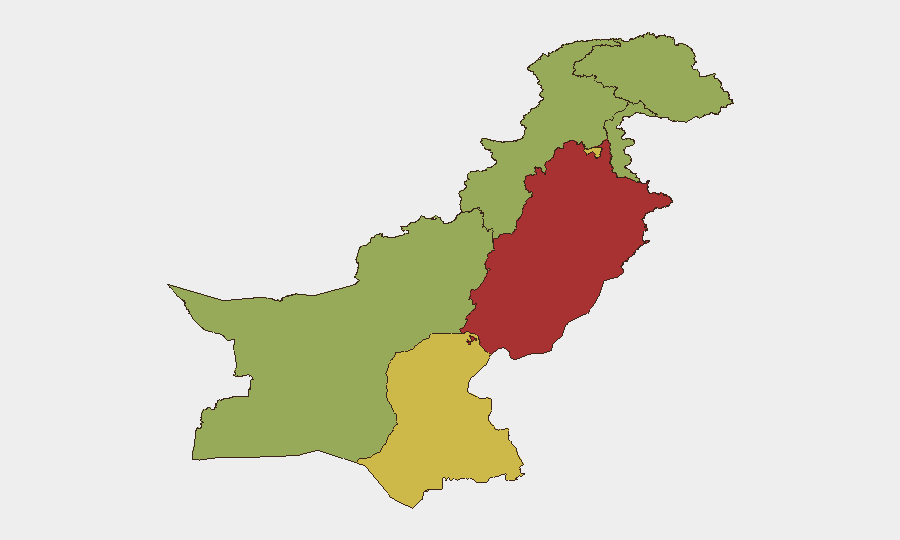
Punjab (78.8) and Islamabad Capital Territory (65.6) rank highest, reflecting urban complexity and critical infrastructure concentration, though current acute threat drivers originate in Balochistan (56.6) and Khyber Pakhtunkhwa (55.0). The latter two provinces are the primary locus of militant operations, suicide attacks, and security force clashes; the N-25 highway and border-adjacent districts in both provinces are immediate flashpoints. Risk in Punjab and Islamabad is elevated by the proximity of militant networks and the potential for secondary attack spread to the capital region; Sindh (63.8) remains a secondary concern for maritime and organized-crime threats.
How GeoBit Would Assist
Corporate teams should employ AOI Monitoring & Early Warning on Bannu, Mastung, Upper Dir, and the N-25 corridor to detect follow-on militant activity or security operations before they affect movement. Routing & Network Analysis is critical for alternative-route planning around Balochistan and KP, given checkpoints and road-closure risk. Conflict & Military mapping and Entity/Actor Network Analysis provide real-time intelligence on force dispositions and militant group command structures, enabling duty-of-care teams to anticipate operational pauses or escalations.
7-Day Outlook
Militant operational tempo is likely to remain elevated or spike further as groups respond to the 17 July raids; secondary attacks on security infrastructure, particularly police stations and checkpoints in Bannu, Upper Dir, and Mastung, should be anticipated. Fuel-price increases will likely trigger localized protests in Karachi, Lahore, and Islamabad within 72–120 hours, creating traffic disruption and temporary civil unrest but not military escalation. Movement restrictions and checkpoint activity will persist throughout Balochistan and KP for at least 10–14 days.
Highest-Risk Areas — Ranked
| # | State / Region | Risk |
|---|---|---|
| 1 | Punjab | 78.8 |
| 2 | Islamabad Capital Territory | 65.6 |
| 3 | Sindh | 63.8 |
| 4 | Azad Kashmir | 57.6 |
| 5 | Balochistan | 56.6 |
| 6 | Khyber Pakhtunkhwa | 55 |
| 7 | Gilgit-Baltistan | 48.9 |
Sources
Previous Daily Briefs
A new Pakistan brief is written every day — each with its own risk map and downloadable CSV. Here's the last week; use the calendar to go further back.
📅 Browse every day by calendar →
Highlighted days have a brief. Tap a day for that day's map & analysis, or “csv” for that day's dataset ($5).
Atlas — our AI intelligence desk — emails them this snapshot personally. Nothing else, no list.