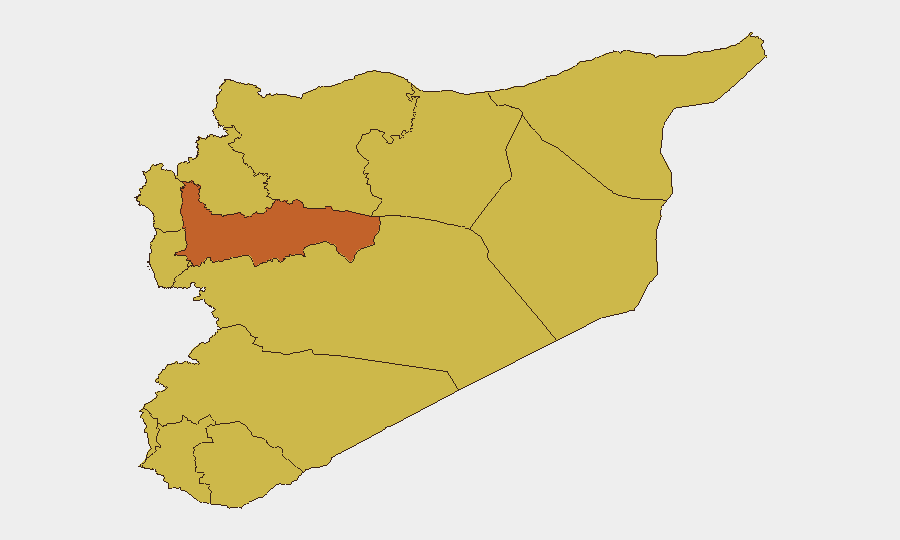
Situation Summary
Syria remains a high-risk operating environment (global rank #16, composite threat score 89) driven by active civil conflict, persistent Islamic State (IS) insurgency, and ongoing state fragmentation. The past 48 hours have demonstrated the continued capacity of IS-affiliated cells to conduct high-profile attacks in government-controlled areas, including a bombing near a foreign dignitary in Damascus, alongside distributed insurgent activity in eastern Syria and targeted operations against security personnel. Damascus Governorate presents the highest sub-national risk (92.6), reflecting concentration of state authority, foreign engagement, and terrorist targeting, while activity across multiple regions signals IS has sustained operational capability beyond its former territorial strongholds.
Key Developments
- Damascus (Mazzeh district) – July 9, 2026: Twin bombs detonated near the hotel housing French President Emmanuel Macron during an official visit, killing 1 person and injuring 36. Syrian state media (SANA) and international sources confirmed the incident and casualty toll.
- Damascus – July 9–10, 2026: Syrian authorities arrested multiple suspects linked to the Damascus bombings; officials stated the detained cell is IS-affiliated and responsible for the twin blasts.
- Damascus – July 10, 2026: Syrian Interior Ministry released final casualty assessment from the bombing: 1 fatality and 36 injuries.
- Raqqa Governorate – July 10, 2026: Syria's Interior Ministry reported one security personnel killed in an IS-claimed attack on government forces in Raqqa city area.
- Eastern Syria (likely Deir ez-Zor region) – July 10, 2026: Islamic State claimed responsibility for an assault that killed two Syrian army soldiers, described as the group's first lethal operation against Syrian government forces since February 2026.
- Northwestern Syria – July 10, 2026: Syrian security officials reported detention of several Uzbek foreign fighters following a dispute and protest outside a government security facility; the incident required a security response.
- Syrian Mediterranean EEZ – July 10, 2026: Syrian Petroleum Company announced identification of a deep-water offshore oil and gas exploration site to be developed with Chevron (U.S.) and UCC Holding (Qatar), signaling energy-sector infrastructure expansion with potential maritime-security implications.
Highest-Risk Areas
Damascus Governorate dominates risk (92.6) owing to concentration of political authority, foreign diplomatic presence, and demonstrated IS targeting capability, as evidenced by the July 9 bombing. Hama Governorate (74.5) and Homs Governorate (65) follow, reflecting ongoing territorial contestation and residual insurgent activity. Eastern regions including Ar-Raqqa and likely Deir ez-Zor, while ranked alongside other governorates at 62.6, have shown sustained IS operational presence; the July 10 incidents confirm the group retains cell networks and attack capability outside western urban centers where Syrian state control is strongest.
How GeoBit Would Assist
Corporate security teams would deploy AOI Monitoring & Early Warning on Damascus and secondary cities to detect emerging threats before escalation, paired with Intel Sweep and multi-language OSINT (X/Telegram, Syrian state media, jihadist forums) to track IS cell communications and claim patterns. Network & Actor Analysis would map IS operational structure and foreign-fighter recruitment flows (e.g., Uzbek contingents), while Conflict & Military tracking monitors Syrian security-force disposition and casualty trends. Routing & Network Analysis supports duty-of-care evacuation planning by identifying secure transit corridors around high-risk governorates.
7-Day Outlook
IS is demonstrating sustained offensive capability and willingness to target high-profile foreign assets, suggesting elevated attack risk in Damascus and other government-held urban centers over the near term. Continued detention and interrogation of arrested suspects may degrade near-term cell effectiveness but is unlikely to eliminate the broader insurgent network. Operations in the east suggest IS is shifting focus toward Syrian military targets; expect announcements of additional attacks, particularly in poorly controlled frontier areas.
Highest-Risk Areas — Ranked
| # | State / Region | Risk |
|---|---|---|
| 1 | Damascus Governorate | 92.6 |
| 2 | Hama Governorate | 74.5 |
| 3 | Homs Governorate | 65 |
| 4 | Aleppo Governorate | 63.1 |
| 5 | Lattakia Governorate | 62.6 |
| 6 | Tartus Governorate | 62.6 |
| 7 | UNDOF | 62.6 |
| 8 | Al-Quneitra Governorate | 62.6 |
| 9 | Dar'a Governorate | 62.6 |
| 10 | Idleb Governorate | 62.6 |
| 11 | Ar-Raqqa Governorate | 62.6 |
| 12 | Rif Dimashq Governorate | 62.6 |
Previous Daily Briefs
A new Syria brief is written every day — each with its own risk map and downloadable CSV. Here's the last week; use the calendar to go further back.
📅 Browse every day by calendar →
Highlighted days have a brief. Tap a day for that day's map & analysis, or “csv” for that day's dataset ($5).
Atlas — our AI intelligence desk — emails them this snapshot personally. Nothing else, no list.