Situation Summary
The United Arab Emirates faces acute escalation risk stemming from direct Iran–US military confrontation in the Gulf, rather than domestic instability. As of 19–20 July 2026, UAE territory and assets are under active threat from Iranian missiles and drones, with confirmed strikes on UAE-operated tankers in the Strait of Hormuz and air-defence engagements over Abu Dhabi airspace. Regional military posturing, unconfirmed reports of explosions in Dubai, and Iranian public warnings targeting UAE airports and ports have elevated infrastructure and aviation risk substantially over the past 48 hours. UAE authorities are calling for de-escalation but have not yet implemented major restrictions on movement or operations.
Key Developments
- Strait of Hormuz, southern approaches – 19 July 2026: Two UAE-flagged crude tankers, *MT Al Bahiyah* and *MT Mombasa*, struck by Iranian cruise missiles; one crew member killed, eight injured; UAE naval and air assets responded to ongoing firefighting and casualty evacuation operations.
- Abu Dhabi and eastern UAE airspace – 18–19 July 2026: UAE air-defence systems conducted multiple active intercepts of Iranian missiles and drones; no confirmed impact on civilian populations, but authorities publicly framed engagements as indicative of acute airspace threat.
- Downtown Dubai – 18–19 July 2026: Residents reported loud explosions and suspected drone activity; Government of Dubai Media Office issued public denial of explosions and stated no injuries, while directing residents to official sources only.
- Iranian public military messaging – 18–19 July 2026: Iranian military-linked social-media channels issued direct warnings naming Dubai International Airport and major UAE ports as retaliation targets; no official UAE evacuation order issued, but warnings are elevating infrastructure-risk perception.
- UAE Ministry of Foreign Affairs statement – 18–19 July 2026: Condemned recent Iranian missile and drone attacks on regional partners (Bahrain, Kuwait, Jordan) and referenced strikes on UAE tankers; reaffirmed solidarity with affected states and called for immediate regional de-escalation.
- Aviation and airspace advisories – 18–19 July 2026: EU Aviation Safety Agency advised operators to avoid Gulf airspace through at least 29 July 2026; international travel advisories (Australia, others) flagged escalated conflict risk and potential flight cancellations in UAE hubs.
Highest-Risk Areas
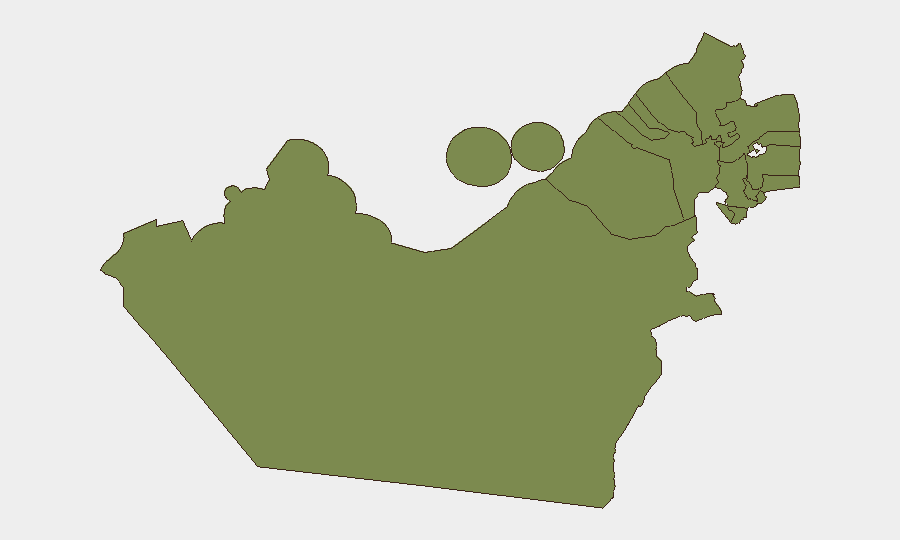
Abu Dhabi Emirate dominates the sub-national risk profile (31.8 composite score) due to active Iranian air and missile targeting, confirmed intercepts, and tanker strikes in adjacent waters. Dubai (14.5) faces secondary but material risk from unconfirmed explosive reports, Iranian public warnings against its airports and ports, and exposure to aviation disruption. Remaining emirates carry minimal independent risk scores but remain exposed to wider airspace closures and potential secondary escalation. Risk is driven by geography (proximity to Strait of Hormuz and Iranian airspace), critical infrastructure concentration (airports, ports, oil terminals), and direct targeting rather than local civil unrest.
How GeoBit Would Assist
Security teams should deploy AOI Monitoring & Early Warning on Abu Dhabi and Dubai airports, ports, and Strait of Hormuz transit corridors to detect missile, drone, or naval activity in real time. Maritime & Aviation tracking capabilities enable continuous monitoring of UAE-flagged vessels and air traffic patterns to identify diversions, delays, or threats to operations and personnel movement. Intel Sweep and multi-language OSINT fusion across Iranian military channels, UAE official statements, and regional media provide early corroboration of threats and allow teams to separate confirmed incidents from unconfirmed social-media reports.
7-Day Outlook
Airspace and maritime risk will remain elevated through at least 29 July pending de-escalation signals or US military posture changes. Flight cancellations, route diversions, and port disruptions are likely to persist, affecting business continuity and personnel movement. Domestic security and UAE law-enforcement posture is not expected to tighten materially in the near term absent a direct attack on UAE civilian population centres.
Highest-Risk Areas — Ranked
| # | State / Region | Risk |
|---|---|---|
| 1 | Abu Dhabi Emirate | 31.8 |
| 2 | Dubai | 14.5 |
| 3 | Fujairah Emirate | 2.2 |
| 4 | Sharjah Emirate | 1.8 |
| 5 | Ajman Emirate | 1.8 |
| 6 | Ras al-Khaimah | 1.8 |
| 7 | Umm al-Quwain | 1.8 |
Sources
Previous Daily Briefs
A new United Arab Emirates brief is written every day — each with its own risk map and downloadable CSV. Here's the last week; use the calendar to go further back.
📅 Browse every day by calendar →
Highlighted days have a brief. Tap a day for that day's map & analysis, or “csv” for that day's dataset ($5).
Atlas — our AI intelligence desk — emails them this snapshot personally. Nothing else, no list.