Situation Summary
Canada remains a low–to–moderate global security risk (#151 globally, composite score 4), but sub-national variation is significant, with Ontario and British Columbia driving the majority of tracked threat activity. Recent 24–48 hour events show a pattern of public safety incidents—including a fatal shooting at a Toronto street festival, ongoing child abduction investigations spanning Alberta and British Columbia, and elevated enforcement activity around street racing and financial crime—indicating localized but persistent public-order and violent-crime pressures in major urban centres. Infrastructure remains stable; wildfire-related disruptions in the Northwest Territories are improving. The threat trajectory remains contained but warrant continued monitoring of Ontario urban corridors and interprovincial crime investigations.
Key Developments
- Toronto, Ontario – evening 17 July 2026: At least two people killed and multiple others wounded in a shooting at a crowded street festival; large emergency response deployed; public safety warnings issued for the affected area and surrounding downtown core.
- Southern Alberta / British Columbia corridor – 17–18 July 2026: RCMP active search and investigative activity ongoing in connection with two abducted Alberta children (Amber Alert issued 8 July); police road checks and interdiction operations reported in both provinces over past 48 hours.
- Peel Region (Mississauga), Ontario – past 48 hours: Peel Regional Police announced arrests under "Project ERASE"; 92 individuals charged for street racing and high–risk driving offences; heightened roadside enforcement now active across Mississauga and surrounding corridors.
- London, Ontario – referenced in safety updates 17–18 July: Police continue to cite 12 July festival disturbance (officers assaulted with rocks, bottles, fireworks; two youths charged) in official public-event safety messaging, signalling ongoing concern over large gatherings in the downtown core.
- Fort Simpson, Northwest Territories – effective 18 July 2026: Wildfire evacuation order lifted; staged resident return via ferry beginning Saturday; conditions improving but travel and essential-services infrastructure remain sensitive.
- Mississauga, Ontario – recent days: Special Victims Unit arrest of male youth in connection with alleged sexual assault; active investigation ongoing with associated police presence.
- Kitchener / Peel Region, Ontario – recent enforcement: Kitchener man charged in connection with counterfeit currency incidents targeting precious-metals online marketplaces; indicates active financial fraud risk in wider Kitchener–Waterloo and Peel Region commercial networks.
Highest-Risk Areas
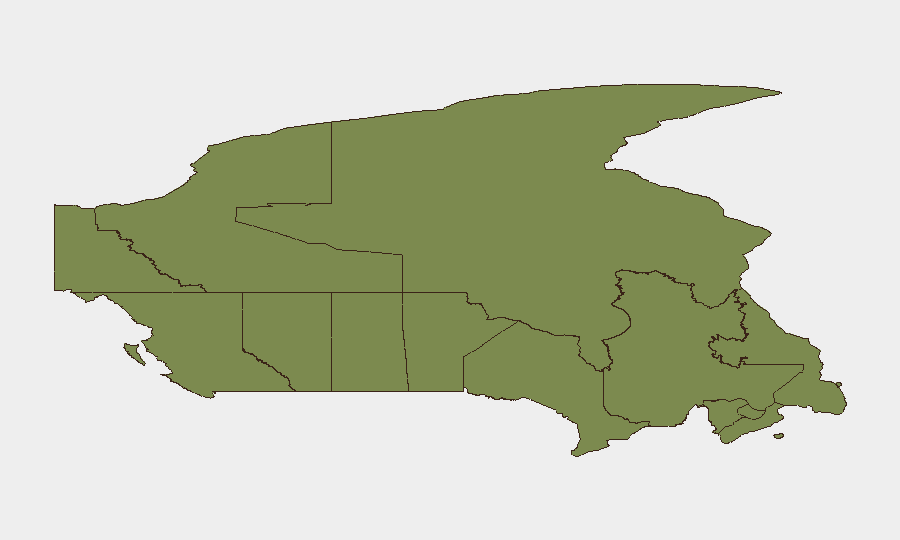
Ontario (31.8) and British Columbia (23.0) account for nearly two-thirds of Canada's tracked threat events, driven by high-volume urban violent crime, ongoing interprovincial criminal investigations, and organized-crime–related activity. Nunavut's elevated risk score (22.3) reflects Arctic governance and resource-security pressures; Quebec (11.6) shows moderate persistent risk. All other provinces score below 8, indicating that risk is highly concentrated in Ontario–BC corridor and select northern territories. Security teams with personnel in Toronto, Mississauga, Peel Region, and metropolitan Vancouver should treat these as heightened-vigilance zones through the near term.
How GeoBit Would Assist
Corporate security teams should employ AOI Monitoring & Early Warning on Toronto, Mississauga, and Vancouver to flag rapid escalation in public-order or violent-crime event density before incident impact. Intel Sweep and multi-language OSINT fusion on organized-crime and gang-activity networks would provide early indicators of violence clustering. Routing & Network Analysis tools support real-time alternative-route planning for staff in high-incident zones, and conflict & actor network analysis clarifies relationships between reported incidents and organized-crime nodes.
7-Day Outlook
Public-order risk in Ontario urban centres is expected to remain elevated; police enforcement intensity (street racing, fraud, violent crime) will likely persist through the weekend and into the following week. Wildfire and evacuation risks in northern territories are improving. No escalation to national-level instability is indicated, but localized Toronto and Greater Toronto Area public-safety risk warrants continued 24–48 hour event monitoring.
Highest-Risk Areas — Ranked
| # | State / Region | Risk |
|---|---|---|
| 1 | Ontario | 31.8 |
| 2 | British Columbia | 23 |
| 3 | Nunavut | 22.3 |
| 4 | Quebec | 11.6 |
| 5 | Alberta | 7.3 |
| 6 | Manitoba | 5 |
| 7 | Saskatchewan | 3.6 |
| 8 | New Brunswick | 2.9 |
| 9 | Prince Edward Island | 2.1 |
| 10 | Nova Scotia | 2.1 |
| 11 | Yukon | 1.9 |
| 12 | Newfoundland and Labrador | 1.9 |
Previous Daily Briefs
A new Canada brief is written every day — each with its own risk map and downloadable CSV. Here's the last week; use the calendar to go further back.
📅 Browse every day by calendar →
Highlighted days have a brief. Tap a day for that day's map & analysis, or “csv” for that day's dataset ($5).
Atlas — our AI intelligence desk — emails them this snapshot personally. Nothing else, no list.