Situation Summary
Cuba remains at composite threat score 10/100 globally, placing it in the lower-middle risk tier, but with acute volatility concentrated in Havana and eastern provinces. Recent signal activity (August 1–3, 2026) points to escalating institutional friction—banking-sector disputes, state-citizen confrontations, and diplomatic tension—alongside conventional military posturing. The trajectory suggests mounting pressure on state legitimacy and financial systems, though the underlying conflict drivers (economic scarcity, electricity deficits, population grievance) remain chronic rather than acute.
Key Developments
- 2026-08-03 · Havana · Demand signal: Unspecified demand action by authorities; no secondary corroboration on specifics.
- 2026-08-03 · National · Disapproval: State authorities recorded disapproving of unspecified actors or actions; no detail available.
- 2026-08-02 · Nationwide · Military posture: Conventional military force deployment or exercise activity flagged ("POLE" actor); context unclear from signal alone.
- 2026-08-02 · Diplomatic · Relation reduction: Cuba or Cuban entities reducing relations; embassy-Havana tension also flagged (2026-08-01).
- 2026-08-01 · Multi-actor friction: Four separate public-statement signals involving bank-vs-media, bank-vs-citizen, and Cuban-vs-Cuban confrontations indicate institutional and interpersonal strain across Havana.
- 2026-08-01 · Institutional disapproval: Banking-sector disapproval noted alongside state disapproval; suggests financial-system stress or policy disagreement.
Caveat: Live web research for the last 24–48 hours could not confirm specific, dated incidents beyond the GeoBit signal feed. Ongoing crises (blackouts, protests, crime) are documented as part of 2026 trends but lack precise timestamps for August 2–3.
Highest-Risk Areas
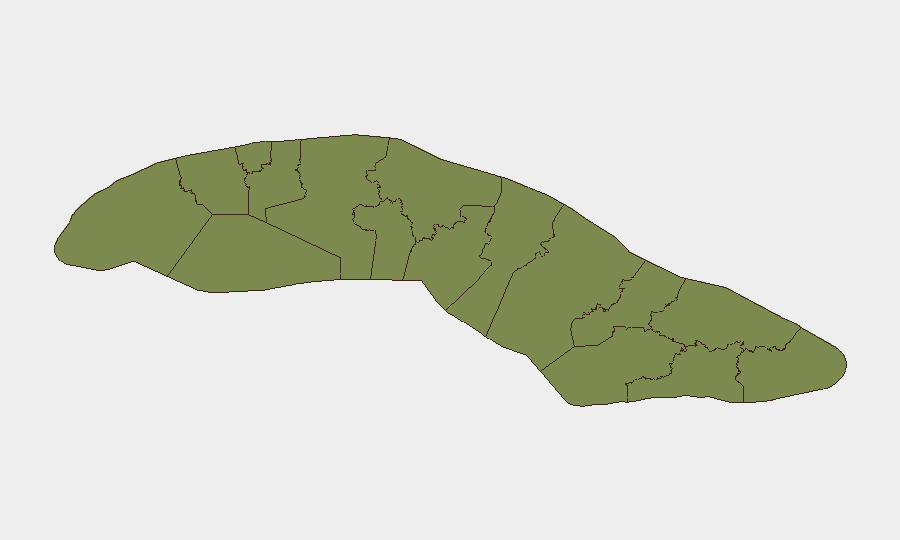
Havana (risk 33) and Granma (risk 30.3) dominate the sub-national threat landscape, together accounting for more than half the tracked event volume. Havana's elevation reflects institutional friction (banking, media, state-citizen disputes) and persistent urban discontent; Granma's ranking suggests either concentrated crime, resource-scarcity incidents, or localized political activity. Mayabeque, Pinar del Río, and Guantánamo (risk 19–22) form a secondary tier, likely reflecting spillover from Havana's dynamics, resource competition, or border-related sensitivities. Lower-risk provinces (Artemisa, Cienfuegos, Villa Clara at risk 3) show minimal recent event density, suggesting either stable local governance or lower reporting penetration.
How GeoBit Would Assist
Security and duty-of-care teams should deploy AOI Monitoring & Early Warning on Havana, Granma, and Mayabeque to catch emerging signals (protest, arrests, infrastructure failure) before they escalate. Entity extraction and network analysis applied to Cuban state, banking, and diplomatic actors will clarify the friction drivers signaled on August 1–3. OSINT fusion across X/Twitter, local media, and Telegram channels—paired with sentiment & temporal analysis—enables real-time tracking of state-citizen and inter-institutional tensions that precede broader instability.
7-Day Outlook
The next week will likely test whether August 1–3 signals represent isolated incidents or the onset of sustained pressure on state legitimacy. If military posturing and diplomatic relation-reduction continue, or if banking-sector friction widens to affect foreign investment or remittances, risk could escalate unevenly across provinces. Monitoring for secondary indicators—protests, internet restrictions, personnel changes in security services—will be critical to differentiating noise from inflection.
Highest-Risk Areas — Ranked
| # | State / Region | Risk |
|---|---|---|
| 1 | Havana | 33 |
| 2 | Granma | 30.3 |
| 3 | Mayabeque | 22.1 |
| 4 | Pinar del Rio | 19.4 |
| 5 | Guantánamo | 19.4 |
| 6 | Santiago de Cuba | 13.9 |
| 7 | Sancti Spiritus | 11.2 |
| 8 | Matanzas | 5.7 |
| 9 | Camagüey | 5.7 |
| 10 | Artemisa | 3 |
| 11 | Cienfuegos | 3 |
| 12 | Villa Clara | 3 |
Sources
Previous Daily Briefs
A new Cuba brief is written every day — each with its own risk map and downloadable CSV. Here's the last week; use the calendar to go further back.
📅 Browse every day by calendar →
Highlighted days have a brief. Tap a day for that day's map & analysis, or “csv” for that day's dataset ($5).
Atlas — our AI intelligence desk — emails them this snapshot personally. Nothing else, no list.