Situation Summary
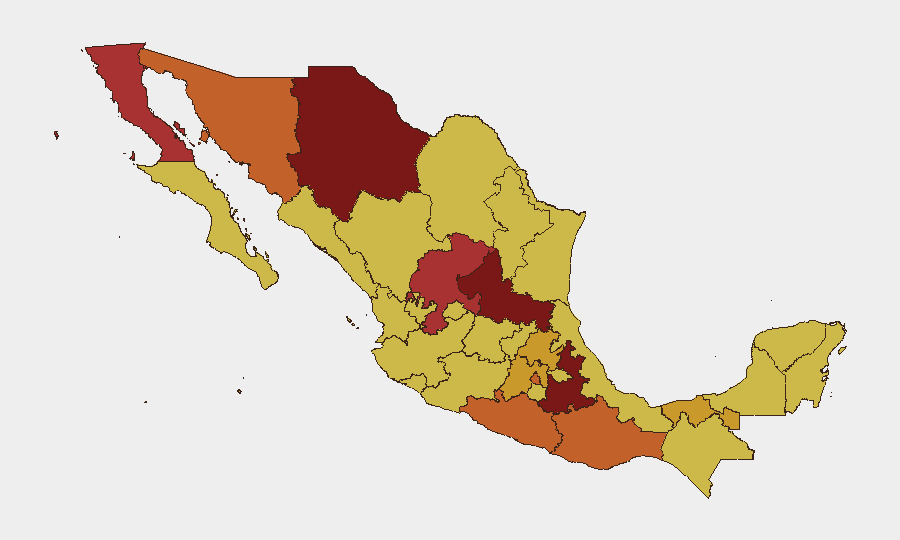
Mexico's composite threat score of 96 places it seventh globally, driven primarily by sustained cartel violence and turf warfare across the country's northern and central regions. The past 48 hours have seen multiple concurrent incidents—military/police operations, alleged cartel confrontations, and civilian casualties—indicating no material de-escalation in underlying conflict dynamics. San Luis Potosí has emerged as the single highest-risk jurisdiction (97.2), with government investigations now active at both state and federal levels. The current trajectory remains volatile, with drug-trafficking organizations continuing to contest territory and respond to enforcement actions.
Key Developments
- San Luis Potosí (2026-07-20): Federal government launched formal investigation into state-level security and governance; incident classified as investigative action by national authorities, signaling federal concern over institutional breakdown or cartel influence in the state administration.
- Zacatecas, multiple municipalities (2026-07-19): Authorities discovered and responded to 10 bodies across Morelos, Pánuco, and Sain Alto; operation included reinforcement of law-enforcement presence, suggesting either gang execution activity or discovery of mass-casualty event.
- Colombia–Mexico border (2026-07-20): Small-arms combat reported involving Colombian and Mexican actors, indicating either transnational cartel conflict or spillover from Colombian internal security situation into Mexican territory.
- Sinaloa region (2026-07-21 context, weekend operation): Nine civilians detained by authorities following violent incidents in Mazatlán; nature of civilian involvement (witness, suspect, or collateral) remains unclear from available reporting.
- Nayarit state (2026-07-21): Marina/FGR/SSPC conducted seven coordinated raids resulting in arrest of 10 alleged CJNG (Jalisco New Generation Cartel) members in Tepic/Xalisco area; reflects sustained federal targeting of major cartel infrastructure.
- Jalisco (weekend, date prior to 2026-07-21): Military reported rescue of four young people from a ranch; suggests either kidnapping-for-ransom or involuntary servitude situation.
- Mexico City, Iztapalapa (2026-07-21): Reported armed home-robbery attempt against family; indicates persistent street-level criminal activity in capital despite lower sub-national ranking (75.3).
Highest-Risk Areas
San Luis Potosí's ranking of 97.2—exceeding even long-standing cartel hotspots—reflects acute state-level institutional stress and active federal investigation. Chihuahua (85), Puebla (81.6), and Zacatecas (78.4) remain primary battlegrounds for cartel territorial control, with Zacatecas' recent mass-casualty discoveries and coordinated enforcement actions indicating high operational tempo. The top 12 states collectively account for the vast majority of Mexico's recorded conflict events; Baja California, Sonora, and Guerrero form a northern and western corridor of sustained violence, while Mexico City and State of Mexico, despite lower rankings, remain embedded in broader national supply-chain and money-laundering networks that sustain cartel operations.
How GeoBit Would Assist
Security and risk teams operating in Mexico should employ Intel Sweep and OSINT fusion to track real-time cartel organizational changes, leadership shifts, and alliance fractures—particularly in San Luis Potosí and Zacatecas. AOI (Area-of-Interest) Monitoring with persistent alerting on corporate facilities, personnel transit corridors, and supply-chain nodes in high-risk states will enable duty-of-care teams to receive tactical notice of emerging violence or enforcement activity near their operations. Network & Actor Analysis coupled with multi-language OSINT (radio SIGINT, Telegram/X monitoring) will clarify which cartels control specific routes and municipalities, informing routing decisions and security posture adjustments.
7-Day Outlook
No significant de-escalation is expected in the near term. Continued federal enforcement operations—particularly in San Luis Potosí and Zacatecas—will likely trigger retaliatory cartel activity and further violence. Corporate and NGO personnel should anticipate heightened checkpoint activity, potential roadblocks, and temporary mobility constraints in the top-five risk states through at least mid-August.
Highest-Risk Areas — Ranked
| # | State / Region | Risk |
|---|---|---|
| 1 | San Luis Potosí | 97.2 |
| 2 | Chihuahua | 85 |
| 3 | Puebla | 81.6 |
| 4 | Zacatecas | 78.4 |
| 5 | Baja California | 78.1 |
| 6 | Sonora | 75.6 |
| 7 | Guerrero | 75.3 |
| 8 | Mexico City | 75.3 |
| 9 | Oaxaca | 73.9 |
| 10 | State of Mexico | 72.8 |
| 11 | Tabasco | 72.2 |
| 12 | Hidalgo | 72 |
Sources
Previous Daily Briefs
A new Mexico brief is written every day — each with its own risk map and downloadable CSV. Here's the last week; use the calendar to go further back.
📅 Browse every day by calendar →
Highlighted days have a brief. Tap a day for that day's map & analysis, or “csv” for that day's dataset ($5).
Atlas — our AI intelligence desk — emails them this snapshot personally. Nothing else, no list.