Situation Summary
North Korea maintains a composite threat ranking of 43 (global position #36), reflecting persistent structural risks including missile readiness, cyber operations, and border enforcement, alongside routine internal security discipline. Over the last 24–48 hours, no clearly dated major security incidents, weapons tests, or border clashes have been verified in open-source reporting; operational tempo appears within historical norms despite elevated baseline threat. P'yŏngyang dominates sub-national risk (score 60), driven by regime concentration, foreign-national presence, and internal security apparatus activity. The overall picture is one of chronic elevated risk rather than acute escalation.
Key Developments
24–28 July 2026 – Limited Open-Source Incident Verification
No confirmed major weapons tests, border incidents, or internal security events have been time-stamped to the last 48 hours in reliably dated reporting. This reflects both structural operational caution and significant reporting gaps due to North Korea's information controls, not necessarily operational quiescence.
Structural Risks Remain Active (Background Context)
Since late July, persistent signals include forward positioning of mobile launcher units (TELs) in rear and operational areas, routine GPS jamming near the maritime boundary, and ongoing border defector interdiction operations. These are standing postures, not discrete incidents in the current window.
Regime Internal Security Activity (28 July)
An arrest/detainment event linked to regime security apparatus was flagged in event signals; specifics including location, individuals, and justification remain opaque in available sources. Monitor for implications regarding internal loyalty purges or administrative enforcement.
Cross-Border Military Signaling (26–27 July Context)
Event signals reference conventional military force events involving North Korean units, Kursk region actors, and Southeast Asian nations, as well as parallel Seoul-based activity. These signals lack precise timestamps and locales in available research; they require cross-confirmation against verified conflict reporting before operational assessment.
Hospital-Related Disapproval Signal (26 July)
A disapproval event tied to hospital facilities was logged; no verified incident narrative, casualty figures, or specific facility location are available. May reflect routine administrative dispute or minor service disruption rather than security incident.
Highest-Risk Areas
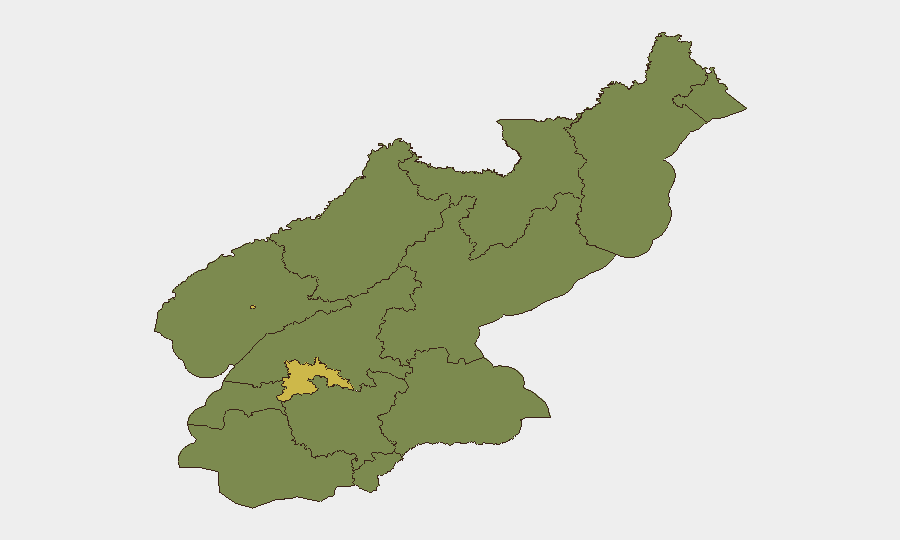
P'yŏngyang's isolation as the sole high-risk region (60) reflects the concentration of regime leadership, foreign diplomatic and business presence, internal security apparatus HQ, and elite-layer personnel. All other tracked provinces cluster at 30–30.8, indicating that sub-national differentiation is driven primarily by capital-city presence rather than regional instability hotspots. Kangwon, Kaesong, and the border provinces (Ryanggang, Chagang, North Pyongan, North Hamgyong) carry moderately elevated scores due to cross-border defector and smuggling activity, military concentration, and seasonal monsoon vulnerability to flooding and supply disruption. Foreign nationals or corporate assets in or traveling to P'yŏngyang face the highest composite exposure; those in border or remote provinces face secondary risks tied to interdiction operations and environmental hazard.
How GeoBit Would Assist
A security team protecting personnel or assets in North Korea would employ Intel Sweep, multi-language OSINT, and entity/sentiment analysis to detect regime statements, sanctions-evasion activity, or internal discipline signals in real time. AOI Monitoring & Early Warning on P'yŏngyang and border provinces enables persistent watch for security crackdowns, military movement, or defector interdiction operations with alert thresholds. Conflict & Military tracking paired with Satellite & Imagery analysis would monitor missile-unit positioning and cross-border signaling to anticipate external escalation. Network & Actor Analysis helps identify regime-loyalty purges or sanctions-circumvention networks affecting business operations.
7-Day Outlook
No major escalation is forecast for the next seven days absent external regional shock (e.g., Seoul-Pyongyang military incident or external alliance shift). Structural risks—border enforcement, cyber operations, internal discipline—will persist. Summer monsoon season may increase flooding and supply-chain disruption in remote provinces; monitor humanitarian-access implications for international NGOs and supply-dependent businesses.
Highest-Risk Areas — Ranked
| # | State / Region | Risk |
|---|---|---|
| 1 | P'yŏngyang | 60 |
| 2 | Kangwon | 30.8 |
| 3 | Kaesong | 30.3 |
| 4 | Ryanggang | 30 |
| 5 | North Hamgyong | 30 |
| 6 | North Pyongan | 30 |
| 7 | Chagang | 30 |
| 8 | South Pyongan | 30 |
| 9 | Nampo | 30 |
| 10 | South Hwanghae | 30 |
| 11 | North Hwanghae | 30 |
| 12 | South Hamgyong | 30 |
Sources
Previous Daily Briefs
A new North Korea brief is written every day — each with its own risk map and downloadable CSV. Here's the last week; use the calendar to go further back.
📅 Browse every day by calendar →
Highlighted days have a brief. Tap a day for that day's map & analysis, or “csv” for that day's dataset ($5).
Atlas — our AI intelligence desk — emails them this snapshot personally. Nothing else, no list.