Situation Summary
Pakistan faces elevated security pressure across multiple provinces, driven by coordinated militant attacks in Khyber Pakhtunkhwa, counter-terrorism sweeps, and isolated political violence. The national composite threat score of 65 (rank #33 globally) reflects 375 tracked events, with Punjab and Islamabad recording the highest sub-national risks. Airspace closure to Indian aircraft through late August adds operational friction to international travel and logistics. The security trajectory remains volatile but manageable, with no imminent state-level instability signaled.
Key Developments
- Bannu & Upper Dir, Khyber Pakhtunkhwa (15–16 July): Coordinated militant attacks—a vehicle-borne suicide bombing on Miryab police station and a security convoy ambush in Upper Dir—killed at least three police and injured multiple personnel. Operational linkage between the two attacks suggests tactical coordination by TTP and affiliated groups.
- Bannu district response (16–17 July): Pakistani security forces conducted intelligence-based raids killing 24 militants (TTP and Baloch separatist elements) and recovering weapons, according to ISPR reporting.
- Balochistan counter-terrorism (16–17 July): Operation Shaban/Shabaan sweeps neutralized at least three additional militants, maintaining momentum in provincial counter-insurgency operations.
- Azad Jammu & Kashmir (17 July): Gunmen fired on the convoy of former AJK Prime Minister Sardar Tanveer Ilyas near Tain–Dhalkot, killing a guard and wounding occupants; motive and perpetrator affiliation remain under investigation.
- Lahore, Punjab (18 July): Police arrested a suspect after a firing incident near politician Attaullah Tarar's vehicle, treated as a significant security incident in the provincial capital.
- Airspace closure extension (18 July): Pakistan Civil Aviation Authority extended the blanket ban on Indian-registered, operated, owned, and leased aircraft through 24 August 2026, affecting routing and cross-border travel logistics.
- Mansehra, Khyber Pakhtunkhwa (18 July): A tourist vehicle plunged into a ravine killing four persons; while non-militant in nature, underscores infrastructure and road safety risks in northern mountainous terrain during monsoon conditions.
Highest-Risk Areas
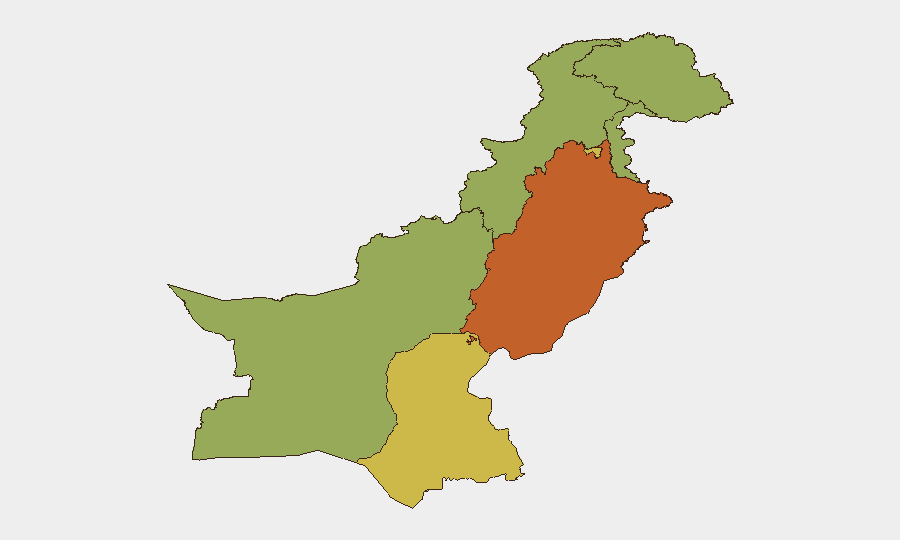
Punjab (risk 74.9) and Islamabad Capital Territory (64.0) dominate the national risk ranking, reflecting concentrated political violence, law-enforcement pressure, and capital-area security incidents. Khyber Pakhtunkhwa (49.1), despite recent militant activity, ranks fifth; this reflects GeoBit's assessment of *aggregate* threat intensity rather than recency alone. Balochistan (53.1) remains a persistent counterinsurgency theater. The top two provinces' risks are driven by sporadic targeted attacks on political figures and officials rather than mass-casualty militant campaigns, distinguishing them from the northern conflict dynamic.
How GeoBit Would Assist
Security teams operating in Pakistan should employ AOI Monitoring & Early Warning on high-risk districts (Bannu, Upper Dir, Mansehra, Azad Kashmir frontier zones) to detect militant activity and road/infrastructure hazards in real time. Network & Actor Analysis on TTP, Baloch separatist groups, and criminal networks would contextualize attack attribution and forecast downstream retaliation cycles. Routing & Network Analysis capabilities enable duty-of-care teams to identify alternative travel corridors in Khyber Pakhtunkhwa and azad Kashmir, circumventing ambush-prone routes and roadside-hazard zones identified in recent incidents.
7-Day Outlook
Militant groups will likely sustain small-unit attacks and raids in Khyber Pakhtunkhwa and Balochistan through late July, prompting continued security force sweeps. Political violence in Punjab and Islamabad may remain episodic and targeted rather than escalatory. No indicators suggest broadening armed conflict or state-level destabilization within the forecast window.
Highest-Risk Areas — Ranked
| # | State / Region | Risk |
|---|---|---|
| 1 | Punjab | 74.9 |
| 2 | Islamabad Capital Territory | 64 |
| 3 | Sindh | 60.9 |
| 4 | Balochistan | 53.1 |
| 5 | Khyber Pakhtunkhwa | 49.1 |
| 6 | Azad Kashmir | 45.5 |
| 7 | Gilgit-Baltistan | 44.9 |
Sources
Previous Daily Briefs
A new Pakistan brief is written every day — each with its own risk map and downloadable CSV. Here's the last week; use the calendar to go further back.
📅 Browse every day by calendar →
Highlighted days have a brief. Tap a day for that day's map & analysis, or “csv” for that day's dataset ($5).
Atlas — our AI intelligence desk — emails them this snapshot personally. Nothing else, no list.