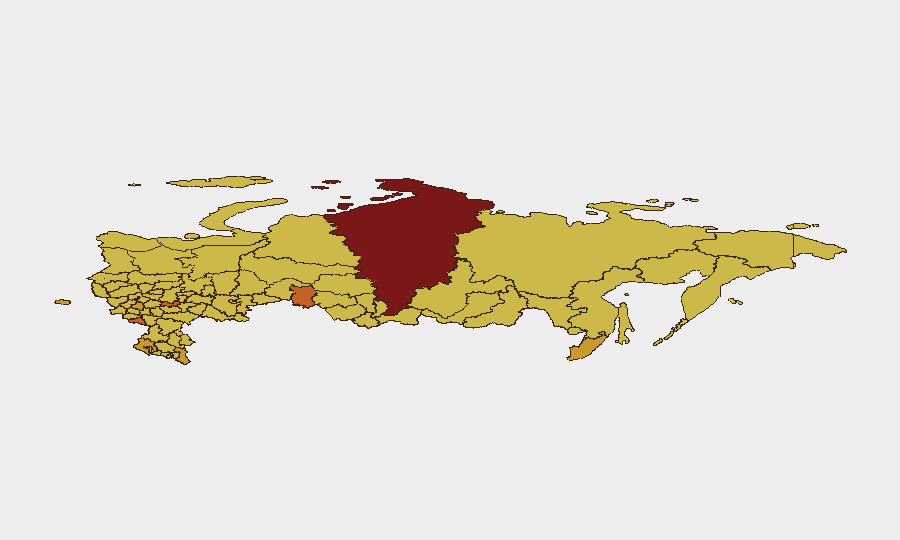
Situation Summary
Russia faces sustained Ukrainian drone and missile strikes on critical infrastructure, particularly energy and logistics assets, creating localized but widening disruption to fuel supply, transport networks, and air operations. Heightened air-defense activity is now evident across central Russia and the Moscow region, signaling expanded Ukrainian strike range and Russian vulnerability in rear areas. Border regions (Belgorod, Kursk) continue to experience cross-border shelling and intermittent civilian infrastructure damage. Overall threat trajectory remains elevated and operationally dynamic, with no near-term de-escalation signaled.
Key Developments
- Ryazan region, 2026-07-08: Ukrainian long-range drones struck fuel infrastructure near Ryazan, causing fires and disruption at an oil facility as part of a broader refinery-targeting campaign.
- Taganrog Bay / Rostov region, 2026-07-08: Ukrainian maritime drones damaged tankers in Taganrog Bay, disrupting Russian Sea of Azov logistics and prompting heightened port security and vessel inspection.
- Southern Russia (likely Rostov airfield), 2026-07-08: Ukrainian drones set fire to a military airfield, with satellite imagery confirming damage to support infrastructure and temporary flight-operation disruption.
- Multiple oil refineries across Russia, 2026-07-08: Coordinated Ukrainian drone raids temporarily knocked out portions of refining capacity, contributing to fuel shortages and localized petrol-station queuing in affected regions.
- Belgorod / Kursk border settlements, 2026-07-08: Cross-border shelling and drone activity caused minor infrastructure damage and power disruptions in civilian areas near the Ukraine frontier.
- Moscow region and central Russia, 2026-07-08: Heightened air-defense alerts and temporary airspace restrictions followed Ukrainian drone operations; residents reported overnight sirens and air-defense engagements, with no large-scale civilian casualties reported.
- Russian transport and logistics hubs, 2026-07-08: Railway and trucking operations experienced delays and rerouting following infrastructure checks and security measures tied to fuel-depot and refinery strikes; freight inspection regimes intensified.
Highest-Risk Areas
Moscow (risk 100) and Krasnoyarsk Krai (88.6) lead the composite risk ranking, driven by critical infrastructure density, population concentration, and exposure to cross-border or long-range strike activity. Belgorod Oblast (73.9) ranks fifth, reflecting direct proximity to active conflict zones and ongoing shelling; similarly, Kursk Oblast experiences persistent border instability. Energy-producing and logistics-hub regions (Omsk, Krasnodar Krai) register elevated scores due to vulnerability of refineries and transport networks to drone strikes. Western and southern regions face compounded risk from both military operations and infrastructure targeting.
How GeoBit Would Assist
Corporate security teams should deploy AOI Monitoring & Early Warning on critical facilities (refineries, logistics hubs, power infrastructure) in high-risk regions to trigger immediate alerts on drone activity, air-defense operations, or damage reports. Conflict & Military battle-mapping and Satellite & Imagery analysis enable real-time assessment of strike locations, facility status, and supply-chain disruption scope. Multi-language OSINT (X/Twitter, Telegram, Russian media) combined with entity extraction and temporal analysis provide 24-hour situational awareness on drone campaigns, airspace restrictions, and cross-border incidents affecting staff movement and logistics routing.
7-Day Outlook
Ukrainian long-range strike operations are likely to continue targeting energy and logistics infrastructure, with Ukrainian drone range now extending into central Russia and the Moscow region. Air-defense activity will remain heightened across populated and strategic areas, necessitating staff awareness of airspace closures and shelter protocols. Supply-chain and fuel-availability pressures are expected to persist, particularly in regions dependent on refineries hit in the past 48 hours.
Highest-Risk Areas — Ranked
| # | State / Region | Risk |
|---|---|---|
| 1 | Moscow | 100 |
| 2 | Krasnoyarsk Krai | 88.6 |
| 3 | Omsk Oblast | 75.5 |
| 4 | Republic of Mordovia | 74.3 |
| 5 | Belgorod Oblast | 73.9 |
| 6 | Tula Oblast | 72.6 |
| 7 | Primorsky Krai | 72.1 |
| 8 | Saint Petersburg | 71.7 |
| 9 | Kaliningrad | 71.4 |
| 10 | Krasnodar Krai | 71.4 |
| 11 | Dagestan | 71.2 |
| 12 | Voronezh Oblast | 70.6 |
Sources
Previous Daily Briefs
A new Russia brief is written every day — each with its own risk map and downloadable CSV. Here's the last week; use the calendar to go further back.
📅 Browse every day by calendar →
Highlighted days have a brief. Tap a day for that day's map & analysis, or “csv” for that day's dataset ($5).
Atlas — our AI intelligence desk — emails them this snapshot personally. Nothing else, no list.