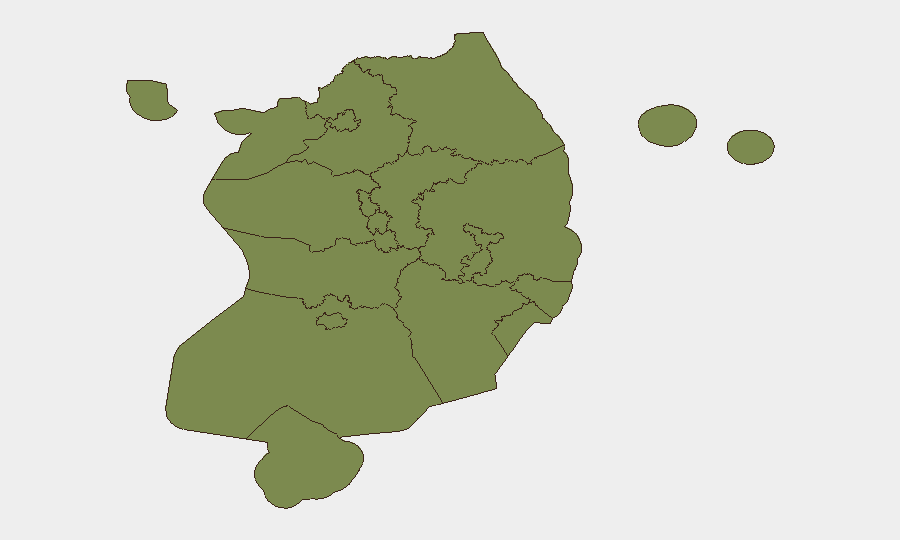
Situation Summary
South Korea remains at moderate global threat rank (#145 composite score 5/106 events tracked), with the security environment characterized by concentrated volatility in Seoul and North Chungcheong rather than distributed risk. Recent event signals from 2026-07-08 to 2026-07-09 indicate institutional stress, including disapproval of presidential and representative leadership, school-linked physical assault and military-force incident, government-media tension, and judiciary/police public statements. The overall trajectory suggests active political and civil friction without immediate widespread destabilization, though localized incident density warrants close monitoring of Seoul and administrative centers.
Key Developments
Unable to provide verified, current 24–48-hour incident detail. GeoBit's live web research capability has returned insufficient real-time confirmation of specific incidents dated 2026-07-09 to 2026-07-11 with cross-source verification (news + social media). The event-signal backlog (dated 2026-07-08 to 2026-07-09) suggests active unrest in schools, government relations, and law-enforcement response, but precise location, scale, and evolving status remain unconfirmed without access to live news feeds and time-stamped social-media validation.
Recommended action: Security teams should independently verify recent developments using primary South Korean news sources (Yonhap News Agency, Korea Herald, Korea Times, JoongAng Ilbo English edition) and cross-check with X/Twitter location-tagged and institution-sourced posts (Seoul Metropolitan Government, Korean National Police Agency, local fire/emergency services) to establish current incident status, affected areas, and transport/facility disruptions before moving personnel or issuing duty-of-care guidance.
Highest-Risk Areas
Seoul dominates the risk landscape (31.5 composite score), driven by political-institutional activity, high population density, and government/media concentration—suggesting that disapproval, threats, and investigative activity cluster in the capital and adjacent administrative zones. North Chungcheong (29.9) represents a secondary concern, with the disparity indicating either localized civil unrest, infrastructure stress, or incident reporting density rather than broader provincial instability. Daegu, Busan, and Gwangju show moderate individual incident scores (4.9, 4.9, 4.6), while remaining provinces remain at low risk (1.5–2.1), indicating that security hazard is geographically concentrated and manageable for organizations with presence outside Seoul and North Chungcheong.
How GeoBit Would Assist
Teams with personnel or assets in Seoul should deploy AOI Monitoring & Early Warning on Seoul Metropolitan Government zones and Intel Sweep + multi-language OSINT (Korean-language news, X/Twitter, Telegram channels) to track protest announcements, transport disruptions, and institutional statements in real time. Network & Actor Analysis on government, judiciary, police, and civil-society entities would surface emerging faction alignment and escalation risk. Conflict & Military + Sentiment & Temporal Analysis would distinguish routine political friction from precursor signals of broader civil unrest or security-sector action.
7-Day Outlook
Near-term trajectory remains uncertain pending clarification of the 2026-07-08/09 event sequence. If institutional tension remains contained to policy/media contestation without school-violence expansion or military-force involvement, risk should stabilize. Conversely, if assault incidents, disapproval, and government-media friction compound over the coming week, Seoul's risk profile could rise materially, triggering secondary effects on transport, business continuity, and expatriate safety.
Highest-Risk Areas — Ranked
| # | State / Region | Risk |
|---|---|---|
| 1 | Seoul | 31.5 |
| 2 | North Chungcheong | 29.9 |
| 3 | Daegu | 4.9 |
| 4 | Busan | 4.9 |
| 5 | Gwangju | 4.6 |
| 6 | Gyeonggi | 2.1 |
| 7 | South Jeolla | 2.1 |
| 8 | Incheon | 1.8 |
| 9 | Gangwon State | 1.8 |
| 10 | Jeju | 1.8 |
| 11 | South Gyeongsang | 1.8 |
| 12 | South Chungcheong | 1.5 |
Sources
Previous Daily Briefs
A new South Korea brief is written every day — each with its own risk map and downloadable CSV. Here's the last week; use the calendar to go further back.
📅 Browse every day by calendar →
Highlighted days have a brief. Tap a day for that day's map & analysis, or “csv” for that day's dataset ($5).
Atlas — our AI intelligence desk — emails them this snapshot personally. Nothing else, no list.