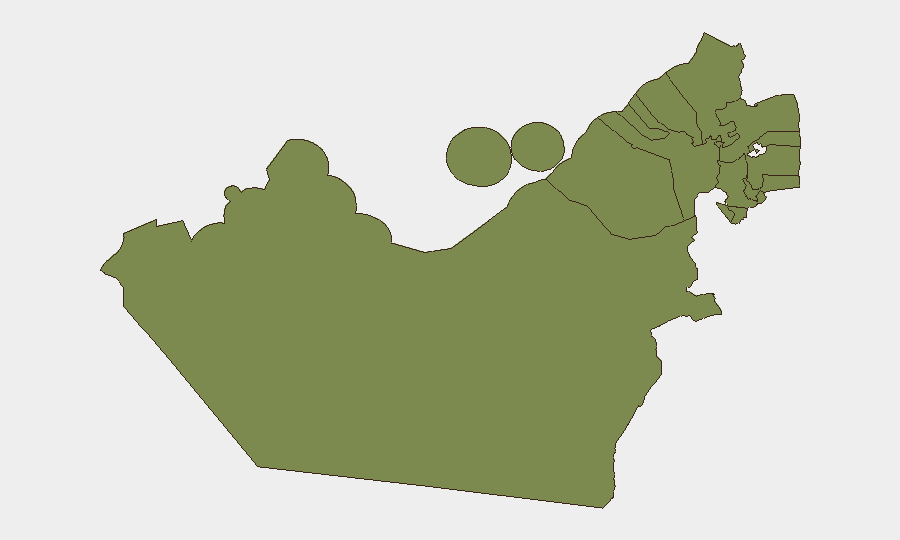
Situation Summary
The United Arab Emirates faces acute regional military spillover rather than domestic instability. Over the past 24–48 hours, Iranian missile and drone strikes targeting the broader Gulf region have directly impacted UAE territory, airspace, and maritime commerce, with two UAE-operated tankers struck in the Strait of Hormuz on 19 July. UAE air-defence systems remain actively engaged, and shipping traffic through critical Gulf lanes has contracted sharply. The security environment has shifted from chronic tension to active kinetic operations affecting civilian and commercial infrastructure.
Key Developments
- Strait of Hormuz tanker strikes, 19 July – Two UAE-operated crude tankers (MT Al Bahiyah and MT Mombasa) were hit by Iranian cruise missiles, resulting in one fatality and eight crew injuries; fires were reported on both vessels, directly disrupting UAE energy exports and maritime commerce.
- UAE air-defence operations, 19–20 July – UAE air-defence systems, particularly around Abu Dhabi's air-defence identification zone (ADIZ), conducted active interception operations against Iranian missiles and drones linked to regional escalation.
- Strait of Hormuz shipping slowdown, 19–20 July – Transit traffic through the Strait sharply declined, with military activity near the waterway reported and US forces conducting boarding operations in the Gulf of Oman; heightened maritime risk for vessels bound to/from UAE ports.
- UAE tanker near Oman's coast, late 19 July – A vessel in Gulf waters used by UAE shipping sustained minor damage from an unknown projectile off Oman's coast; crew unharmed but incident underscores elevated risk to commercial shipping on UAE-linked routes.
- UAE Ministry of Foreign Affairs statement, 19–20 July – The UAE publicly condemned renewed Iranian missile and drone attacks as a serious threat to regional security, following Iranian strikes on Bahrain, Kuwait, and Jordan.
- Canadian travel advisory upgrade, 19–20 July – Canada upgraded its travel warning for the UAE, urging residents to avoid non-essential travel due to intensifying regional tensions and security risks.
- Dubai and Abu Dhabi airport/aviation status, 19–20 July – Major UAE carriers (Emirates, flydubai, Etihad) maintained normal operations; however, airlines advised passengers to monitor updates and arrive early; routes may be adjusted to avoid conflict zones but airports remain open.
Highest-Risk Areas
Dubai (31.3) and Abu Dhabi Emirate (25.3) drive the national risk profile, reflecting their concentration of critical infrastructure, international shipping, aviation hubs, and energy facilities exposed to direct and indirect effects of regional military escalation. The remaining emirates carry minimal assessed risk (1.3–2.4), indicating that threat concentration aligns with economic and strategic importance. Risk is primarily from maritime and air-domain spillover rather than internal instability.
How GeoBit Would Assist
Security teams should deploy AOI Monitoring & Early Warning on critical facilities and ports in Dubai and Abu Dhabi to track missile/drone activity and infrastructure disruption in real time. Maritime & Aviation tracking combined with Routing & Network Analysis capabilities enable real-time rerouting of personnel and assets away from high-risk transit corridors and airspace. Conflict & Military and Satellite & Imagery analysis provide rapid damage assessment and escalation tracking to inform duty-of-care decisions and continuity planning.
7-Day Outlook
Regional military escalation is likely to remain elevated over the next seven days, with continued risk to UAE maritime lanes and potential for additional air-defence engagement. Domestic airports and major business districts are expected to remain operational but congested; shipping delays and insurance costs for Gulf transit will persist. No credible indicator suggests imminent domestic unrest or systemic infrastructure failure, but travel and maritime risk warrants active monitoring and contingency adjustment.
Highest-Risk Areas — Ranked
| # | State / Region | Risk |
|---|---|---|
| 1 | Dubai | 31.3 |
| 2 | Abu Dhabi Emirate | 25.3 |
| 3 | Fujairah Emirate | 2.4 |
| 4 | Sharjah Emirate | 1.3 |
| 5 | Ajman Emirate | 1.3 |
| 6 | Ras al-Khaimah | 1.3 |
| 7 | Umm al-Quwain | 1.3 |
Sources
Previous Daily Briefs
A new United Arab Emirates brief is written every day — each with its own risk map and downloadable CSV. Here's the last week; use the calendar to go further back.
📅 Browse every day by calendar →
Highlighted days have a brief. Tap a day for that day's map & analysis, or “csv” for that day's dataset ($5).
Atlas — our AI intelligence desk — emails them this snapshot personally. Nothing else, no list.