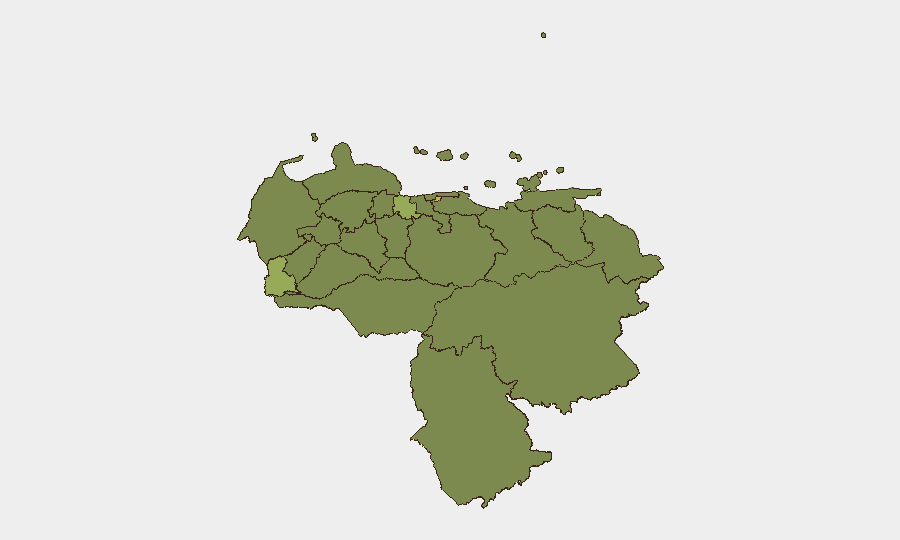
Situation Summary
Venezuela's composite threat score remains stable at 46/100 (global rank #35), with 504 tracked events reflecting underlying political, infrastructure, and civil-order fragmentation rather than acute nationwide crisis. The past 48 hours show localized tension in Caracas—unverified reports of military-area explosions, continued armed-civilian checkpoints, and scattered protest activity—layered atop ongoing earthquake-recovery constraints and sanctions-relief logistics. No wholesale deterioration is evident, but fragmented security controls, infrastructure damage, and institutional stress create persistent risk for personnel and asset movement, particularly in the Federal District and Tachira State.
Key Developments
- Caracas (La Carlota / Fuerte Tiuna military complex) – Night of July 28–29, 2026: Multiple social-media accounts reported loud detonations, low-flying aircraft, smoke, and localized power outages near military installations around 02:00 local time. Reports remain unverified by official sources or major wire services and should not yet be treated as confirmed incidents; however, circulation across Venezuela-focused monitoring feeds indicates plausible signal worth tracking for corroboration.
- Caracas (central and western districts) – July 29, 2026: Armed civilian checkpoints ("colectivo"-type groups) continued ad-hoc vehicle searches and roadblock operations on major avenues, reportedly targeting pro-U.S. symbols and political content. Pattern aligns with earlier activity but persists as localized intimidation vector.
- Maiquetía / Simón Bolívar International Airport (La Guaira) – ongoing through July 29: Commercial traffic remains restricted due to earthquake-related structural damage; humanitarian flights only. Constraint persists from late June and directly impacts corporate travel and cargo diversion.
- National – July 29, 2026: X/Twitter reports from Caracas, Aragua, and Miranda indicate continued snap vehicle checkpoints (alcabalas) by armed groups, with documented phone searches and political questioning. Consistent with German Foreign Office advisory warnings on colectivo activity.
- Caracas (multiple neighborhoods) – July 29, 2026: Small, localized cacerolazos (pot-banging protests) reported via social media, dispersed quickly, protesting earthquake recovery and political detentions. Scale and impact remain low; no mainstream media confirmation.
- National (sanctions relief) – ongoing through October 23, 2026: U.S. Treasury OFAC General License 60 (issued June 25) remains in force, authorizing earthquake-relief transactions. SOUTHCOM continues military support for State Department humanitarian aid distribution.
Highest-Risk Areas
Federal District (62.3) dominates threat concentration, driven by political tension, infrastructure vulnerability, and armed-civilian control dynamics in Caracas. Tachira (44.2), Carabobo (42.2), and Vargas (36.2) follow, reflecting border instability, gang presence, and localized social fragmentation. The Federal District's elevated score reflects capital-based institutional strain, colectivo activity, and earthquake recovery friction; regional risk is dispersed across criminal networks, migration pressures, and civil-unrest pockets rather than concentrated state control.
How GeoBit Would Assist
Security teams should employ AOI Monitoring & Early Warning to track Caracas and Tachira for unverified incident corroboration and protest escalation signals. OSINT fusion & corroboration (X/Twitter, diaspora outlets, radio SIGINT) can distinguish credible checkpoint and aircraft reports from rumor. Routing & Network Analysis can identify safe corridors around armed checkpoints and airport constraints, and sentiment & temporal analysis on social feeds will flag escalation in political-unrest language before widespread mobilization.
7-Day Outlook
No imminent nationwide destabilization is forecast; however, unverified military-area explosions and colectivo checkpoint intensity warrant close 48-72 hour corroboration. Airport restrictions persist through month-end, sustaining travel friction. Expect continued fragmented protest and checkpoint activity in Caracas and scattered unrest in secondary cities, with political messaging around U.S. earthquake assistance and ongoing detentions as friction points.
Highest-Risk Areas — Ranked
| # | State / Region | Risk |
|---|---|---|
| 1 | Federal District | 62.3 |
| 2 | Tachira State | 44.2 |
| 3 | Carabobo State | 42.2 |
| 4 | Vargas State | 36.2 |
| 5 | Monagas State | 34.7 |
| 6 | Apure State | 33.5 |
| 7 | Trujillo State | 33.3 |
| 8 | Cojedes State | 33.3 |
| 9 | Zulia State | 32.8 |
| 10 | Falcon State | 32.8 |
| 11 | Anzoategui State | 32.8 |
| 12 | Bolivar State | 32.8 |
Sources
Previous Daily Briefs
A new Venezuela brief is written every day — each with its own risk map and downloadable CSV. Here's the last week; use the calendar to go further back.
📅 Browse every day by calendar →
Highlighted days have a brief. Tap a day for that day's map & analysis, or “csv” for that day's dataset ($5).
Atlas — our AI intelligence desk — emails them this snapshot personally. Nothing else, no list.