Situation Summary
Russia faces an intensifying campaign of Ukrainian cross-border strikes targeting energy infrastructure and maritime logistics, with significant attacks recorded overnight into 6–7 July 2026. Infrastructure disruptions in Crimea, the Baltic, and multiple Russian regions indicate sustained pressure on critical supply chains and power systems. The overall composite threat score places Russia at #14 globally, but sub-national risk concentration in Moscow and western/southern oblasts reflects both conflict-adjacent exposure and domestic stability concerns.
Key Developments
- Yaroslavl Oblast, overnight 6–7 July: Ukrainian drone attack on Yaroslavl city wounded two civilians; Russian air defenses reported downing over 70 drones in the regional wave, with Ministry of Defense claiming 519 drones intercepted overnight across multiple regions.
- Crimea (peninsula-wide), early 7 July: Major blackout caused by external impact (confirmed as Ukrainian strikes on energy infrastructure); Sevastopol authorities activated backup systems to restore power after targeted attacks on regional energy assets.
- Vysotsk, Leningrad Oblast, night of 6–7 July: Ukrainian forces struck an oil terminal and three Russian refineries in coordinated operation; terminal operations sustained damage and maritime shipping risk in the Baltic port increased.
- Russian merchant fleet, 72-hour window to 7 July: Ukrainian forces targeted 21 Russian-linked tankers and bulkers, the highest 48-hour merchant vessel casualty count since invasion onset; shadow fleet vessels servicing Crimean supply lines were primary targets.
- Energy logistics (shadow fleet routes), last 48 hours to 7 July: Fresh Ukrainian attacks on fuel tankers and terminals supplying Crimea indicate concentrated campaign to constrain Russian petrol distribution; operational risk for vessels on shadow fleet routes assessed as elevated.
Highest-Risk Areas
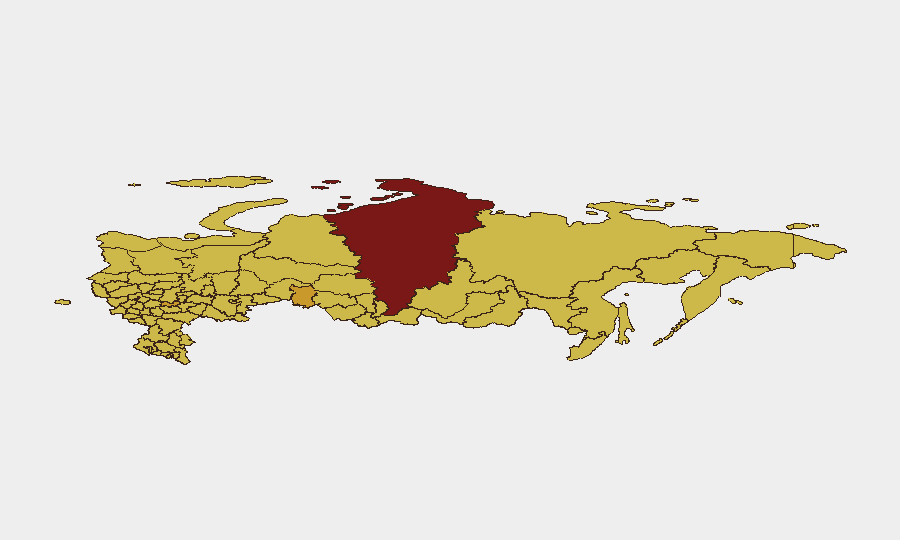
Moscow (97.1) and Krasnoyarsk Krai (86) dominate the sub-national ranking, with western border oblasts and Crimea-adjacent regions showing sustained elevation. Belgorod Oblast (70.9), Tula Oblast (69.6), and Kaliningrad (68.5) reflect exposure to cross-border strike activity and ongoing conventional military operations along the Ukraine contact line. Saint Petersburg and Kaliningrad's high scores correlate with Baltic maritime and energy infrastructure concentration; Crimea's status as occupied territory with degraded power systems adds operational friction for any commercial or personnel movement.
How GeoBit Would Assist
Corporate security teams with Russian exposure should employ AOI Monitoring & Early Warning on high-risk oblasts (especially Belgorod, Tula, Yaroslavl, and Crimea) to receive real-time alerting on drone/strike events before secondary reports; Maritime & Aviation Tracking to monitor shadow fleet vessel movements and port status in the Baltic and Black Sea; and Conflict & Military battle mapping to track contact-line dynamics and cross-border attack patterns. Economic & Trade and Routing & Network Analysis capabilities support supply-chain resilience planning and alternative logistics corridors around energy infrastructure at risk.
7-Day Outlook
Ukrainian strike frequency and targeting precision appear to be rising, with energy and maritime logistics as primary focus; further overnight drone waves and attacks on tanker traffic are probable. Power outages and fuel-supply constraints in Crimea and border regions will likely persist, complicating both personnel safety and operational continuity for companies with Russian exposure. Escalation risk remains elevated but trajectory suggests sustained attritional pressure rather than immediate territorial shift.
Highest-Risk Areas — Ranked
| # | State / Region | Risk |
|---|---|---|
| 1 | Moscow | 97.1 |
| 2 | Krasnoyarsk Krai | 86 |
| 3 | Omsk Oblast | 72.5 |
| 4 | Republic of Mordovia | 71.3 |
| 5 | Belgorod Oblast | 70.9 |
| 6 | Tula Oblast | 69.6 |
| 7 | Primorsky Krai | 69.1 |
| 8 | Saint Petersburg | 68.7 |
| 9 | Kaliningrad | 68.5 |
| 10 | Krasnodar Krai | 68.5 |
| 11 | Dagestan | 68.2 |
| 12 | Voronezh Oblast | 67.7 |
Sources
Previous Daily Briefs
A new Russia brief is written every day — each with its own risk map and downloadable CSV. Here's the last week; use the calendar to go further back.
📅 Browse every day by calendar →
Highlighted days have a brief. Tap a day for that day's map & analysis, or “csv” for that day's dataset ($5).
Atlas — our AI intelligence desk — emails them this snapshot personally. Nothing else, no list.