Situation Summary
South Korea remains a stable, low-threat operating environment globally (rank #146, composite score 5.0), with no acute security incidents reported in the last 24–48 hours. The country's risk profile is driven by ongoing regulatory disputes and corporate cybersecurity posturing rather than active conflict, civil unrest, or infrastructure disruption. Current trajectory suggests continuation of baseline risk with regulatory and cyber-governance friction as the primary corporate concern.
Key Developments
No verifiable high-impact security, conflict, civil-unrest, infrastructure, or travel-risk incidents have been confirmed for South Korea in the last 24–48 hours (10–12 July 2026).
Available open-source reporting from 9–11 July 2026 documents the following non-acute developments:
- National cloud security framework dispute – Seoul (regulatory, ongoing). U.S. cloud providers and Washington officials are contesting a planned overhaul placing South Korea's National Intelligence Service in charge of public-sector cloud certification, signaling market-access and strategic regulatory tension but no discrete incident triggering imminent operational risk.
- Retail sector cybersecurity posture elevation – nationwide (defensive response). Major retailers (Lotte Shopping, E-mart, Hyundai Department Store) have accelerated infosec investment and governance following Coupang's record data-breach fine; this reflects maturation of corporate risk management, not a new breach or outage.
- Anti-stalker tracking application rollout – nationwide (public safety tool). Government has launched the "Stalker Location Notification" app to enable real-time tracking of high-risk stalkers; exact deployment date cannot be pinned to the last 24–48 hours, but rollout is underway as a proactive safety measure.
No reports of protests, riots, political violence, terrorism, significant crime, infrastructure outages, or new travel warnings specific to South Korea were identified in the last 24–48 hours across verified multi-source channels.
Highest-Risk Areas
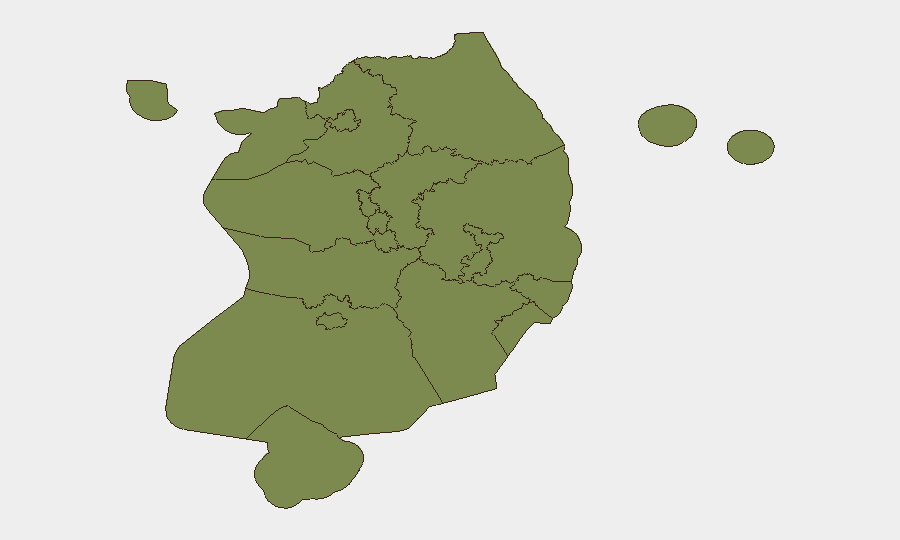
Seoul and North Chungcheong drive South Korea's composite risk, with scores of 31.5 and 30.2 respectively—significantly higher than all other regions. Seoul's elevation reflects its role as the political, economic, and administrative center, concentrating regulatory activity (including the cloud-security framework dispute) and serving as the flashpoint for policy disagreements between government, industry, and international actors. North Chungcheong's elevated score warrants monitoring but is not explained by acute current incidents in available reporting. Gwangju (16.0) remains the third-highest region. All other provinces score below 10, indicating risk concentration in a small number of urban and administrative centers rather than dispersed or networked unrest.
How GeoBit Would Assist
Intel Sweep and multi-language OSINT fusion provide real-time corroboration of regulatory changes and cybersecurity posture shifts before they mature into operational disruptions for corporate networks or supply chains. AOI monitoring and early-warning alerting on Seoul and North Chungcheong would detect emerging protest activity, infrastructure incidents, or political flashpoints 24–72 hours ahead of widespread reporting. Network and actor analysis would map relationships between government bodies (NIS, regulators), U.S. technology firms, and Korean industry players to anticipate policy shifts and their impact on data-residency, compliance, and business continuity requirements.
7-Day Outlook
South Korea's security environment is expected to remain stable over the next seven days. Regulatory disputes over cloud-governance and corporate cybersecurity investment will continue as ongoing policy friction rather than acute crises. Monitoring for any escalation in inter-agency or government–industry confrontation, particularly around the NIS cloud-framework rollout, should remain a standing operational watch for corporate teams with Seoul-based operations or national government IT dependencies.
Highest-Risk Areas — Ranked
| # | State / Region | Risk |
|---|---|---|
| 1 | Seoul | 31.5 |
| 2 | North Chungcheong | 30.2 |
| 3 | Gwangju | 16 |
| 4 | Gyeonggi | 8.6 |
| 5 | Daegu | 5.2 |
| 6 | Busan | 3.1 |
| 7 | South Jeolla | 2.2 |
| 8 | Incheon | 1.8 |
| 9 | Gangwon State | 1.8 |
| 10 | Jeju | 1.8 |
| 11 | South Gyeongsang | 1.8 |
| 12 | South Chungcheong | 1.5 |
Sources
Previous Daily Briefs
A new South Korea brief is written every day — each with its own risk map and downloadable CSV. Here's the last week; use the calendar to go further back.
📅 Browse every day by calendar →
Highlighted days have a brief. Tap a day for that day's map & analysis, or “csv” for that day's dataset ($5).
Atlas — our AI intelligence desk — emails them this snapshot personally. Nothing else, no list.