Situation Summary
The UAE remains free of direct domestic security incidents, but faces significant indirect risk from intensifying US–Iran military escalation in the broader Gulf region over the past 72 hours. Regional missile and drone activity, naval strike operations, and shipping disruptions are creating spillover exposure to UAE airspace, maritime commerce, and travel infrastructure. While UAE air defenses remain actively engaged and airports operational, the trajectory is toward sustained elevated regional tension with corresponding economic and logistics friction.
Key Developments
- Iranian missile and drone strikes on neighboring states (Bahrain, Kuwait, Jordan; 19–21 July). UAE Ministry of Foreign Affairs issued formal condemnation on 20–21 July, characterizing attacks as serious regional security threats. No strikes on UAE soil confirmed; however, activity directly affects UAE airspace monitoring and regional stability perception.
- UAE-operated tanker strike in Strait of Hormuz (19 July). At least one UAE-flagged crude tanker reported hit by projectile with minor damage and crew safe. Incident underscores exposure of UAE maritime trade to ongoing kinetic operations in critical chokepoint.
- Sharp contraction in Gulf shipping traffic (past 48 hours). Reporting cites slowed vessel transits through Strait of Hormuz and Gulf of Oman amid active military operations and US boarding activity against Iran-linked vessels. Direct impact on UAE export routes and energy transport costs.
- Canada upgraded travel advisory for UAE (19–20 July). Warning advises against non-essential travel due to regional escalation, signaling tightening international risk perception of UAE as secondary spillover zone.
- Airline route and schedule adjustments (20–21 July). Emirates, Etihad, flydubai, and Air Arabia implementing course changes and publishing flight delays/cancellations. UAE airports remain operational but travelers face ongoing disruptions.
- UN and international assessment of UAE economic impact (20–21 July). UN Secretary-General spokesperson cited expanding conflict as already affecting UAE trade systems, transport costs, and fuel prices alongside humanitarian access constraints.
Highest-Risk Areas
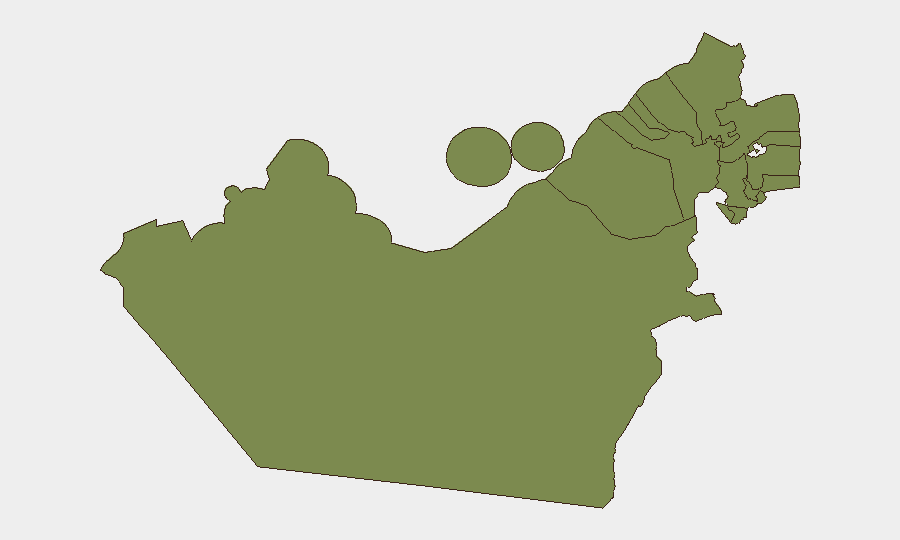
Dubai dominates the sub-national ranking (31.3 vs. national composite 18), reflecting concentration of international aviation, maritime, and commercial activity in the emirate—exposure vectors for regional spillover. Abu Dhabi Emirate (12.8) is secondary, likely driven by port operations, energy infrastructure, and government facilities. Remaining emirates (Fujairah, Sharjah, Ajman, Ras al-Khaimah, Umm al-Quwain) register minimal independent risk scores, suggesting risk is geographically concentrated in the two largest trading hubs and their international connectivity rather than dispersed across the federation.
How GeoBit Would Assist
A corporate security team protecting personnel and assets in the UAE would deploy Persistent Area-of-Interest (AOI) Monitoring on Dubai and Abu Dhabi ports, airports, and maritime lanes (Strait of Hormuz, Gulf of Oman) to detect changes in shipping patterns, air-defense activity, or new strike incidents in real time. Maritime and Aviation Tracking capabilities would provide current vessel routing, flight-path deconfliction, and chokepoint congestion data to support duty-of-care travel and cargo decisions. Intel Sweep and multi-source OSINT fusion would consolidate airline advisories, port updates, and regional military activity signals into actionable briefing for ongoing risk assessment.
7-Day Outlook
Regional military operations are expected to persist at current tempo, with no immediate de-escalation signal. Shipping delays, fuel-price volatility, and airline disruptions will likely remain in effect; travel advisories may tighten further if strikes broaden. Domestic UAE security incidents remain unlikely, but economic friction and logistics disruption will accumulate unless regional tensions ease.
Highest-Risk Areas — Ranked
| # | State / Region | Risk |
|---|---|---|
| 1 | Dubai | 31.3 |
| 2 | Abu Dhabi Emirate | 12.8 |
| 3 | Fujairah Emirate | 1.8 |
| 4 | Sharjah Emirate | 1.3 |
| 5 | Ajman Emirate | 1.3 |
| 6 | Ras al-Khaimah | 1.3 |
| 7 | Umm al-Quwain | 1.3 |
Sources
Previous Daily Briefs
A new United Arab Emirates brief is written every day — each with its own risk map and downloadable CSV. Here's the last week; use the calendar to go further back.
📅 Browse every day by calendar →
Highlighted days have a brief. Tap a day for that day's map & analysis, or “csv” for that day's dataset ($5).
Atlas — our AI intelligence desk — emails them this snapshot personally. Nothing else, no list.