Situation Summary
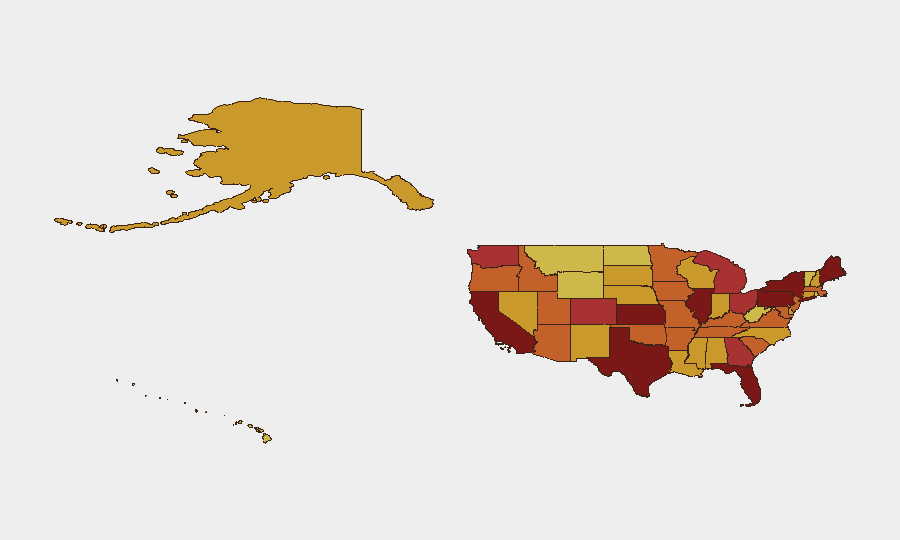
The United States faces a composite threat score of 100 (ranking #2 globally) driven by a complex overlay of civil unrest, immigration-related tensions, hate-motivated violence, and policy shifts affecting firearms and cybersecurity posture. Over the past 24–48 hours, coordinated protests at 125 AI data-center locations, shooting incidents at immigration facilities, a federal court ruling on weapons law, and high-profile arrests have created a fragmented but elevated threat environment. California, Texas, and Kansas show the highest composite risk scores, reflecting both scale of population and concentration of critical infrastructure. The trajectory suggests continued political polarization around technology, immigration, and civil liberties, with sporadic but recurring flashpoints of violence.
Key Developments
- Nationwide (125+ locations) – July 18, 2026 – Coordinated nationwide protests targeting AI data-center expansion across multiple states. Organizers cited resource strain and political friction; events were large-scale but remain primarily civil in character, though potential for confrontation with site security or counterprotesters exists.
- Colorado (ICE facility) – July 17, 2026 – Employee of migrant-processing contractor arrested on suspicion of shooting and wounding a female protester outside the facility. Incident reflects intersection of immigration enforcement and civil protest activity with risk of armed escalation.
- Utah County, Utah – July 17, 2026 – Man charged with two counts of attempted aggravated murder for stabbing a Muslim individual; prosecutors characterized attack as hate-motivated. Decision signals risk of religiously targeted violence and potential secondary tensions in interfaith communities.
- New Jersey (statewide) – July 17, 2026 – Federal appeals court struck down state assault-weapons and large-capacity magazine ban as unconstitutional. Ruling immediately alters legal firearms landscape and may affect law-enforcement operational posture and risk profile in the state.
- Nationwide – July 18, 2026 – Andrew and Tristan Tate arrested by U.S. Marshals Service; extradition sought by UK Crown Prosecution Service on rape, bodily harm, and human-trafficking charges. Arrest location unspecified but suggests heightened law-enforcement activity and potential media concentration that could draw secondary attention.
- Nationwide (food distribution) – July 18, 2026 – FDA flagged shredded iceberg lettuce from Taylor Farms testing positive for parasitic contamination affecting thousands of consumers. While primarily a health incident, it signals supply-chain vulnerability and potential operational disruptions across food-distribution networks.
- Federal government (nationwide) – July 17, 2026 – Justice Department loosened TikTok restrictions on federal devices, permitting employee downloads. Policy reversal carries cybersecurity implications for federal infrastructure given persistent concerns over data exfiltration and foreign-influence vectors via social media.
Highest-Risk Areas
California, Texas, and Kansas lead the risk ranking, with California at 100 (baseline) and Texas at 97. These states combine large populations, critical tech and energy infrastructure, significant immigration flows, and pronounced political divisions. Florida (86) and New York (85) rank fourth and fifth, reflecting urban density, protest activity, and federal facility concentration. Maine (83.1), a lower-population outlier, warrants attention; its elevation suggests either localized infrastructure vulnerability or emerging protest/civil-unrest signals not yet fully disaggregated in this brief. Colorado and Georgia also rank high (76.5 each), consistent with the immigration-facility incidents and ongoing civil tensions documented in the past 48 hours.
How GeoBit Would Assist
Corporate security teams should employ AOI Monitoring & Early Warning to track protest formations, facility perimeters, and flashpoint concentrations in real time across the top-risk states. Network & Actor Analysis and Telegram/X OSINT feeds would provide sentiment tracking and coordination signals for further coordinated actions (AI protests, immigration-related mobilization). Routing & Network Analysis enables alternative supply-chain and personnel routing around contamination zones and protest concentrations. Regular Intel Sweep and Risk & Threat Assessment updates will provide 7–14 day forward indicators of policy cascades (e.g., secondary court rulings on weapons law) and transnational incidents (Tate extradition proceedings).
7-Day Outlook
The next week is likely to see secondary civil mobilization around the New Jersey weapons-ban ruling, continued nationwide dispersal of AI data-center protests, and law-enforcement activity tied to the Tate extradition process. Immigration-related tensions will probably persist without major policy announcement. Risk of isolated hate-motivated violence remains elevated; interfaith community alerts and law-enforcement presence in targeted neighborhoods should be monitored as leading indicators.
Highest-Risk Areas — Ranked
| # | State / Region | Risk |
|---|---|---|
| 1 | California | 100 |
| 2 | Texas | 97 |
| 3 | Kansas | 93.5 |
| 4 | Florida | 86 |
| 5 | New York | 85 |
| 6 | Maine | 83.1 |
| 7 | Pennsylvania | 81.8 |
| 8 | Illinois | 80.1 |
| 9 | Ohio | 79.3 |
| 10 | Colorado | 76.5 |
| 11 | Georgia | 76.5 |
| 12 | Michigan | 76 |
Sources
Previous Daily Briefs
A new United States brief is written every day — each with its own risk map and downloadable CSV. Here's the last week; use the calendar to go further back.
📅 Browse every day by calendar →
Highlighted days have a brief. Tap a day for that day's map & analysis, or “csv” for that day's dataset ($5).
Atlas — our AI intelligence desk — emails them this snapshot personally. Nothing else, no list.