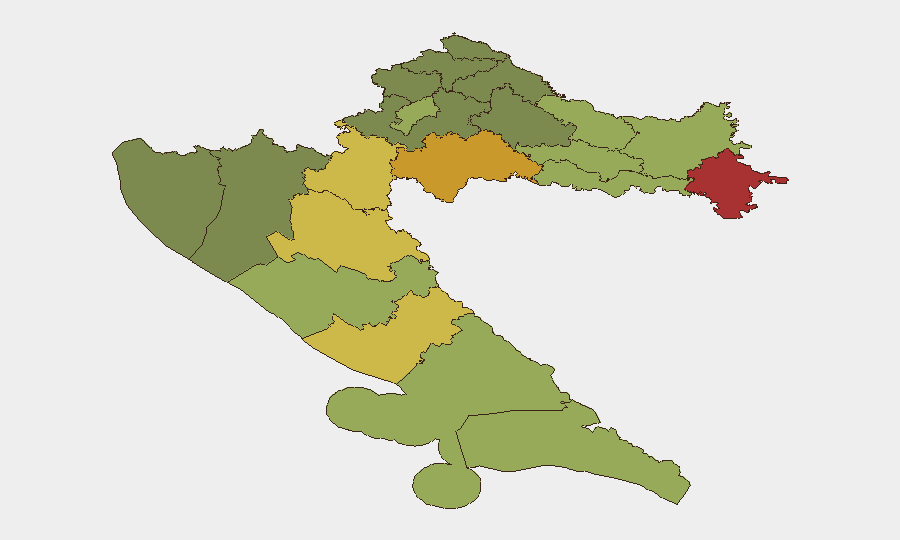
Situation Summary
Croatia remains a low-threat environment globally (rank #148, composite score 7), but is experiencing a concentrated spike in deliberate arson incidents and infrastructure disruption in its eastern and coastal counties. Multiple large-scale wildfire and structural fires—some coordinated, others opportunistic—have been reported across Zadar, Šibenik-Knin, and surrounding regions since mid-August, with criminal investigation and detention proceedings now underway. A separate high-profile transnational security case (Nord Stream sabotage suspect) and severe weather damage add to the current operational environment. The risk trajectory is moderately elevated in specific sub-national zones but remains regionally contained.
Key Developments
- Paklenica / Velebit Mountain (Zadar County) – 21 Aug 2026 (confirmed 22 Aug): An ultralight aircraft (D-KWZE, Czech origin) lost radar contact at 16:14 on 21 Aug approximately 27 km northeast of Zadar. Search-and-rescue teams located wreckage around 22:00 the same day, confirming two fatalities; on-site investigation commenced 22 Aug. Route and cause under investigation.
- Drniš, Šibenik-Knin County – 17 Aug incident; custody decision 21–22 Aug: Three Canadian citizens detained on suspicion of deliberately igniting major wildfires on 17 Aug; two suspects remain at large. Šibenik County Court ordered pre-trial detention on 21–22 Aug citing flight risk and risk of further offences.
- Zadar County (10 coordinated locations) – 14–15 Aug incident; ongoing proceedings through 22 Aug: Four suspects (three Croatian, one Polish national) have admitted guilt to planning and igniting fires at 10 locations including Bili Brig, Zemunik Donji, Galovac, and eight other settlements. Courts are processing serious charges under crimes-against-general-security statutes; sentences range 1–10 years' imprisonment.
- Pula, Istria County – 19–20 Aug 2026: A Ukrainian national suspected by German prosecutors of involvement in the 2022 Nord Stream pipeline explosions was arrested on a European arrest warrant on 19 Aug and remanded in pre-trial detention on 20 Aug. Extradition proceedings are active; individual is alleged to be a trained diver involved in placing explosives.
- Zagreb and coastal regions (Selce) – 21 Aug 2026 evening: Severe thunderstorm with rainfall exceeding 95 mm/m² in several hours caused localized flooding, infrastructure damage (roofs, walls), and transport disruption; water ingress reported at kindergarten and police station in Selce.
- National legislative development – 21 Aug 2026: Croatian government announced proposed criminal code amendments introducing "ecocide" as a new offence with potential life imprisonment for severe environmental destruction; relevant to corporate and industrial compliance.
Highest-Risk Areas
Vukovar-Srijem (risk 78), Sisak-Moslavina (72), and Karlovac (68) counties remain the structurally highest-risk zones, reflecting legacy post-conflict conditions and historical instability. However, immediate operational risk is concentrated in Zadar County (risk 55) and Šibenik-Knin County (62), driven by the current coordinated and ongoing arson incidents and wildfire activity. Eastern inland counties (Vukovar-Srijem, Sisak-Moslavina) carry sustained baseline risk; coastal and central-coastal counties are experiencing acute short-term incident clustering. Zagreb (risk 50) remains moderate and resilient but experienced weather-related disruption on 21 Aug.
How GeoBit Would Assist
Intel Sweep, OSINT fusion, and multi-language event-feed monitoring would provide real-time corroboration and pattern detection across the arson clusters and transnational cases. AOI Monitoring & Early Warning with persistent watch on Zadar, Šibenik-Knin, and coastal high-risk counties would enable rapid alerting on fire activity, weather events, and law-enforcement actions. Routing & Network Analysis would support alternative journey and supply-chain planning around affected zones and transport disruption.
7-Day Outlook
Arson and wildfire investigations are expected to remain active through the coming week, with ongoing manhunts for the two fugitive Canadian suspects and continued detention proceedings for admitted offenders. Weather risk remains elevated; late August seasonal storm activity is typical in Adriatic regions. The Nord Stream extradition proceeding will continue in Croatian courts but is unlikely to create direct civil security impact on the ground.
Highest-Risk Areas — Ranked
| # | State / Region | Risk |
|---|---|---|
| 1 | Vukovar-Srijem County | 78 |
| 2 | Sisak-Moslavina County | 72 |
| 3 | Karlovac County | 68 |
| 4 | Lika-Senj County | 65 |
| 5 | Šibenik-Knin County | 62 |
| 6 | Brod-Posavina County | 58 |
| 7 | Zadar County | 55 |
| 8 | Osijek-Baranja County | 52 |
| 9 | City of Zagreb | 50 |
| 10 | Split-Dalmatia County | 48 |
| 11 | Požega-Slavonia County | 45 |
| 12 | Virovitica-Podravina County | 42 |
Sources
Previous Daily Briefs
A new Croatia brief is written every day — each with its own risk map and downloadable CSV. Here's the last week; use the calendar to go further back.
- August 20, 2026
- August 18, 2026
- August 16, 2026
- August 14, 2026
- August 12, 2026
- August 10, 2026
- August 8, 2026
📅 Browse every day by calendar →
Highlighted days have a brief. Tap a day for that day's map & analysis, or “csv” for that day's dataset ($5).
Atlas — our AI intelligence desk — emails them this snapshot personally. Nothing else, no list.