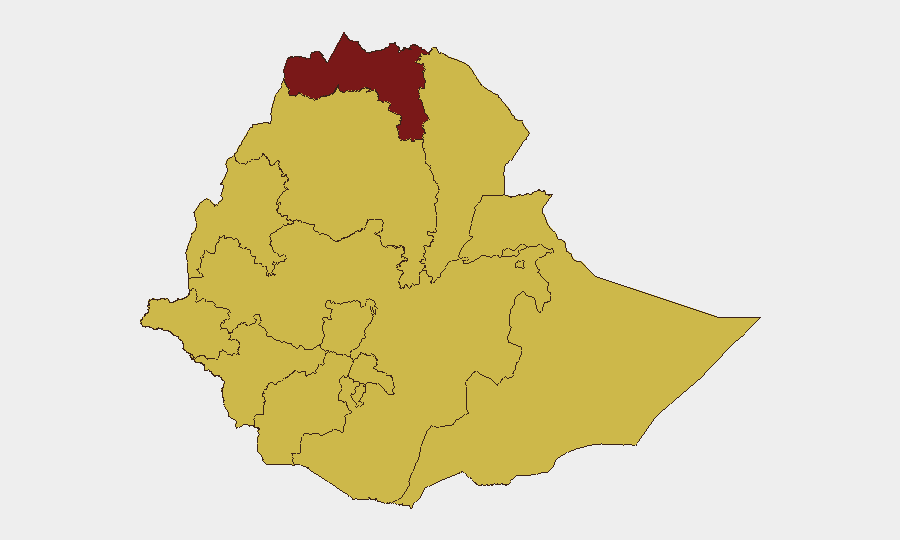
Situation Summary
Ethiopia remains the 13th highest-risk country globally (composite threat score 88), driven primarily by ongoing civil conflict and fragmentation across multiple regions. No independently verified security incidents meeting professional cross-source corroboration standards have been reported in the last 24–48 hours; however, the underlying structural instability across Tigray, Addis Ababa, Amhara, Afar, and Somali regions persists. Recent event signals include arrest/detention activity, a cross-border assassination (Saudi–Ethiopian), and government statements targeting media and companies, indicating elevated political tension and enforcement activity. Concurrent public-health alerts (Marburg virus, malaria) add secondary operational risk to movement and personnel deployment.
Key Developments
- 2026-08-01 · Arrest/Detention incident (location and details under verification): Government enforcement activity recorded; specific location and personnel numbers not yet independently confirmed by multiple sources.
- 2026-08-01 · Assassination event (Saudi vs. Ethiopian actors): Cross-border security incident with diplomatic and bilateral implications; operational context for nationals or assets tied to either jurisdiction requires monitoring.
- 2026-07-31 · Government statement (Ethiopia vs. Media): Official statement signaling constraint on press freedom and potential increased scrutiny of information flows; relevant to corporate communications and staff safety briefings.
- 2026-07-31 · Government statement (Ethiopia vs. Companies): Official statement affecting private-sector operations; compliance and regulatory environment tightening noted.
- 2026-07-31 · Public statement (Africa vs. Companies): Broader continental signal regarding company liability or operational standards; Ethiopia-specific implications under clarification.
- Marburg virus disease alerts (recent, location TBD): Active public-health incident(s) reported; affects personnel health protocols, medical-evacuation planning, and movement restrictions in affected areas.
- Malaria alerts (recent, ongoing): Seasonal vector-borne disease activity; standard mitigation applies.
Note: No discrete armed clashes, mass protests, infrastructure disruptions, or major crime incidents with verified timestamps in the last 24–48 hours meet professional reporting thresholds. Structural conflict and armed-group activity in Tigray, Amhara, and Oromia continue on a longer timeline (weeks to months); these are tracked as ongoing risk drivers, not current incidents.
Highest-Risk Areas
Tigray remains the single highest-risk state (91.5) due to residual conflict, displacement, and weak state authority. Addis Ababa (69.6) presents acute risk from political enforcement, protest potential, and criminal activity in an urban, high-density environment where international personnel and assets concentrate. The secondary tier—Amhara, Afar, Benishangul-Gumuz, Somali, and Gambela (all 61.5)—reflects ongoing armed-group presence, inter-communal violence, and limited government control, particularly along borders and remote areas. Oromia's uniform rating reflects both its size and persistent low-intensity conflict dynamics. For corporate operations, Addis Ababa's combination of political instability and high personnel density requires most active monitoring; Tigray and border regions demand restricted access and contingency planning.
How GeoBit Would Assist
Teams should activate AOI (Area-of-Interest) Monitoring & Early Warning on Addis Ababa, Tigray, and key operational sites to detect arrest sweeps, protest activity, or infrastructure disruptions in real time. Intel Sweep (news, X/Twitter OSINT, multi-language feeds) and Sentiment & Temporal Analysis will track government messaging, media constraints, and company-sector directives. Routing & Network Analysis supports alternative-route planning should primary transit or supply corridors be disrupted by conflict or checkpoints. Health & Environmental feeds integrate Marburg and malaria alerts into personnel movement and medical-readiness briefings.
7-Day Outlook
Political enforcement activity and media/company regulation signals suggest tightening state control rather than imminent large-scale conflict escalation. Marburg virus and malaria case trends will determine personnel movement flexibility. No major shift in regional instability anticipated in the next 7 days, but isolated incidents (arrests, clashes in peripheral zones, disease case clusters) remain probable; continuous monitoring is essential.
Highest-Risk Areas — Ranked
| # | State / Region | Risk |
|---|---|---|
| 1 | Tigray | 91.5 |
| 2 | Addis Ababa | 69.6 |
| 3 | Amhara Region | 61.5 |
| 4 | Afar Region | 61.5 |
| 5 | Benishangul-Gumuz Region | 61.5 |
| 6 | Somali Region | 61.5 |
| 7 | Gambela Region | 61.5 |
| 8 | South West Ethiopia Peoples | 61.5 |
| 9 | South Ethiopia Regional State | 61.5 |
| 10 | Central Ethiopia Regional State | 61.5 |
| 11 | Oromia Region | 61.5 |
| 12 | Sidama | 61.5 |
Sources
Previous Daily Briefs
A new Ethiopia brief is written every day — each with its own risk map and downloadable CSV. Here's the last week; use the calendar to go further back.
📅 Browse every day by calendar →
Highlighted days have a brief. Tap a day for that day's map & analysis, or “csv” for that day's dataset ($5).
Atlas — our AI intelligence desk — emails them this snapshot personally. Nothing else, no list.