Situation Summary
India's overall threat environment remains moderate (rank 18 globally, composite score 68), but acute security volatility has spiked in the past 48 hours across multiple domains: student-led civil unrest linked to exam integrity allegations, a ceasefire violation on the Pakistan border, maritime risks to Indian nationals in the Black Sea, and industrial accidents with mass casualties. Delhi dominates the sub-national risk landscape, driven by centralized political sensitivity and protest activity, while Bihar and West Bengal show elevated instability tied to civil disorder and law enforcement response. The convergence of these incidents suggests elevated operational risk for corporate and NGO personnel through early August.
Key Developments
- Siwan district, Bihar – July 27: Student-led protests over alleged NEET-UG 2026 paper leak turned violent during a statewide bandh; police fired on crowds, leaving three students with bullet injuries. Stone-pelting and attacks on security personnel preceded the shooting.
- Central Delhi – July 26–27: A monsoon-triggered building collapse killed at least four people. Delhi Metro subsequently closed 11+ central stations "until further notice" and police dismantled protest encampments near Parliament, severely disrupting commuter networks and signaling ongoing sensitivity to large gatherings.
- India–Pakistan border (ceasefire line) – July 27: Pakistani forces allegedly violated a newly agreed DGMO-level ceasefire (effective 17:00 IST on July 26). Both sides issued contradictory compliance statements; military alert levels remain elevated across land, air, and sea domains.
- New Delhi – July 27: Ministry of External Affairs summoned a senior Russian diplomat after a missile/drone strike on merchant vessel MV Golden Leo (departing Odesa) killed four Indian nationals. Indian authorities issued a safety advisory to Indian seafarers and crewing firms operating in the Black Sea, citing heightened risk from missile and drone attacks.
- Samardung village, Sikkim – July 27: A methane gas explosion and tunnel collapse at an NHPC-operated Teesta hydro project killed at least 13 workers and trapped 17 others. Hazardous gas conditions have complicated rescue operations and pose ongoing risk to responders and nearby critical infrastructure.
- Bilaspur district, Himachal Pradesh – July 27: A private bus carrying pilgrims overturned near Shahtalai, killing two and injuring seven, reflecting localized travel safety risks on hilly routes during monsoon season.
Highest-Risk Areas
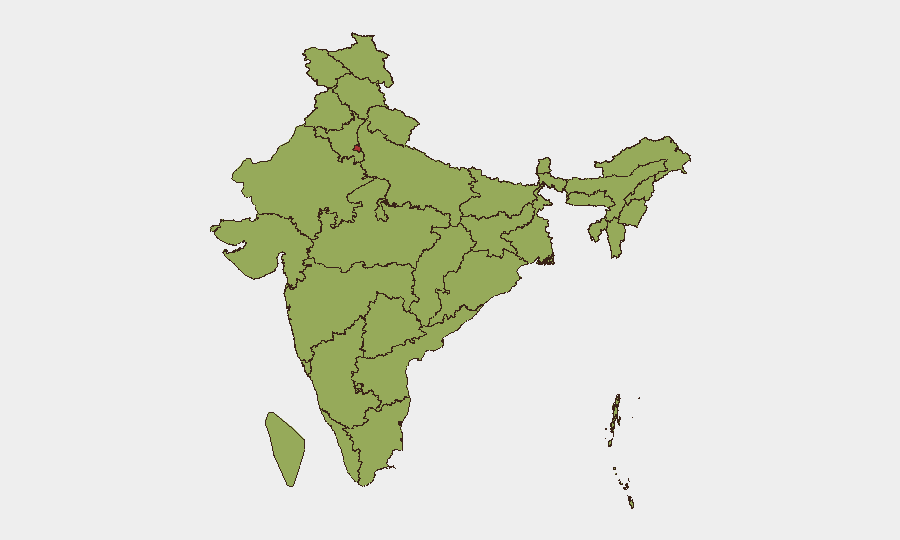
Delhi (risk 77.7) dominates the ranking, driven by centralized government sensitivity, concentrated student activism, monsoon-related infrastructure failures, and transport network disruption. West Bengal and Bihar (59.4 and 59.0 respectively) show elevated risk from civil unrest tied to education-sector grievances and police response intensity. Jammu and Kashmir and Maharashtra round the top five, reflecting longstanding border and urban security dynamics. Corporate security teams should prioritize monitoring and contingency planning for operations in Delhi, Bihar, and West Bengal over the next 7–10 days.
How GeoBit Would Assist
Intel Sweep and OSINT fusion would track real-time protest activity, police deployment, and ceasefire compliance statements across social media, official channels, and local news feeds to provide early warning of escalation. AOI Monitoring with alerting on Delhi transport hubs, Bihar education centers, and the India–Pakistan border would flag incident onset and disruption spread within 2–4 hours. Routing & Network Analysis would enable security teams to model alternative commute and supply-chain routes around metro closures and bandh-affected regions, while maritime tracking and Black Sea maritime intelligence would support duty-of-care briefings for personnel with maritime exposure.
7-Day Outlook
Student-led protests are likely to remain active through early August as investigation outcomes emerge; further transport restrictions and police deployments in urban centers should be anticipated. Border military posture is unlikely to de-escalate rapidly absent high-level diplomatic intervention. Monsoon-related infrastructure and travel incidents will persist through at least mid-August.
Highest-Risk Areas — Ranked
| # | State / Region | Risk |
|---|---|---|
| 1 | Delhi | 77.7 |
| 2 | West Bengal | 59.4 |
| 3 | Bihar | 59 |
| 4 | Jammu and Kashmir | 54.7 |
| 5 | Maharashtra | 54.4 |
| 6 | Tamil Nadu | 53.1 |
| 7 | Uttar Pradesh | 51.6 |
| 8 | Kerala | 51.2 |
| 9 | Madhya Pradesh | 50.7 |
| 10 | Gujarat | 50.4 |
| 11 | Chhattisgarh | 49.9 |
| 12 | Telangana | 49.6 |
Sources
Previous Daily Briefs
A new India brief is written every day — each with its own risk map and downloadable CSV. Here's the last week; use the calendar to go further back.
📅 Browse every day by calendar →
Highlighted days have a brief. Tap a day for that day's map & analysis, or “csv” for that day's dataset ($5).
Atlas — our AI intelligence desk — emails them this snapshot personally. Nothing else, no list.