Situation Summary
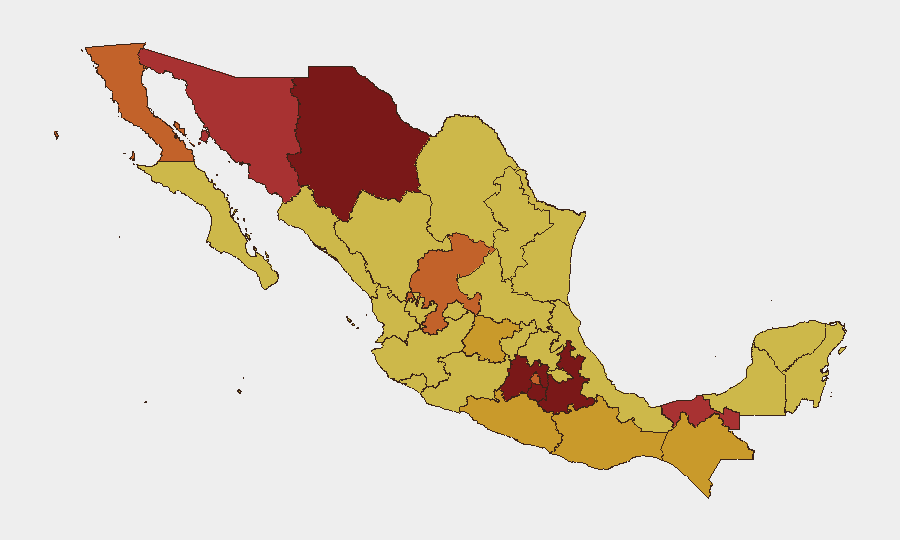
Mexico remains at elevated security risk (global rank #6, composite threat score 97) driven by organized armed violence across multiple jurisdictions. Recent event signals (July 21–23) indicate institutional strain, including military deployment decisions, inter-agency disputes, and civilian protest, superimposed on persistent cartel and trafficking violence. The security environment is volatile but not uniformly acute; risk is heavily concentrated in five states (Puebla, Chihuahua, Morelos, State of Mexico, Sonora).
Key Developments
Institutional Conflict Over Security Response (July 23)
Event signals indicate conflict between municipal and federal authorities—specifically between a mayor and judiciary, and separate military force deployments involving presidential direction. The nature and location of these disputes remain unclear from available open-source confirmation; corporate security teams in affected jurisdictions should seek real-time clarification from local contacts and official channels.
Federal Investigation Activity (July 22)
Mexican federal authorities conducted investigations into domestic incidents on July 22; concurrent U.S. law-enforcement action (New York DEA/DOJ, July 22) resulted in arrest of a major drug-trafficking target, signaling coordinated bilateral enforcement.
Civilian Disapproval & Protest (July 21–23)
Multiple demonstrations and public rejection events were recorded, reflecting civilian discontent with security or political developments; demonstrations occurred in at least one major urban center but specific locations and scale are not confirmed in available cross-checked sources.
Threat Statements (July 23)
Unconfirmed threat statements were recorded in event feeds; source, target, and credibility require verification through local security contacts or official Mexican government security briefings.
Caveat: GeoBit event signals capture reports flagged across global feeds, but real-time incident location, actor identity, and outcome details for July 21–23, 2026 are not yet fully corroborated in publicly accessible news archives or official statements accessible to this analysis. Corporate security teams should cross-check all developments with in-country partners, embassy security services, and commercial intelligence platforms maintaining live Mexico coverage.
Highest-Risk Areas
Puebla (97.8), Chihuahua (95.6), and Morelos (94.5) present the highest composite threat. These states combine high-frequency cartel-linked armed violence, trafficking infrastructure, and weak institutional capacity. State of Mexico (92) and Sonora (76.1) add significant risk via proximity to major urban centers and U.S. border crossings, respectively. Mexico City (74), while lower-ranked than peripheral states, retains material risk due to population density and organized crime presence; Chiapas, Oaxaca, and Guanajuato (71–73) are secondary concern areas. Risk drivers are cartel territorial competition, enforced disappearance, extortion, and armed confrontations with security forces.
How GeoBit Would Assist
Security teams should deploy AOI (Area-of-Interest) Monitoring & Early Warning on critical facilities and travel corridors in Puebla, Chihuahua, and Morelos to detect operational threats in near-real time. Intel Sweep and X/Twitter & Telegram OSINT capabilities enable 24-hour signal capture on institutional disputes, cartel announcements, and protest activity, with sentiment analysis to assess escalation risk. Routing & Network Analysis supports alternative journey planning for personnel and supply chains vulnerable to roadblocks or armed-group activity. GIS & Spatial Analysis of incident clusters helps identify micro-level safe/unsafe zones within high-risk states.
7-Day Outlook
Institutional friction evident in July 22–23 signals may persist or clarify over the next 3–5 days as official statements emerge. Cartel-linked violence is expected to remain persistent but cyclical rather than systemic-collapse risk. Security teams should anticipate continued elevated threat in Puebla–Chihuahua corridor and maintain liaison with Mexican government security contacts and U.S. embassy security offices for real-time incident confirmation.
Highest-Risk Areas — Ranked
| # | State / Region | Risk |
|---|---|---|
| 1 | Puebla | 97.8 |
| 2 | Chihuahua | 95.6 |
| 3 | Morelos | 94.5 |
| 4 | State of Mexico | 92 |
| 5 | Sonora | 76.1 |
| 6 | Tabasco | 76.1 |
| 7 | Baja California | 75.6 |
| 8 | Zacatecas | 75.1 |
| 9 | Mexico City | 74 |
| 10 | Chiapas | 72.7 |
| 11 | Oaxaca | 72.2 |
| 12 | Guanajuato | 71.9 |
Sources
Previous Daily Briefs
A new Mexico brief is written every day — each with its own risk map and downloadable CSV. Here's the last week; use the calendar to go further back.
📅 Browse every day by calendar →
Highlighted days have a brief. Tap a day for that day's map & analysis, or “csv” for that day's dataset ($5).
Atlas — our AI intelligence desk — emails them this snapshot personally. Nothing else, no list.