Situation Summary
Pakistan remains at elevated composite threat level (global rank #24, score 66) driven primarily by active border conflict and insurgent operations. The last 48 hours have seen significant counter-terrorism sweeps in Balochistan and Khyber Pakhtunkhwa yielding reported militant casualties, alongside a targeted attack on a former political figure's convoy in Kashmir and widening political tensions over constitutional governance. Infrastructure disruptions (monsoon flooding, fuel-supply friction) and ongoing India–Pakistan airspace restrictions add operational friction to the security landscape.
Key Developments
- Balochistan (unspecified districts) – 22 July 2026
Security forces reported killing 10 militants and arresting two female suicide bombers in intelligence-based operations; cumulative militant casualty toll since 5 July stands at 117, indicating sustained counter-terrorism pressure.
- Bannu district, Khyber Pakhtunkhwa – 21–22 July 2026
Military reported 24 militant deaths over a 24-hour period in intelligence operations targeting Pakistani Taliban and allied groups; operations followed recent vehicle-borne suicide bombing and police assaults in the area.
- Rawalakot–Tain Dhalkot area, Azad Jammu & Kashmir – 22 July 2026
A guard was killed in a targeted shooting attack on the convoy of former AJK Prime Minister Sardar Tanveer Ilyas; motive and perpetrators remain unclear as of reporting.
- Pakistan–India Airspace corridor – 22 July 2026 (announcement)
Government extended existing airspace closure for Indian airlines and India-registered aircraft by one month, maintaining overflight restrictions and reflecting ongoing bilateral aviation-security tensions.
- Lahore, Punjab – 22 July 2026
Monsoon flooding caused at least one fatality (electrocution) and disrupted urban infrastructure and travel in low-lying neighborhoods; drainage system weaknesses exposed.
- Nationwide fuel sector – 22 July 2026
Petrol pump owners withdrew planned strike after government assurances on profit margins and a two-week pricing trial, averting immediate fuel-supply disruption.
- National political arena – Islamabad – 22 July 2026
PPP leader Bilawal Bhutto Zardari publicly accused PML-N of pursuing constitutional amendment to allow Nawaz Sharif to become AJK prime minister, escalating political rhetoric around Kashmir governance.
Highest-Risk Areas
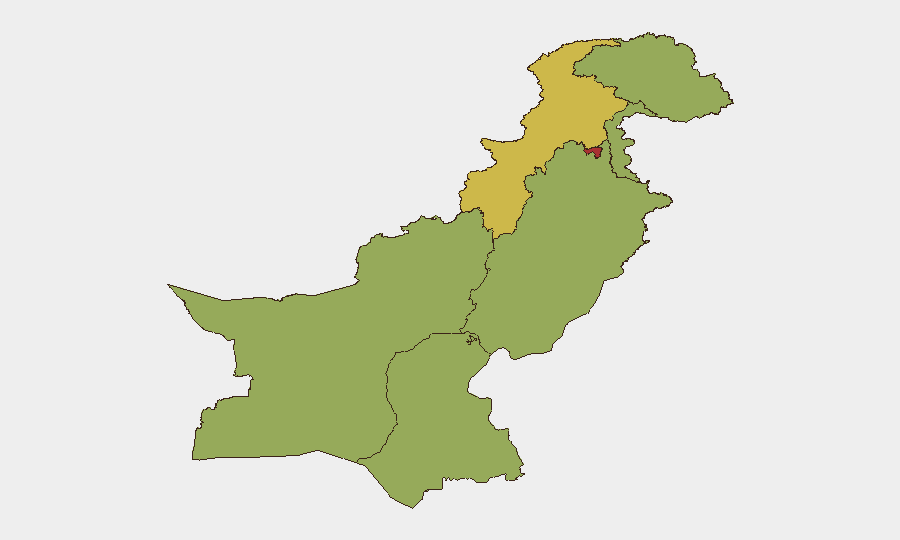
Islamabad Capital Territory (76.1) ranks highest, reflecting political instability and proximity to contested Kashmir. Khyber Pakhtunkhwa (61.1) remains the second-highest-risk region due to persistent Pakistani Taliban and allied insurgent operations (as evidenced by the Bannu casualty toll); Punjab (56.5) faces lower but material risk from urban unrest and sectarian tensions. Balochistan (50.2), despite ranking fifth overall, is experiencing intense counter-terrorism operations with 117 reported militant deaths since early July, indicating an active operational environment. All rankings reflect the cumulative weight of border conflict, insurgency, political instability, and sectarian factors.
How GeoBit Would Assist
Security teams monitoring Pakistan would employ AOI Monitoring & Early Warning to track Balochistan and Khyber Pakhtunkhwa for militant activity clusters; Conflict & Military capabilities (force structure, battle mapping) to correlate reported military operations with ground reality; and Network & Actor Analysis combined with OSINT (X/Telegram feeds, multi-language search) to identify emerging actor statements, grievances, and operational signalling. Routing & Network Analysis supports alternative journey planning around Bannu, Kashmir, and flooding-affected areas.
7-Day Outlook
Counter-terrorism operations in Balochistan and KP are expected to persist, with increased risk of retaliatory attacks by targeted groups. Political friction over Kashmir governance and constitutional maneuvering may intensify rhetoric but is unlikely to trigger immediate street mobilization. Monsoon season will continue to pose localized infrastructure and travel risks, particularly in Punjab; airspace restrictions and bilateral tensions remain in force.
Highest-Risk Areas — Ranked
| # | State / Region | Risk |
|---|---|---|
| 1 | Islamabad Capital Territory | 76.1 |
| 2 | Khyber Pakhtunkhwa | 61.1 |
| 3 | Punjab | 56.5 |
| 4 | Sindh | 53 |
| 5 | Balochistan | 50.2 |
| 6 | Gilgit-Baltistan | 46.1 |
| 7 | Azad Kashmir | 46.1 |
Sources
Previous Daily Briefs
A new Pakistan brief is written every day — each with its own risk map and downloadable CSV. Here's the last week; use the calendar to go further back.
📅 Browse every day by calendar →
Highlighted days have a brief. Tap a day for that day's map & analysis, or “csv” for that day's dataset ($5).
Atlas — our AI intelligence desk — emails them this snapshot personally. Nothing else, no list.