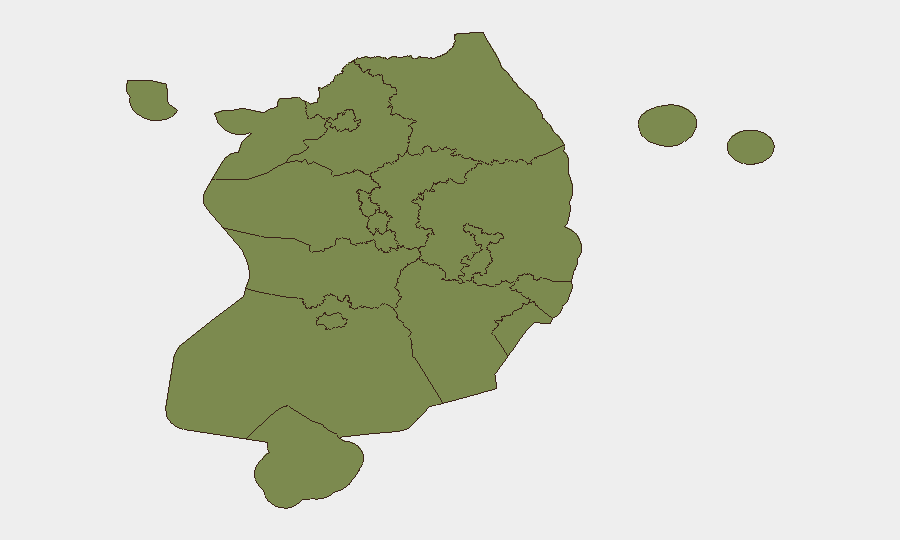
Situation Summary
South Korea remains at global rank #146 with a composite threat score of 5, reflecting manageable but non-trivial security exposure across 118 tracked events. The sub-national risk distribution is highly concentrated, with Seoul and North Chungcheong accounting for the majority of identified threat signals. Recent event clusters (July 10–11) point to political and institutional friction—including military mobilization, arrests, and cross-sector public statements—rather than acute civil violence or infrastructure failure. The overall trajectory suggests elevated political tension without immediate indicators of destabilization.
Key Developments
- 2026-07-11 · Seoul/National – Police conventional military force deployment recorded; scope and trigger unclear from available open sources.
- 2026-07-11 · National (Supreme Court) – High-profile arrest or detention activity; likely political or corporate governance dimension given concurrent industry and presidential statements.
- 2026-07-11 · National (Industry vs. Presidential Office) – Public statement conflict between business sector and executive branch; nature and scale not yet confirmed in accessible reporting.
- 2026-07-11 · National (Legislative) – Parliamentary public statement; timing suggests response to executive or judicial action.
- 2026-07-11 · National (U.S. Government) – U.S. public statement on South Korea; likely diplomatic or alliance-related (standard USFK/Seoul security coordination rhetoric or new concern).
- 2026-07-10 · National – Reduction in inter-Korean relations announced; may signal DPRK activity or Seoul policy shift.
- 2026-07-10 · National (Prosecution/Business) – Investigation activity initiated; corporate or fraud angle suggested.
- 2026-07-10 · Busan – Local disapproval statement; scale and target not specified.
*Note: Detailed triggers and casualties for these events are not yet fully characterized in available open-source material. Confirmation and scope expansion should be sought from Korean national press (Yonhap, KBS, Chosun Ilbo, Korea Herald) within the next 12 hours.*
Highest-Risk Areas
Seoul dominates the risk profile (31.5), driven by political institutions, high-density population, and concentration of government, judiciary, and media assets. North Chungcheong (28.8) shows secondary elevation, though the specific drivers are not clear from current event signals and warrant investigation. Gwangju (24) registers significant risk, historically reflective of labor activism and regional political sentiment. Outside these three, risk drops sharply (Gyeonggi 12.5; all others under 8), suggesting that corporate and government personnel in Daegu, Busan, Daejeon, Incheon, and southern/island regions face lower acute threat.
How GeoBit Would Assist
Teams with staff or assets in South Korea should deploy AOI Monitoring & Early Warning on Seoul and North Chungcheong to track real-time protest, transport disruption, and security force activity; pair with OSINT Fusion (X, Korean news feeds, police/government accounts) to corroborate and triangulate incident scope. Conflict & Military force-structure tracking and Network & Actor Analysis will help clarify the July 10–11 institutional tensions and assess escalation risk. Routing & Network Analysis should be used to pre-stage alternative transit options for Seoul-based personnel should major arteries (metro, highways, Incheon airport access) be affected by political action.
7-Day Outlook
Current signals point to continued political and institutional friction over the next week, with lower probability of kinetic violence or mass civil unrest. DPRK relations warrant close watch given the July 10 reduction statement. If parliamentary or judicial actions accelerate, Seoul and North Chungcheong may see organized labor, student, or opposition demonstrations; corporate and foreign personnel should plan flexibility into travel and meeting schedules through July 20.
Highest-Risk Areas — Ranked
| # | State / Region | Risk |
|---|---|---|
| 1 | Seoul | 31.5 |
| 2 | North Chungcheong | 28.8 |
| 3 | Gwangju | 24 |
| 4 | Gyeonggi | 12.5 |
| 5 | Daegu | 7.2 |
| 6 | Busan | 3.9 |
| 7 | Daejeon | 2.9 |
| 8 | South Jeolla | 2.4 |
| 9 | Gangwon State | 1.9 |
| 10 | Incheon | 1.5 |
| 11 | South Chungcheong | 1.5 |
| 12 | Jeju | 1.5 |
Sources
Previous Daily Briefs
A new South Korea brief is written every day — each with its own risk map and downloadable CSV. Here's the last week; use the calendar to go further back.
📅 Browse every day by calendar →
Highlighted days have a brief. Tap a day for that day's map & analysis, or “csv” for that day's dataset ($5).
Atlas — our AI intelligence desk — emails them this snapshot personally. Nothing else, no list.