Situation Summary
The United Arab Emirates remains in a stable internal security posture as of 22 July 2026, with no verified domestic attacks, civil unrest, or infrastructure disruptions reported in the last 24–48 hours. However, the country faces sustained elevated risk from regional spillover—specifically air-defense readiness, airspace volatility, and maritime threats linked to the ongoing Iran–US strike cycle and confirmed attacks on UAE-operated vessels earlier in the week. Information-warfare pressure is evident, with authorities actively countering false social-media claims of explosions in Dubai and other emirates. The UAE's diplomatic posture remains cautious and de-escalatory, but exposure to neighboring conflicts and maritime interdiction risk remains the primary threat vector for corporate operations.
Key Developments
- Nationwide, 22 July: UAE authorities and state media are actively countering misinformation campaigns promoting false claims of explosions in Dubai and other emirates; the Public Prosecution is investigating rumor-spreading, indicating organized information-warfare targeting but confirming no verified kinetic incidents on UAE soil in the last 24–48 hours.
- UAE airspace and airlines, 22 July: Flight operations across the Gulf remain subject to sudden changes due to the continuing Iran–US strike cycle in neighboring states; carriers and authorities are advising passengers and operators to maintain close monitoring of airline notices and air-defense readiness protocols.
- Strait of Hormuz and UAE maritime routes, 22 July: UAE-associated shipping continues heightened-alert posture along the Strait of Hormuz and Gulf of Oman following confirmed missile hits on UAE-operated tankers earlier in the week; maritime operators are advised to maintain enhanced security and are monitoring Iran-linked threats.
- Dubai urban infrastructure, 22 July: Core urban infrastructure, including transport and logistics networks, continues normal operations with no curfews, closures, or civil unrest; routine economic and transport measures by the Roads and Transport Authority confirm stability in the emirate's public sector.
- Federal diplomatic level, 22 July: UAE leadership continues high-level regional security engagement with foreign counterparts, emphasizing de-escalation and protection of civilian infrastructure; no new UAE military strikes or domestic emergency declarations have been announced in the last 24–48 hours.
- Humanitarian and government services, 22 July: Routine government services, health systems, and aid convoys are operating without newly reported security incidents or crime spikes; public administration remains functional across the federation.
Highest-Risk Areas
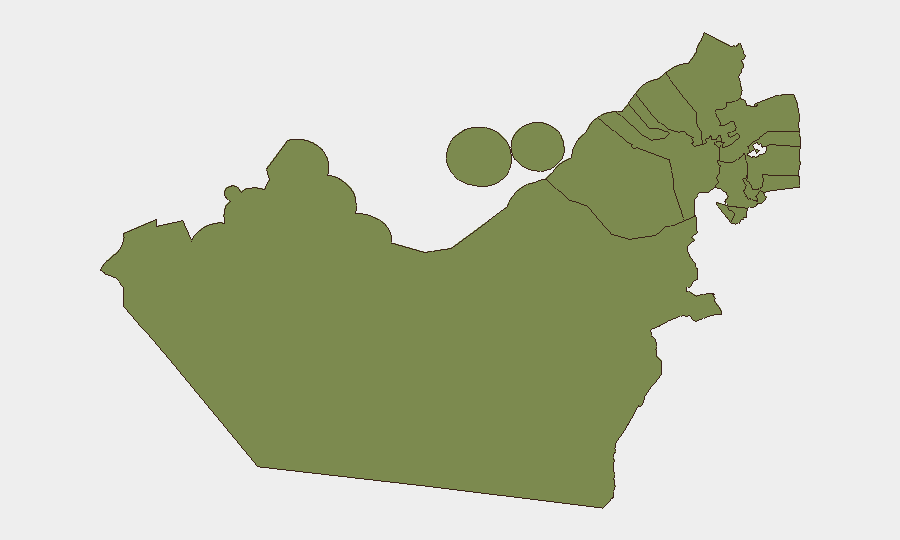
Dubai carries the dominant risk profile (31.3), driven by its role as a major aviation and maritime hub, high concentration of international business, and exposure to airspace volatility and maritime-route interdiction from regional conflicts. Abu Dhabi (3.6) carries secondary risk, reflecting its status as the capital and strategic energy center. The remaining emirates (Fujairah, Sharjah, Ajman, Ras al-Khaimah, Umm al-Quwain; each 1.3–2.0) face lower but non-negligible risk, primarily from maritime exposure and information-warfare spillover. Risk is concentrated in infrastructure nodes (airports, ports, energy facilities) rather than dispersed civil unrest.
How GeoBit Would Assist
Security teams should deploy AOI Monitoring & Early Warning on Dubai's aviation and maritime nodes to detect sudden airspace closures, flight disruptions, or vessel-routing changes with minimal latency. Maritime & Aviation tracking combined with Intel Sweep (X/Twitter, Telegram OSINT, regional news feeds) provides real-time detection of misinformation campaigns, airspace alerts, and Strait of Hormuz traffic anomalies. Economic & Trade and Routing & Network Analysis capabilities enable alternative supply-chain and personnel-movement planning should primary corridors (air, sea) face disruption.
7-Day Outlook
The UAE's internal security environment is expected to remain stable, but airspace volatility and maritime-threat exposure will persist as long as the Iran–US strike cycle continues in neighboring territories. Corporate operations should anticipate periodic flight-schedule disruptions and maintain heightened maritime-security protocols for Gulf-based shipping. De-escalatory diplomatic signals from UAE leadership suggest low probability of direct territorial strikes, but information-warfare intensity may increase.
Highest-Risk Areas — Ranked
| # | State / Region | Risk |
|---|---|---|
| 1 | Dubai | 31.3 |
| 2 | Abu Dhabi Emirate | 3.6 |
| 3 | Fujairah Emirate | 2 |
| 4 | Sharjah Emirate | 1.3 |
| 5 | Ajman Emirate | 1.3 |
| 6 | Ras al-Khaimah | 1.3 |
| 7 | Umm al-Quwain | 1.3 |
Previous Daily Briefs
A new United Arab Emirates brief is written every day — each with its own risk map and downloadable CSV. Here's the last week; use the calendar to go further back.
📅 Browse every day by calendar →
Highlighted days have a brief. Tap a day for that day's map & analysis, or “csv” for that day's dataset ($5).
Atlas — our AI intelligence desk — emails them this snapshot personally. Nothing else, no list.