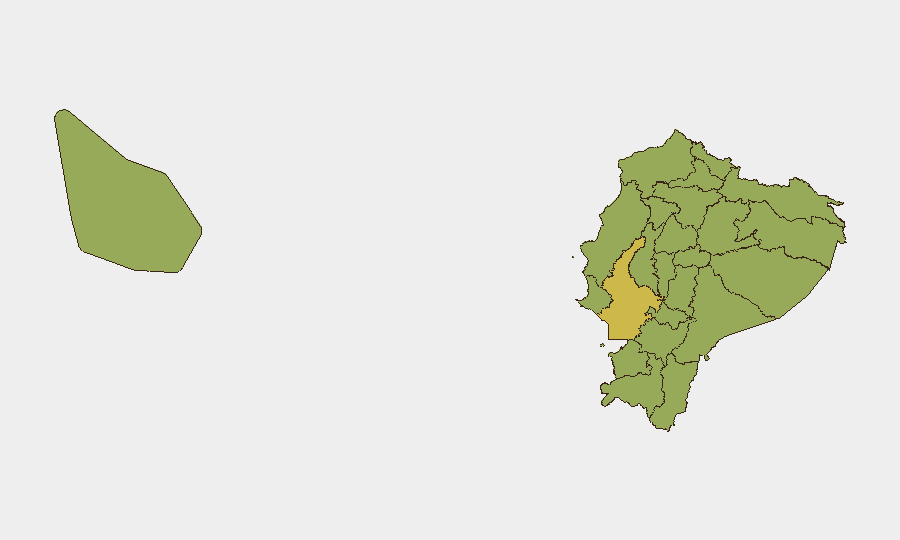
Situation Summary
Ecuador remains at composite threat rank #34 globally (score 59), with organized crime and drug-trafficking violence as primary drivers. The security picture is marked by institutional tension rather than acute escalation: concurrent government operations targeting corruption in health, education, and judiciary sectors are creating friction between executive and institutional actors, while localized criminal violence persists in coastal and border provinces. The past 24–48 hours show a "quiet" macro-level period with no mass-casualty incidents, but sustained investigative and enforcement activity across multiple sectors signals active state response to embedded institutional and criminal challenges.
Key Developments
- National: Health-sector purge (22–23 July 2026). Government intelligence agents deployed across public health institutions to investigate corruption networks. Indicates potential disruption to health services and reflects state-institution friction with political-control implications.
- National: Prosecutor's office raid (22–23 July 2026). Interior Ministry raided a provincial prosecutor's office following a formal complaint regarding alternative measures granted to an alleged *Chone Killers* gang leader. Escalates executive–judiciary confrontation over organized-crime case handling and legal certainty.
- National: Higher-education security intervention (22 July 2026). Interior and Education ministries, with National Police, initiated coordinated security operations in 37 universities and institutes across 8 provinces. Reflects heightened surveillance and security posture in education sector; operational rationale and scope remain partially unclear.
- Guayaquil/Guayas: Counter-terrorism arrests (overnight 21–22 July 2026). Police conducted ~14 coordinated raids in northern Guayaquil and Yaguachi, arresting four individuals linked to a terrorist network allegedly responsible for the September 2025 La Roca car bombing. Confirms ongoing counter-gang activity in Ecuador's highest-risk province.
- Manabí Province: Bodies discovered (22 July 2026). Four bodies recovered in mountainous terrain. Indicates persistent lethal violence and possible organized-crime activity in the second-ranked risk province; attribution and cause remain unconfirmed.
- National: Political-corruption allegations (posted within 24–48h). Media reports allege public funds were diverted to finance ruling party's pre-election campaign. At allegation stage; potential trigger for legal action, protest, or opposition mobilization.
Highest-Risk Areas
Guayas Province (risk 70.9) dominates the sub-national ranking and is the principal driver of Ecuador's national threat score, reflecting sustained drug-trafficking infrastructure, prison-linked violence, and gang competition in and around Guayaquil. Manabí Province (41.8) ranks second, with recent discovery of bodies underlining active organized-crime presence. Border and Amazonian provinces (Napo, Sucumbíos, Orellana, Carchi, Esmeraldas) cluster at 40.9, reflecting trafficking routes and armed-group activity linked to Colombian conflict spillover. Pichincha (containing Quito, the capital) also scores 40.9, indicating institutional and criminal risk in the political center.
How GeoBit Would Assist
Security teams would deploy AOI Monitoring & Early Warning on Guayaquil, port facilities, and border crossings to flag emerging gang/trafficking activity; Network & Actor Analysis to map relationships between detained individuals and broader criminal structures; and Intel Sweep (OSINT feeds, Telegram/X monitoring, multi-language news fusion) to detect institutional tensions, protest mobilization, or organized-crime escalation before operational impact. GIS & Spatial Analysis can correlate body-discovery sites and raid locations with known gang territories to refine targeting and travel-route safety.
7-Day Outlook
Institutional investigations (health, education, judiciary) are likely to continue and generate friction between executive and independent bodies, with potential legal and political fallout. Criminal violence in Guayas and Manabí provinces will persist at endemic levels. No imminent system-wide rupture or mass-casualty event is signaled, but localized incidents and enforcement operations should be monitored for secondary escalation or collateral impact on business, staff, and supply chains.
Highest-Risk Areas — Ranked
| # | State / Region | Risk |
|---|---|---|
| 1 | Guayas Province | 70.9 |
| 2 | Manabí Province | 41.8 |
| 3 | Napo Province | 41.4 |
| 4 | Sucumbíos Province | 40.9 |
| 5 | Orellana Province | 40.9 |
| 6 | Galápagos | 40.9 |
| 7 | Esmeraldas Province | 40.9 |
| 8 | Carchi Province | 40.9 |
| 9 | Imbabura Province | 40.9 |
| 10 | Santo Domingo de los Tsáchilas Province | 40.9 |
| 11 | Pichincha Province | 40.9 |
| 12 | Santa Elena Province | 40.9 |
Sources
Previous Daily Briefs
A new Ecuador brief is written every day — each with its own risk map and downloadable CSV. Here's the last week; use the calendar to go further back.
📅 Browse every day by calendar →
Highlighted days have a brief. Tap a day for that day's map & analysis, or “csv” for that day's dataset ($5).
Atlas — our AI intelligence desk — emails them this snapshot personally. Nothing else, no list.