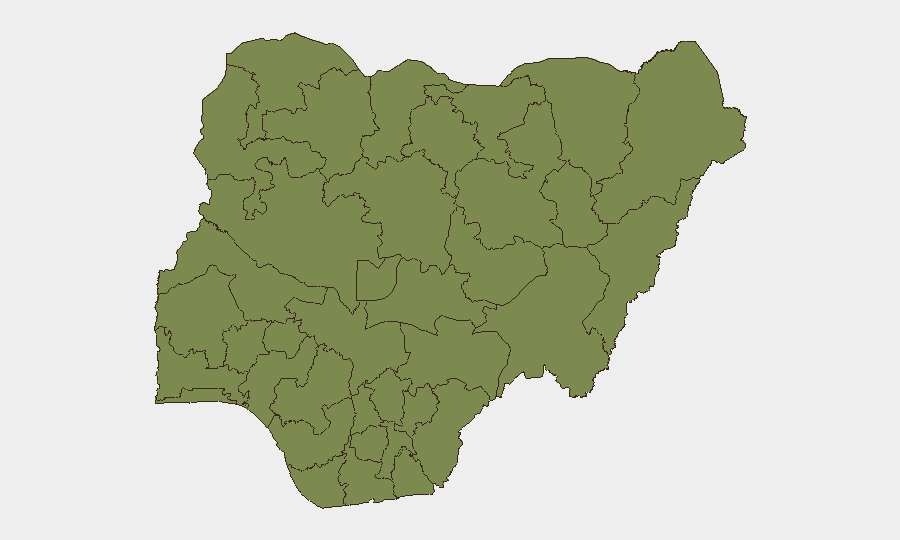
Situation Summary
Nigeria remains at composite threat rank #32 globally, with 488 tracked events and a composite score of 65. The security picture is characterized by concurrent waves of coordinated non-state armed group violence in the north-central belt (Benue, Plateau, Niger) and nationwide police counter-operations against kidnapping, banditry and armed robbery. Oyo State dominates the sub-national risk ranking at 31.8, followed by Lagos (22.7) and Zamfara (16.9), reflecting concentrated threat activity across urban centers and ungoverned spaces. The trajectory shows sustained operational tempo from both threat actors and security forces, with recent incidents indicating escalation in lethality and geographic spread.
Key Developments
- Otukpo-Nobi, Benue State (12 July, early morning): Armed attackers killed 8–10 residents and injured 5 in a coordinated assault on a community following funeral rites; houses and vehicles destroyed. Local and international monitors report additional missing persons.
- Wereng-Camp and Kum, Plateau State (11–12 July, overnight): Suspected bandit/terrorist gangs killed 9 members of a single family, including a three-month-old child, in coordinated attacks on two Berom communities; at least one survivor critically wounded.
- Borgu LGA, Niger State (9–11 July, multiple sites): Suspected terrorists conducted four separate attacks across Kpenya, Dekara, Pissa and the Dakera-Babanna road, killing 9 total—including 4 from an IED strike on a vehicle and 3 prominent community figures (former school principal, traditional title holder).
- Nationwide police operations (mid-July, ongoing): Nigeria Police Force reported coordinated sweeps across 11 states, rescuing 12 kidnap victims (including 7 unharmed in a foiled Imo State kidnapping), arresting 15 suspects, and seizing firearms and vehicles; manhunts for fleeing suspects continue.
- Bauchi, Niger, Kwara, Kebbi, Nasarawa, Ogun States (last 24 hours): Intelligence-led police operations pursued suspected kidnappers, cattle rustlers, and armed robbery networks; active investigations into multiple residential robberies and abductions reflect federal counter-kidnapping momentum.
- Bayelsa State (last 24 hours): Police arrested a suspect in connection with alleged theft of government property valued at approximately ₦500 million.
Highest-Risk Areas
Oyo State's risk score of 31.8—nearly 40% higher than Lagos—points to acute violence concentration in Nigeria's southwestern urban-rural interface. Lagos (22.7) remains a major financial and logistics hub where police operations and crime intersect with civilian density. The north-central belt (Benue, Plateau, Niger; risk scores 9.4–16.9) is experiencing the most acute lethal threat from coordinated non-state armed groups—driven by farmer-herder conflict, banditry and suspected terrorism—with recent incidents showing intentional targeting of communities and use of IEDs. Zamfara (16.9) and Kaduna (12.7) reflect ongoing bandit and kidnapping networks in the northwest. Together, these five jurisdictions account for the majority of tracked violent events and fatalities.
How GeoBit Would Assist
Security teams should deploy AOI Monitoring & Early Warning on Benue, Plateau and Niger States to detect attack patterns and provide 24–48-hour advance alerts before coordinated strikes. Network & Actor Analysis and OSINT fusion capabilities would track suspected bandit and terrorist group communications, movement patterns and recruitment across Telegram, X and local channels to anticipate next targets. Routing & Network Analysis tools enable security operations to identify safer corridors and alternative routes for personnel and supply convoys in high-risk zones, while Conflict & Military tracking monitors police operations tempo and suspected armed group force posture to inform duty-of-care decisions.
7-Day Outlook
Lethal attacks by non-state armed groups are likely to continue in the north-central belt with 5–7 day intervals; police counter-operations will maintain tempo but are unlikely to achieve decisive disruption without reinforced intelligence-fusion and inter-agency coordination. Urban centers (Lagos, Oyo, FCT) may see secondary spillover from banditry and kidnapping networks as police pressure drives displacement northward.
Highest-Risk Areas — Ranked
| # | State / Region | Risk |
|---|---|---|
| 1 | Oyo State | 31.8 |
| 2 | Lagos State | 22.7 |
| 3 | Zamfara State | 16.9 |
| 4 | Kaduna State | 12.7 |
| 5 | Federal Capital Territory | 11.7 |
| 6 | Katsina State | 11.6 |
| 7 | Borno State | 9.4 |
| 8 | Kogi State | 6.7 |
| 9 | Abia State | 5.5 |
| 10 | Kano State | 5.4 |
| 11 | Kwara State | 4.9 |
| 12 | Anambra State | 3.9 |
Sources
Previous Daily Briefs
A new Nigeria brief is written every day — each with its own risk map and downloadable CSV. Here's the last week; use the calendar to go further back.
📅 Browse every day by calendar →
Highlighted days have a brief. Tap a day for that day's map & analysis, or “csv” for that day's dataset ($5).
Atlas — our AI intelligence desk — emails them this snapshot personally. Nothing else, no list.