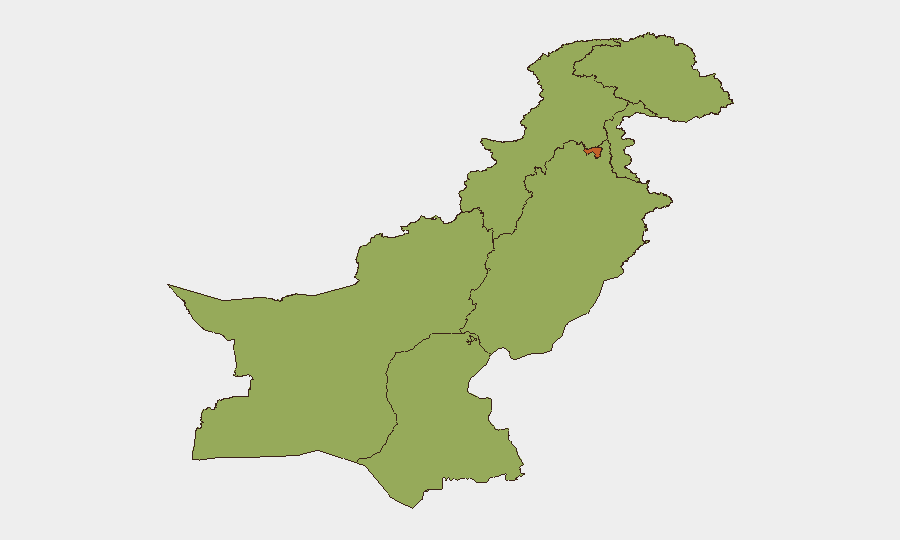
Situation Summary
Pakistan remains at persistently elevated threat level (global rank #29, composite score 64), driven primarily by border conflict and sustained militant activity in Balochistan and Khyber Pakhtunkhwa. The last 48 hours have seen a marked spike in violence—including counter-terror operations by security forces and at least three coordinated or near-simultaneous attacks on civilian transport and infrastructure along the Quetta–Karachi corridor. The trajectory suggests active tactical escalation rather than strategic de-escalation; militant networks continue to operate with operational capacity despite ongoing counter-insurgency sweeps.
Key Developments
- Surab district, Balochistan (22–23 July): Security forces killed seven militants and recovered weapons, ammunition, and IEDs during Operation Shaban raids; ISPR statement confirmed action occurred in preceding 48 hours.
- Mastung district, Balochistan (22–23 July): Related Operation Shaban sweep resulted in three terrorist deaths and arrest of two female suicide bombers and one facilitator linked to militant networks; operations completed within 48-hour window prior to 24 July briefing.
- Khadkocha area, National Highway near Quetta, Balochistan (evening 22 July): Armed gunmen opened fire on a Karachi-bound passenger coach, killing three civilians and wounding five; authorities imposed indefinite curfew from 9 pm and launched search operations.
- National Highway bridge, Khadkocha, Balochistan (22 July): Explosion damaged infrastructure on the Quetta–Karachi route on same day as coach attack, indicating potential coordinated or linked operation; provincial authorities responded with heightened security posture.
- Zhob–Karachi corridor, Balochistan (21–22 July): Third attack in three days: unidentified gunmen fired on a vehicle near Mastung, killing one woman and injuring three others including two children, underscoring pattern of repeated strikes on the same transport corridor.
- National security posture (21–22 July): No major large-scale attacks recorded nationally on 20–21 July; threat environment remains controlled but volatile, with counter-terror operations and militant activity continuing in parallel across Khyber Pakhtunkhwa and Balochistan.
Highest-Risk Areas
Islamabad Capital Territory carries the composite highest sub-national risk (75.1), likely reflecting political volatility and potential security service activity; however, operational threat concentration lies in Balochistan (57.8) and Khyber Pakhtunkhwa (59.2), where militant networks maintain active capacity for both coordinated attacks on civilian infrastructure and armed confrontation with security forces. The Quetta–Karachi corridor in Balochistan is demonstrably the acute flashpoint: three attacks in three days on the same route indicate either organized campaign activity or emerging instability along a critical national artery. Punjab (54.3) remains moderately elevated, reflecting spillover risk from northern and western unrest.
How GeoBit Would Assist
Security teams should deploy AOI Monitoring & Early Warning on the Quetta–Karachi National Highway corridor and key Balochistan towns (Surab, Mastung, Khadkocha) to detect attack patterns and curfew zones in near-real time. Conflict & Military battle mapping, Network & Actor Analysis, and multi-language OSINT fusion (Telegram, X, local media cross-reference) enable identification of militant group attribution, claimed responsibility, and operational tempo shifts. Routing & Network Analysis alternatives help duty-of-care teams avoid active threat corridors and plan personnel movement during high-activity periods.
7-Day Outlook
Balochistan will likely remain the primary pressure point over the next week, with Operation Shaban continuing and militant groups potentially responding to recent losses with secondary attacks on transport routes or soft targets. Security force presence should increase on National Highways; civilian travel risk remains elevated. Watch for public statements or claimed responsibility from militant factions that may signal next phase of activity.
Highest-Risk Areas — Ranked
| # | State / Region | Risk |
|---|---|---|
| 1 | Islamabad Capital Territory | 75.1 |
| 2 | Khyber Pakhtunkhwa | 59.2 |
| 3 | Balochistan | 57.8 |
| 4 | Punjab | 54.3 |
| 5 | Gilgit-Baltistan | 47.4 |
| 6 | Sindh | 46.8 |
| 7 | Azad Kashmir | 45.7 |
Sources
Previous Daily Briefs
A new Pakistan brief is written every day — each with its own risk map and downloadable CSV. Here's the last week; use the calendar to go further back.
📅 Browse every day by calendar →
Highlighted days have a brief. Tap a day for that day's map & analysis, or “csv” for that day's dataset ($5).
Atlas — our AI intelligence desk — emails them this snapshot personally. Nothing else, no list.