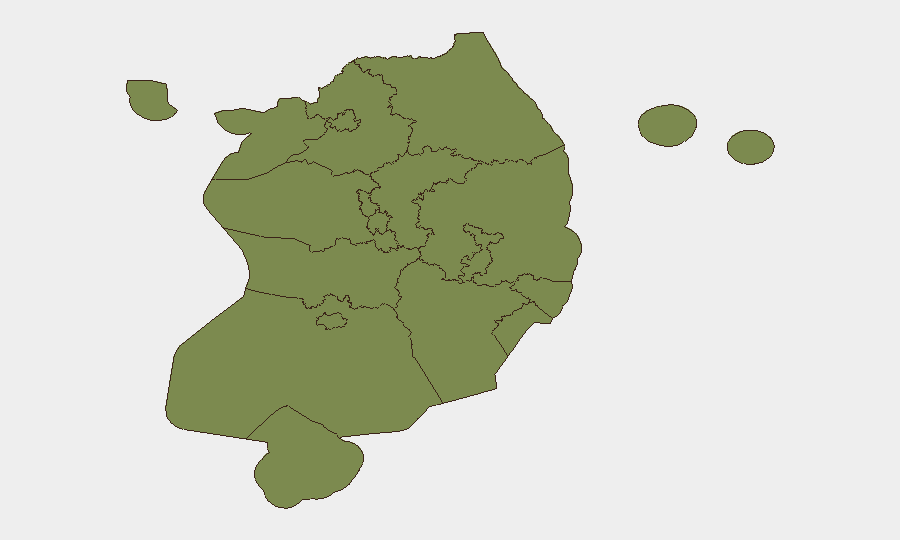
Situation Summary
South Korea remains a stable, low-threat operating environment (global rank #160, composite threat score 4) with no verified large-scale civil unrest, attacks, or infrastructure failures in the past 24–48 hours. Current risk is driven by three distinct vectors: elite-level political-legal instability tied to the ongoing martial law investigation, elevated cyber threats against defense infrastructure, and isolated border incidents in the West Sea. Overall security posture for corporate operations and travel remains sound, though political uncertainty and external maritime exposure warrant monitoring.
Key Developments
- Yeonpyeong Island, Incheon (West Sea / Northern Limit Line) – July 13, 0400 hrs. A South Korean navy seaman missing since the weekend was recovered dead by naval forces near the North Korea maritime border. No hostile action or broader naval clash reported; incident reflects operational hazard in sensitive border waters rather than escalation.
- Seoul Central District Court – July 10–12, 2026. Former senior national security aide Kim Tae‑hyo arrested on charges of insurrection-related activities and alleged involvement in justifying martial law. Arrest warrant cited evidence-destruction concerns; special counsel investigation continues through July 24. Elevates political-legal risk in Seoul and national leadership circles.
- National (Defense Committee, Republic of Korea Navy) – July 12, 2026. Public data released showing 18,951 attempted cyberattacks on South Korean military in the past year—a 31.4% surge year-over-year, with focus on website intrusions to gain admin privileges. Indicates rapidly deteriorating cyber-threat environment against defense infrastructure.
- Korea Exchange – July 13, 2026. KOSPI index fell 8%, breaking below 7,000 for the first time in two months and triggering level-one circuit breaker (20-min trading halt). No concurrent civil unrest reported, but market shock carries potential for secondary political and economic-stability risk.
- Strait of Hormuz (external maritime exposure) – July 12, 2026. Following Iranian blockade and attack on civilian merchant shipping, two South Korean–flagged vessels remain trapped inside the strait amid U.S.–Iran escalation. Direct risk to Korean maritime operators and supply-chain continuity, not domestic security.
Highest-Risk Areas
North Chungcheong (risk 31.5) and Seoul (26.5) dominate the sub-national ranking, together accounting for the majority of tracked threat signals. Seoul's elevation reflects ongoing legal proceedings and political tension around the martial law investigation and senior-official arrests; North Chungcheong's unusually high score warrants verification but may signal localized labor, environmental, or administrative tensions. Remaining provinces and metropolitan areas (Busan, Incheon, Gangwon, Jeju) carry minimal composite risk (1–4 points), indicating threat concentration in the capital region and central provinces.
How GeoBit Would Assist
Corporate security teams should deploy AOI Monitoring & Early Warning on Seoul courts and the National Assembly to track legal proceedings and political signaling in real time. Cyber threat intelligence and network analysis capabilities would support continuous monitoring of defense-sector cyber attack trends and attribution. Maritime tracking would provide live visibility on South Korean–flagged vessel positions in the Strait of Hormuz and alternative routing options to mitigate supply-chain exposure.
7-Day Outlook
Political-legal volatility is expected to persist through late July as the special counsel investigation deadline (July 24) approaches, with potential for additional arrests or court motions. No escalation in street-level unrest or border incidents is anticipated in the near term, though cyber attacks on defense infrastructure will likely continue at elevated tempo. External maritime risk in the Hormuz region remains dependent on U.S.–Iran dynamics and is outside South Korea's direct control.
Highest-Risk Areas — Ranked
| # | State / Region | Risk |
|---|---|---|
| 1 | North Chungcheong | 31.5 |
| 2 | Seoul | 26.5 |
| 3 | Gwangju | 16.1 |
| 4 | Gyeonggi | 12.7 |
| 5 | Busan | 4 |
| 6 | Daejeon | 3 |
| 7 | Incheon | 2 |
| 8 | Gangwon State | 2 |
| 9 | South Jeolla | 2 |
| 10 | South Chungcheong | 1.5 |
| 11 | Jeju | 1.5 |
| 12 | Sejong | 1.5 |
Sources
Previous Daily Briefs
A new South Korea brief is written every day — each with its own risk map and downloadable CSV. Here's the last week; use the calendar to go further back.
📅 Browse every day by calendar →
Highlighted days have a brief. Tap a day for that day's map & analysis, or “csv” for that day's dataset ($5).
Atlas — our AI intelligence desk — emails them this snapshot personally. Nothing else, no list.