Situation Summary
The United Arab Emirates remains internally stable with no confirmed major security incidents, attacks, or civil unrest reported in the past 24–48 hours. However, the country faces elevated contextual risk from regional conflict spillover—particularly Iranian missile activity in the Strait of Hormuz, Houthi drone threats, and US–Iran tensions—alongside active misinformation campaigns targeting Dubai. Daily life continues normally across all seven emirates, but travel, maritime trade, and information environments warrant heightened monitoring.
Key Developments
- UAE Public Prosecution (national, 24–25 July 2026): Launched investigations into false information about alleged explosions in Dubai and issued public warnings against sharing unverified security rumors. This reflects active misinformation-control measures and indicates social-media spread of unfounded reports rather than confirmed incidents.
- Dubai & UAE airspace (23–24 July 2026): Regional conflict monitoring noted heightened vigilance and route adjustments on Gulf air corridors, including some UAE–Saudi flight disruptions, driven by continuing US–Iran and Houthi activity in neighboring airspace and the Strait of Hormuz. UAE airports remain operational.
- Strait of Hormuz maritime traffic (referenced in last 24 hours, incidents from prior days): Security briefs continue to flag Iranian missile strikes on UAE-operated tankers in the southern Strait and Iran's declaration of the waterway as "closed until further notice." This sustained closure remains an active maritime security and energy-export risk for UAE shipping and trade.
- Dubai Roads & Transport Authority (24 July 2026): Approved a five-year "Soft Mobility Plan" covering 25 residential areas and 63 public stations. This infrastructure development will affect urban mobility patterns but does not stem from a security incident.
- All emirates (23–24 July 2026): Social and local media round-ups describe calm conditions across Dubai and the broader UAE with no major accidents, emergencies, or security events reported by official authorities. Daily life continues normally.
Highest-Risk Areas
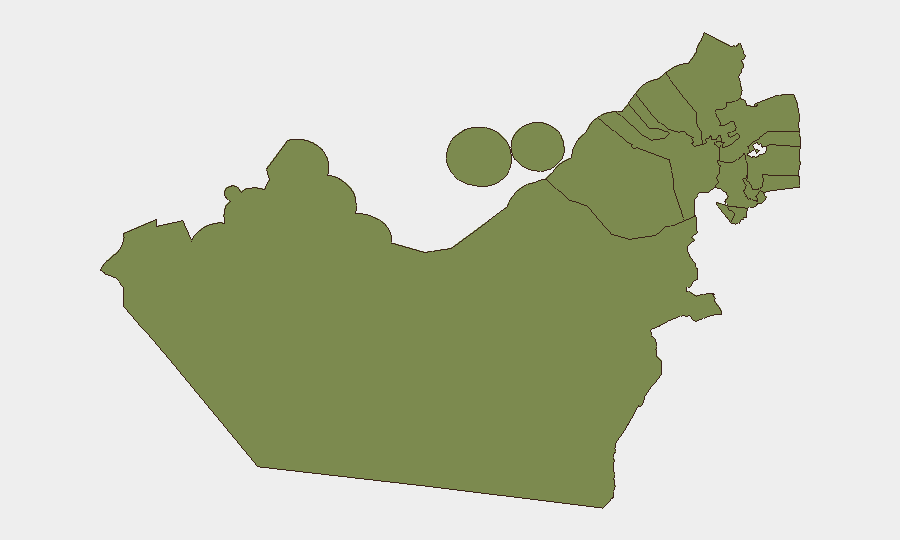
Dubai significantly outranks other emirates with a composite risk score of 31.3, driven by its status as a major international hub, maritime chokepoint exposure, and current misinformation activity. The remaining six emirates—Sharjah, Ajman, Ras al-Khaimah, Fujairah, Umm al-Quwain, and Abu Dhabi—cluster at risk score 1.3, reflecting the country's overall stability. Risk concentration in Dubai reflects its role as a commercial, aviation, and shipping nexus where regional threats and information-security pressures are most visible, rather than endemic internal instability.
How GeoBit Would Assist
Corporate security and risk teams should deploy AOI Monitoring & Early Warning on Dubai, UAE airports, and the Strait of Hormuz to track regional conflict spillover in real time. Intel Sweep, multi-language OSINT, and Telegram/X monitoring enable rapid detection and corroboration of misinformation campaigns—critical for protecting communications and reputation. Maritime & Aviation tracking combined with Routing & Network Analysis allow duty-of-care teams to monitor alternative travel corridors and supply-chain routes around disrupted Gulf shipping lanes.
7-Day Outlook
No major escalation of internal UAE security incidents is expected; the country's security apparatus and stable governance environment support continued low domestic threat levels. However, regional conflict intensity—particularly Iranian threats to shipping, Houthi drone activity, and US military posture—will sustain elevated travel and maritime disruption risk through the near term. Misinformation campaigns may continue; teams should rely on official UAE channels and verified intelligence for operational decisions.
Highest-Risk Areas — Ranked
| # | State / Region | Risk |
|---|---|---|
| 1 | Dubai | 31.3 |
| 2 | Sharjah Emirate | 1.3 |
| 3 | Ajman Emirate | 1.3 |
| 4 | Ras al-Khaimah | 1.3 |
| 5 | Fujairah Emirate | 1.3 |
| 6 | Umm al-Quwain | 1.3 |
| 7 | Abu Dhabi Emirate | 1.3 |
Sources
Previous Daily Briefs
A new United Arab Emirates brief is written every day — each with its own risk map and downloadable CSV. Here's the last week; use the calendar to go further back.
📅 Browse every day by calendar →
Highlighted days have a brief. Tap a day for that day's map & analysis, or “csv” for that day's dataset ($5).
Atlas — our AI intelligence desk — emails them this snapshot personally. Nothing else, no list.