Situation Summary
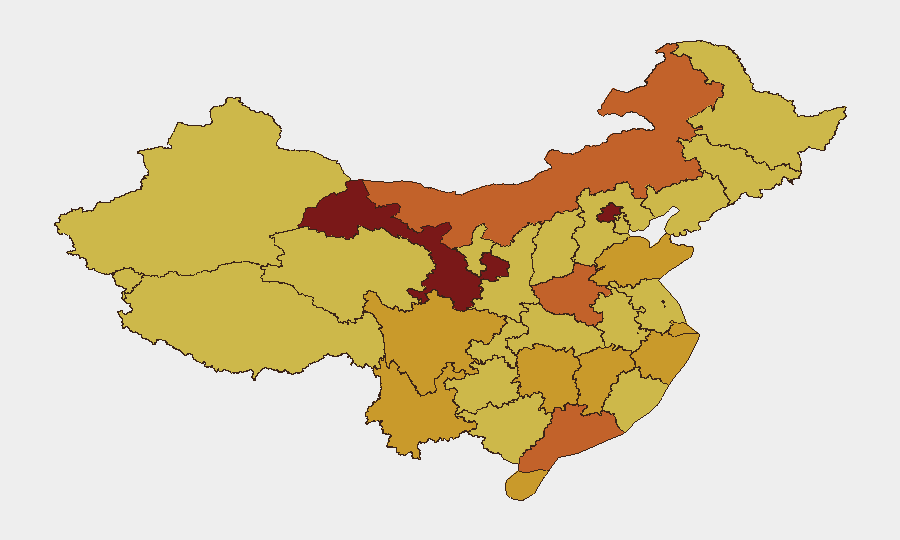
China remains ranked #5 globally in composite threat (score 100; 1,110 tracked events), with elevated volatility across civil, military, and regulatory domains. Recent 48-hour activity spans industrial disasters, national security enforcement, infrastructure strain from extreme weather, and regional military signaling. Risk remains concentrated in northwestern (Gansu) and capital-region jurisdictions, with secondary concentration in economically vital coastal and central provinces. The security trajectory reflects compounding pressure from climate-driven infrastructure stress, tightening enforcement posture, and underlying civil-military coordination friction.
Key Developments
- Sichuan Province (Meigu County, Liangshan) – Wednesday, July 15, 2026: Long-distance bus plunged into river, killing 6 and injuring 11. Emergency response ongoing; localized road and transit disruption reported.
- Hong Kong – Late Wednesday, July 15, 2026: National security police arrested five booksellers under sedition provisions. Operation targets politically sensitive material distributor; reflects sustained enforcement of national security statutes post-2020.
- Nationwide Power Grid – Tuesday, July 14, 2026: Electricity load reached record 1.551 billion kilowatts amid heatwave, surpassing previous high from four days prior. National Energy Administration forecasts persistent heat and localized heavy rainfall through mid-week.
- Gansu Province (Dunhuang) – Early to mid-July 2026, reported Wednesday, July 15: Scenic sites implementing cooling measures as temperatures exceed 40°C (reaching 44°C in early July). Operational strain on tourism and visitor health management.
- Eastern and Southern China – Wednesday, July 15, 2026 forecast: Weather authorities issued heavy rainfall alerts for eastern and southern regions. Flash-flood, landslide, and transport-delay risk elevated over 24–72 hours, particularly in low-lying urban zones and key corridors.
- Fujian Province (southeastern) – Within last 48 hours: Factory fire killed 28 workers. Active investigation underway; raises acute labour safety and regulatory enforcement concerns in affected industrial zone.
- South Pacific – Recent (within current cycle): China conducted ballistic missile launch into South Pacific. Draws regional criticism; elevates perception risk for maritime and aviation routes linked to Western Pacific operations.
- Military-Government Signal – July 16, 2026: GeoBit event tracking indicates "disapprove" signal between military and government actors. Specific operational context under analysis; warrants monitoring for policy or command-structure shifts.
Highest-Risk Areas
Gansu (risk 100) leads the sub-national ranking, driven by geographic isolation, infrastructure exposure to extreme weather, and sustained event density. Beijing (94.1) follows, reflecting capital-region regulatory intensity, political sensitivity, and national security enforcement activity. Henan, Guangdong, and Inner Mongolia (73–74 range) represent secondary clusters balancing economic centrality, civil-military presence, and climate/infrastructure vulnerability. The concentration of top-ranked risk in northwestern and coastal-capital zones indicates that threat drivers are geographically heterogeneous: Gansu emphasizes environmental and infrastructure fragility; Beijing and coastal provinces reflect enforcement density and foreign-national footprint.
How GeoBit Would Assist
Organizations with personnel or assets in China should deploy AOI Monitoring & Early Warning on high-risk provinces (especially Gansu, Beijing, Guangdong) to detect localized incidents—transport disruption, labour events, regulatory action—in near-real time. Environmental & Health monitoring coupled with GIS & Spatial Analysis enables tracking of heatwave, rainfall, and flood risk to predict supply-chain and mobility impacts. Network & Actor Analysis and Intel Sweep across multi-language sources and regulatory announcements provide early signal of enforcement escalation or policy shifts affecting foreign nationals and corporate operations.
7-Day Outlook
Extreme weather conditions (heatwave and localized heavy rainfall) will persist through mid-week, sustaining power-grid strain and transport risk, particularly in eastern and southern corridors. Regulatory enforcement activity (national security, labour, industrial safety) is likely to remain elevated, especially in Guangdong, Fujian, and capital region. Military-government signal friction warrants close monitoring; any escalation in civil-military messaging could signal broader policy or operational reorientation.
Highest-Risk Areas — Ranked
| # | State / Region | Risk |
|---|---|---|
| 1 | Gansu | 100 |
| 2 | Beijing | 94.1 |
| 3 | Henan | 73.9 |
| 4 | Guangdong Province | 73.4 |
| 5 | Inner Mongolia | 73 |
| 6 | Yunnan | 72.8 |
| 7 | Shandong | 72.7 |
| 8 | Shanghai | 72.6 |
| 9 | Sichuan | 72.5 |
| 10 | Hainan Province | 71.7 |
| 11 | Jiangxi | 71.5 |
| 12 | Hunan | 71.4 |
Sources
Previous Daily Briefs
A new China brief is written every day — each with its own risk map and downloadable CSV. Here's the last week; use the calendar to go further back.
📅 Browse every day by calendar →
Highlighted days have a brief. Tap a day for that day's map & analysis, or “csv” for that day's dataset ($5).
Atlas — our AI intelligence desk — emails them this snapshot personally. Nothing else, no list.