Situation Summary
Colombia faces a sharp escalation in armed-group violence as of 24 July 2026, marked by two major attacks in a single day targeting military and police assets. A car bombing in Cali killed at least 6 and injured over 60 near a military aviation school; simultaneously, a police helicopter conducting anti-narcotics operations was downed by drone in rural Antioquia, killing 12 officers. The government has attributed the helicopter attack to the EMC guerrilla group and convened a national security council meeting, signaling recognition of a worsening armed-conflict environment and imminent policy escalation.
Key Developments
- Cali, Valle del Cauca — 24 July 2026: Car bomb detonated on a busy street near the Marco Fidel Suárez Military Aviation School, killing 6 and wounding 60+; authorities classified it as a terrorist attack. Mayor Alejandro Eder subsequently ordered martial law and special security measures for the city.
- Amalfi, Antioquia — 24 July 2026: Police helicopter engaged in anti-coca operations was struck by a drone attack, crashed, and resulted in 12 officer fatalities. The government publicly attributed the incident to the EMC guerrilla group.
- National level — 24 July 2026: President Gustavo Petro and military leadership convened an emergency security council meeting to define additional protection measures, indicating a national-level policy response to the day's attacks.
- Antioquia region — 24 July 2026: The helicopter attack was directly linked to counternarcotics operations against coca cultivation, highlighting persistent armed-group opposition to government drug-control efforts in the northwestern Medellín corridor.
Highest-Risk Areas
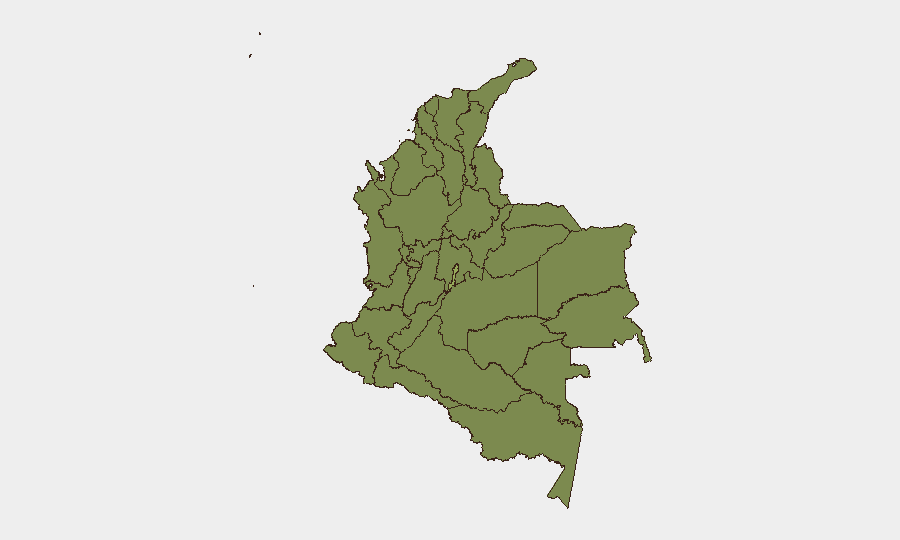
The Capital District (Bogotá) remains the highest-risk jurisdiction by composite score (55.2), reflecting persistent urban crime, trafficking activity, and governance challenges. However, the day's attacks underscore the acute threat environment in Antioquia (which includes Medellín and rural zones like Amalfi) and Valle del Cauca (Cali), where armed groups—particularly the EMC—maintain operational capacity to conduct coordinated, high-casualty strikes on military and police infrastructure. Nariño (38.5) and Atlántico (36.2) also rank significantly; these southern and northern border zones experience sustained narcotics trafficking and criminal-group activity. The attacks suggest that guerrilla and criminal actors are willing to escalate conventional military tactics, including drone deployment, against state targets in zones previously considered relatively secure.
How GeoBit Would Assist
Corporate security teams with personnel or assets in Colombia should employ AOI Monitoring & Early Warning for their primary operational locations (Bogotá, Cali, Medellín, regional offices) to detect shifting threat indicators in near-real time. Conflict & Military mapping, Network & Actor Analysis, and Intelligence & OSINT fusion (particularly X/Telegram monitoring and multi-language event feeds) enable tracking of EMC and other armed-group communications, operational patterns, and claimed attacks. Risk & Threat Assessment and GIS & Spatial Analysis support dynamic routing and duty-of-care decisions for personnel traveling between high-risk departments.
7-Day Outlook
State security forces are expected to announce expanded counterinsurgency and counternarcotics operations in response to the 24 July attacks, likely increasing military presence in Antioquia, Valle del Cauca, and border regions. Armed groups may attempt follow-up operations to demonstrate resilience or escalate further. Organizations should anticipate temporary disruptions to movement and business continuity in Cali and Medellín metro areas over the immediate term.
Highest-Risk Areas — Ranked
| # | State / Region | Risk |
|---|---|---|
| 1 | Capital District | 55.2 |
| 2 | Nariño | 38.5 |
| 3 | Atlántico Department | 36.2 |
| 4 | Cundinamarca Department | 34.4 |
| 5 | Santander Department | 29.9 |
| 6 | Cauca | 29.5 |
| 7 | Arauca Department | 29.5 |
| 8 | Valle del Cauca Department | 29.2 |
| 9 | Norte de Santander Department | 29.2 |
| 10 | Tolima Department | 26.9 |
| 11 | La Guajira | 26.5 |
| 12 | Magdalena Department | 25.9 |
Sources
Previous Daily Briefs
A new Colombia brief is written every day — each with its own risk map and downloadable CSV. Here's the last week; use the calendar to go further back.
📅 Browse every day by calendar →
Highlighted days have a brief. Tap a day for that day's map & analysis, or “csv” for that day's dataset ($5).
Atlas — our AI intelligence desk — emails them this snapshot personally. Nothing else, no list.