Situation Summary
Ecuador faces intensifying gang-driven violence and state institutional strain, with organized-crime networks demonstrating capability to coordinate multi-city attacks and hostage operations. The past 48 hours have seen a significant counterterrorism operation in Guayaquil, a prison hostage crisis in Cuenca linked to coordinated bombing, and discovery of mass graves in Manabí Province. Government response includes police raids on judicial officials and health-sector purges, signaling institutional fracture under pressure. The trajectory remains volatile, with criminal organizations testing state capacity across multiple fronts simultaneously.
Key Developments
- Cuenca, Pichincha – 25 Jul 2026: Inmates at Turi prison seized and held 57 guards and police officers hostage, protesting prisoner transfers. Interior Ministry linked unrest directly to gang activity and transfer protocols.[3]
- Quito – 25 Jul 2026: Two car explosions occurred in the capital; authorities attribute them to coordinated gang action in direct response to the Cuenca prison hostage situation, indicating command-and-control capability across provincial distances.[3]
- Guayaquil – 24–25 Jul 2026 (pre-dawn ops): Police arrested four suspected members of a "terrorist network" believed responsible for a September 2025 car bomb at La Roca Regional Prison. Seizures included the attack vehicle, explosives, and stolen vehicles; detainees include a 22-year-old already convicted of 2026 homicide and a 55-year-old with drug-trafficking records. Terrorism charges are in preparation.[5][6][8]
- Guayaquil & Yaguachi – 24–25 Jul 2026: National Police executed 14 coordinated raids targeting the same network linked to car-bomb and drone operations against La Roca prison. The operation is being framed as a major cell disruption.[5][8]
- Manabí Province – 24–25 Jul 2026: Four bodies discovered in mountainous terrain with evidence of multiple clandestine graves (at least three burial pits), under investigation as part of territorial-control violence.[8]
- National – 24–25 Jul 2026: Interior and Education ministries announced a security intervention plan for 37 higher-education institutions across eight provinces, citing organized-crime threats and recent violence, with enhanced police presence on campuses.[8]
- Judicial sector – 24–25 Jul 2026: Interior Minister John Reimberg ordered a raid on a prosecutor's office after the official had sought lenient measures for an alleged "Chone Killers" gang leader, escalating government friction with the judiciary over organized-crime adjudication.[9]
- Health sector – 24–25 Jul 2026: Government deployed intelligence agents across the public health network for corruption investigations, described as a "purge," with unclear scope and potential disruption to service delivery.[7]
Highest-Risk Areas
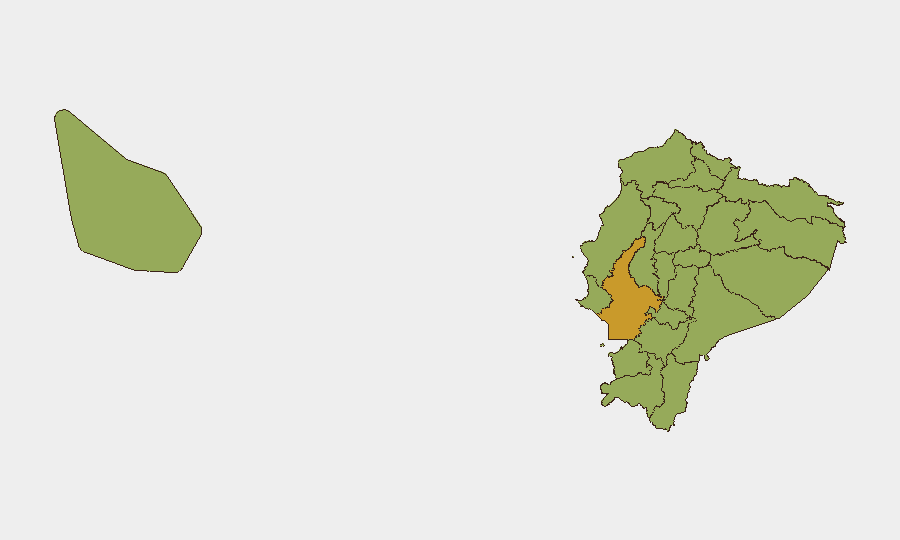
Guayas Province (risk 72.5) dominates the threat profile, driven by gang territorial control and prison-complex attacks in and around Guayaquil. Cotopaxi, Manabí, and the northern border zones (Napo, Sucumbíos, Orellana, Carchi, Esmeraldas) all register elevated risk (42.5–45) due to narcotics trafficking, armed-group presence, and weak state capacity in remote areas. Pichincha (Quito) is elevated by recent bombings and institutional instability; Galápagos remains flagged despite remote status, likely reflecting transnational trafficking transit risk.
How GeoBit Would Assist
Security teams should activate AOI Monitoring & Early Warning on Guayaquil, Cuenca, and northern border provinces to detect coordinated multi-site operations before they mature. Network & Actor Analysis linked to OSINT fusion (Telegram, local media, radio SIGINT) will track gang command-and-control signals and prison-linked coordination. Conflict & Military mapping combined with GIS & Spatial Analysis can visualize territorial control and identify secondary-risk corridors (e.g., Yaguachi–Guayaquil axis) for asset routing and staff movement planning.
7-Day Outlook
Expect continued prison unrest and retaliatory bombings as gangs respond to the Guayaquil arrests and Cuenca hostage resolution. Educational and health-sector institutions will remain under heightened volatility due to police presence and ongoing purges. Guayas Province will remain the primary flashpoint; northern border zones should be monitored for spillover activity linked to Venezuelan gang presence and trafficking routes.
Highest-Risk Areas — Ranked
| # | State / Region | Risk |
|---|---|---|
| 1 | Guayas Province | 72.5 |
| 2 | Cotopaxi Province | 45 |
| 3 | Manabí Province | 42.8 |
| 4 | Napo Province | 42.8 |
| 5 | Sucumbíos Province | 42.5 |
| 6 | Orellana Province | 42.5 |
| 7 | Galápagos | 42.5 |
| 8 | Esmeraldas Province | 42.5 |
| 9 | Carchi Province | 42.5 |
| 10 | Imbabura Province | 42.5 |
| 11 | Santo Domingo de los Tsáchilas Province | 42.5 |
| 12 | Pichincha Province | 42.5 |
Sources
Previous Daily Briefs
A new Ecuador brief is written every day — each with its own risk map and downloadable CSV. Here's the last week; use the calendar to go further back.
📅 Browse every day by calendar →
Highlighted days have a brief. Tap a day for that day's map & analysis, or “csv” for that day's dataset ($5).
Atlas — our AI intelligence desk — emails them this snapshot personally. Nothing else, no list.