Situation Summary
Nigeria remains at elevated composite threat level (rank #5 globally, score 97) driven primarily by ongoing insurgency, kidnapping, and community unrest across multiple states. The past 24–48 hours have yielded limited independently time-stamped incident reporting, though the broader 20–23 July window shows sustained police counterkidnapping operations and armed gang activity in rural and transitional zones. Political and labor-related public statements (logged 27 July) suggest underlying governance and worker grievances that may compound security fragmentation in urban centers.
Key Developments
- Nationwide Police Operations (20 July): Nigeria Police Force reported a coordinated 13-state plus FCT crackdown resulting in 112 arrests, two kidnapped victims rescued, one suspect neutralized, and recovery of three firearms and 14 rounds of ammunition—indicating sustained but reactive counterkidnapping posture.
- Owerri, Imo State (20 July): Police foiled active kidnapping, rescued seven victims unharmed, and recovered two vehicles after armed engagement; suspects fled to bush areas, limiting follow-on arrests.
- Ondo State (20 July): Joint security team disrupted kidnapping attempt and rescued intended victim; spent AK-47 ammunition recovered at scene, consistent with organized armed gang activity.
- Multi-State Kidnapping Operations (20 July, Bauchi, Niger, Kwara, Kebbi, Nasarawa): Concurrent abductions and cattle-rustling incidents across five states triggered parallel police manhunt and rescue operations, signaling distributed rather than centralized threat architecture.
- Borno State (21–23 July reporting window): Hostage-taking incident resulted in rapid rescue of 46 students; incident classification and perpetrator identity remain limited in available open sources, but aligns with known northeastern insurgency activity.
- Zamfara State (23 July): Armed attackers killed at least 20 people in village raids (outside strict 24–48-hour window but relevant to state-level trajectory).
Note: Open-source reporting between 24–27 July focused on political statements and labor grievances rather than kinetic or abduction incidents; time-stamped security events in past 48 hours are limited in available intelligence feeds.
Highest-Risk Areas
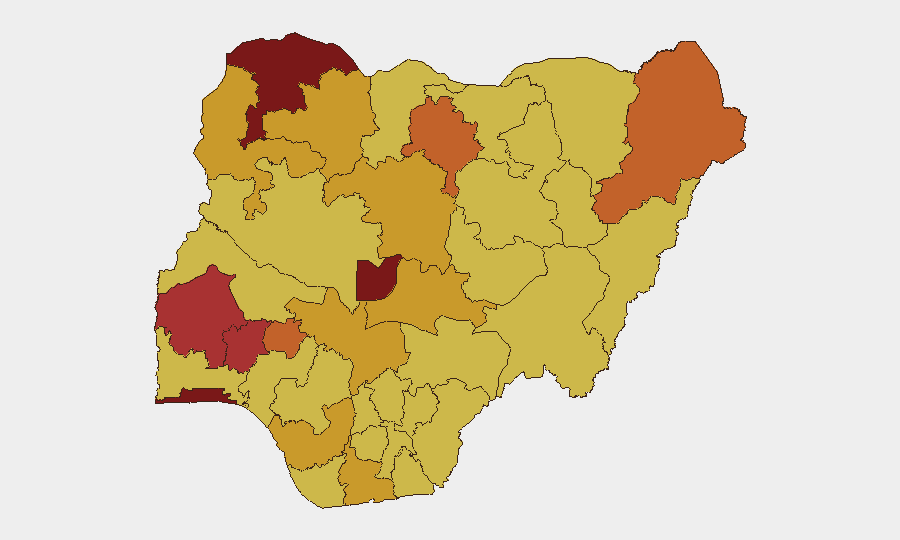
Lagos State (98.2) and Federal Capital Territory (83) drive composite risk through volume of events, critical infrastructure exposure, and concentrated population; Lagos alone recorded a company-related incident on 25 July. The northern states—Sokoto (82), Kano (73.6), Kaduna (72.5), Zamfara (72.3), and Nasarawa (72.3)—show persistently high scores rooted in armed group activity, pastoral-nomadic tensions, and kidnapping-for-ransom operations; Borno (73) and Kogi (72.9) remain embedded in active insurgency and banditry zones. Rural and semi-urban peripheries in Kaduna, Zamfara, Nasarawa, and Niger are primary hotspots for abduction and cattle-rustling; security response capacity remains limited beyond state capitals.
How GeoBit Would Assist
Security teams should employ Intel Sweep and OSINT fusion (X/Twitter, Telegram, local radio SIGINT) for real-time monitoring of kidnapping networks, gang communications, and political unrest signaling in Lagos, FCT, and northern states. AOI Monitoring & Early Warning on Zamfara, Kaduna, Nasarawa, and Niger State rural zones enables persistent watch for abduction patterns, armed-group movement, and police response timelines—critical for duty-of-care alerts to personnel in or transiting those regions. Routing & Network Analysis supports alternative travel planning and incident-response coordination, while Conflict & Military tracking maintains visibility on insurgent force posture in Borno and adjacent states.
7-Day Outlook
Kidnapping and armed robbery activity will likely remain elevated across northern and north-central states through early August absent major security intervention changes. Political and labor unrest signals in Lagos and FCT suggest potential for sporadic protest-linked disruption, which could complicate security posture for multinational and critical-infrastructure operations. No imminent strategic shift in threat actor capability or geography is indicated; reactive police operations are expected to continue.
Highest-Risk Areas — Ranked
| # | State / Region | Risk |
|---|---|---|
| 1 | Lagos State | 98.2 |
| 2 | Federal Capital Territory | 83 |
| 3 | Sokoto State | 82 |
| 4 | Osun State | 78.6 |
| 5 | Oyo State | 76.1 |
| 6 | Kano State | 73.6 |
| 7 | Ekiti State | 73.4 |
| 8 | Borno State | 73 |
| 9 | Kogi State | 72.9 |
| 10 | Kaduna State | 72.5 |
| 11 | Zamfara State | 72.3 |
| 12 | Nasarawa State | 72.3 |
Sources
Previous Daily Briefs
A new Nigeria brief is written every day — each with its own risk map and downloadable CSV. Here's the last week; use the calendar to go further back.
📅 Browse every day by calendar →
Highlighted days have a brief. Tap a day for that day's map & analysis, or “csv” for that day's dataset ($5).
Atlas — our AI intelligence desk — emails them this snapshot personally. Nothing else, no list.