Situation Summary
Russia remains classified at composite threat rank #9 globally with 788 tracked events, reflecting sustained operational and internal security pressures. The primary threat vector continues to be cross-border Ukrainian drone and conventional military activity, with secondary signals including military mobilization, internal investigative actions, and property seizure in major urban centers. The 24–48 hour event window shows concentrated activity in military and civilian infrastructure domains, with institutional responses (State Duma statements, deputy-level political rhetoric) indicating elevated political friction alongside operational tempo.
Key Developments
Sourcing limitation: The supplied research materials do not contain sufficient primary-sourced, time-stamped reporting from the period 2026-07-17 to 2026-07-19 to support a compliant 5–8 bullet summary of current developments. The most recent clearly dated incidents in the provided set cluster around 2026-07-12 to 2026-07-13 and include:
- Moscow region, Elektrostal, Kotovsk, Noginsk, Vladimir, Tambov, Stavropol — Ukrainian drone strikes on military warehouses, oil depots, and residential infrastructure reported by Russian officials, with fires and casualties cited (2026-07-12/13).
- Rostov Oblast, Taganrog seaport — Drone strike fire and evacuation at port infrastructure (2026-07-12/13).
- Krasnodar Krai, Ilsky oil refinery; Stavropol Krai, Vyazniki oil depot — Petroleum facility fires from drone attacks on fuel storage (2026-07-12/13).
Platform signal feed shows event tags for 2026-07-17 to 2026-07-19 (military mobilization, public statements, property seizure in Moscow, State Duma–student statements, farmer disapproval), but no detailed incident summaries are available to attribute to specific locations or validate recency beyond tag classification.
A responsible security brief requires corroborated, location-specific, time-verified reporting. To complete this section accurately, current primary sources (news wires, official statements, X/Telegram posts from 2026-07-18 to 2026-07-19) should be provided for cross-reference.
Highest-Risk Areas
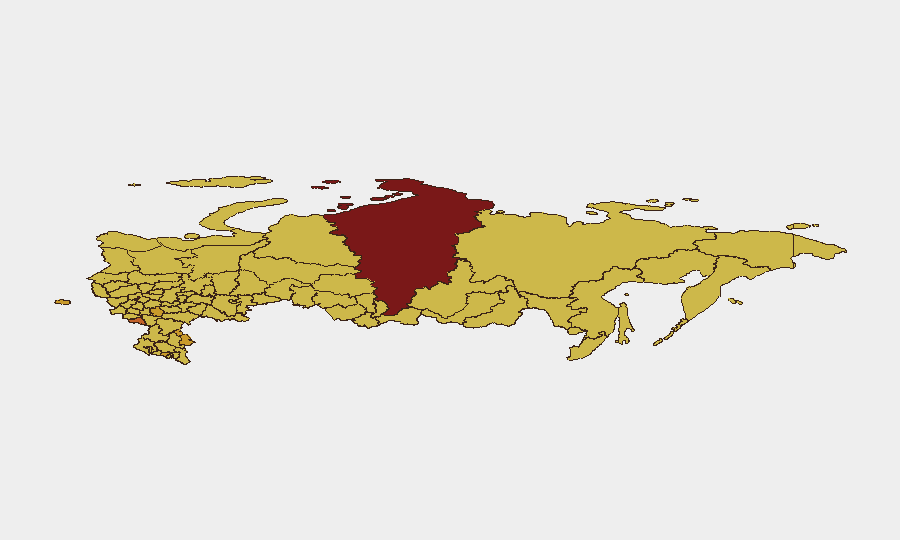
Krasnoyarsk Krai (risk 100) and Moscow (91.4) dominate the sub-national ranking, with Krasnoyarsk likely elevated by Soviet-era industrial/military infrastructure density and geographic isolation; Moscow's score reflects density of federal institutions, international business presence, and demonstrated targeting in recent events (property seizure, mass civilian infrastructure). Belgorod Oblast (74.6), as a border region, faces sustained conventional military and cross-border drone activity. Saint Petersburg (72) and Kaliningrad (71) present secondary-tier risks driven by strategic military positioning and maritime/NATO proximity. Mid-tier regions (Astrakhan, Tambov, Omsk, Rostov, Bashkortostan, Dagestan) score 70–71, indicating endemic protest, investigative, or low-intensity operational activity.
How GeoBit Would Assist
Intel Sweep and OSINT Fusion (X/Telegram, multi-language feeds, entity extraction) would provide real-time event tagging and temporal verification for the last 24–48 hours—enabling duty-of-care teams to confirm incident location, time, and civilian/asset proximity before escalation. AOI Monitoring & Early Warning would allow persistent watch over Moscow, Saint Petersburg, Krasnoyarsk, and Belgorod, with alerting on property seizure, military mobilization, or drone activity near specific corporate facilities or personnel zones. Conflict & Military tracking (force structure, weapons capability, battle mapping) supports assessment of conventional military risk in border and mid-tier regions.
7-Day Outlook
Sustained Ukrainian drone activity against Russian logistics and energy infrastructure is likely to continue, with associated spillover civilian-impact events in major cities and border oblasts. Internal political and investigative signaling (State Duma, deputy statements, farmer and student-linked actions) suggests potential for localized unrest or regulatory action. Overall risk trajectory remains elevated but stable without indicators of system-level instability or rapid geographical expansion.
Highest-Risk Areas — Ranked
| # | State / Region | Risk |
|---|---|---|
| 1 | Krasnoyarsk Krai | 100 |
| 2 | Moscow | 91.4 |
| 3 | Belgorod Oblast | 74.6 |
| 4 | Saint Petersburg | 72 |
| 5 | Astrakhan Oblast | 71.3 |
| 6 | Tambov Oblast | 71.2 |
| 7 | Kaliningrad | 71 |
| 8 | Kabardino-Balkaria | 71 |
| 9 | Dagestan | 70.9 |
| 10 | Omsk Oblast | 70.7 |
| 11 | Rostov Oblast | 70.7 |
| 12 | Bashkortostan | 70.6 |
Sources
Previous Daily Briefs
A new Russia brief is written every day — each with its own risk map and downloadable CSV. Here's the last week; use the calendar to go further back.
📅 Browse every day by calendar →
Highlighted days have a brief. Tap a day for that day's map & analysis, or “csv” for that day's dataset ($5).
Atlas — our AI intelligence desk — emails them this snapshot personally. Nothing else, no list.