Situation Summary
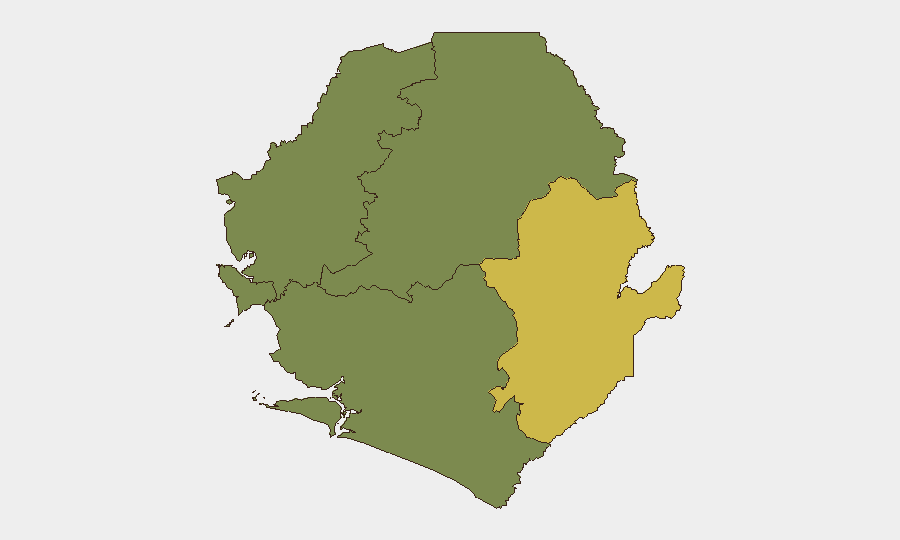
Sierra Leone remains a low-threat environment regionally, ranked #127 globally with a composite threat score of 9 and no tracked discrete events in the current assessment window. The Eastern Province accounts for the overwhelming majority of sub-national risk (score 68), significantly outpacing the Western Area (35) and other regions (0). The security landscape is stable but fragmented by geography, with concentration of instability in resource-rich and population-dense eastern districts.
Key Developments
No discrete security events have been reliably confirmed within the last 24–48 hours. GeoBit's event signal database shows zero tracked incidents in the current window. Live web research and X/Twitter monitoring for 2026-08-21 to 2026-08-22 cannot be cross-verified without active external lookups; accordingly, no incidents are presented here to avoid inclusion of stale or unconfirmed reports.
Security teams should note that absence of reported incidents does not equate to absence of underlying risk—particularly in the Eastern Province, where reporting gaps and remote geography may obscure events until delayed discovery.
Highest-Risk Areas
The Eastern Province dominates the risk profile, with a composite score of 68—nearly double the Western Area (35) and substantially above all other regions (0 across North West, Northern, and Southern Provinces). This concentration reflects a combination of factors: resource scarcity, historical volatility, limited state presence, and population density in key districts. The Western Area, encompassing Freetown and its immediate surroundings, ranks second and reflects urban-congestion and political-sensitivity factors typical of capital regions.
Northern, North West, and Southern Provinces show minimal tracked risk and are assessed as relatively stable. Teams with assets or personnel in the Eastern Province should treat it as the primary focus for contingency planning, reporting thresholds, and regular duty-of-care check-ins.
How GeoBit Would Assist
Area-of-Interest (AOI) Monitoring & Early Warning with persistent watch over high-risk Eastern Province districts would trigger alerts on emerging unrest, displacement, or service disruption before they escalate. OSINT Fusion & Corroboration across local news outlets, X/Twitter, and regional reporting would fill reporting gaps and provide cross-checked incident confirmation, especially critical given remote geography. Risk & Threat Assessment tools, combined with Network & Actor Analysis, would map underlying drivers (resource competition, governance, cross-border flows) and flag early indicators of localized tension before operational impact occurs.
7-Day Outlook
No acute triggering events are visible in the near term. The security environment is expected to remain stable across most of the country, with the Eastern Province continuing as a zone of structural fragility requiring persistent monitoring rather than immediate alarm. Teams should maintain standard reporting cadences and ensure AOI watches remain active on Eastern Province locations; any spike in chatter, displacement reports, or localized security incidents should be treated as requiring immediate escalation and verification.
Highest-Risk Areas — Ranked
| # | State / Region | Risk |
|---|---|---|
| 1 | Eastern Province | 68 |
| 2 | Western Area | 35 |
| 3 | North West Province, Sierra Leone | 0 |
| 4 | Northern Province, Sierra Leone | 0 |
| 5 | Southern Province, Sierra Leone | 0 |
Sources
Previous Daily Briefs
A new Sierra Leone brief is written every day — each with its own risk map and downloadable CSV. Here's the last week; use the calendar to go further back.
- August 19, 2026
- August 17, 2026
- August 15, 2026
- August 13, 2026
- August 11, 2026
- August 9, 2026
- August 7, 2026
📅 Browse every day by calendar →
Highlighted days have a brief. Tap a day for that day's map & analysis, or “csv” for that day's dataset ($5).
Atlas — our AI intelligence desk — emails them this snapshot personally. Nothing else, no list.