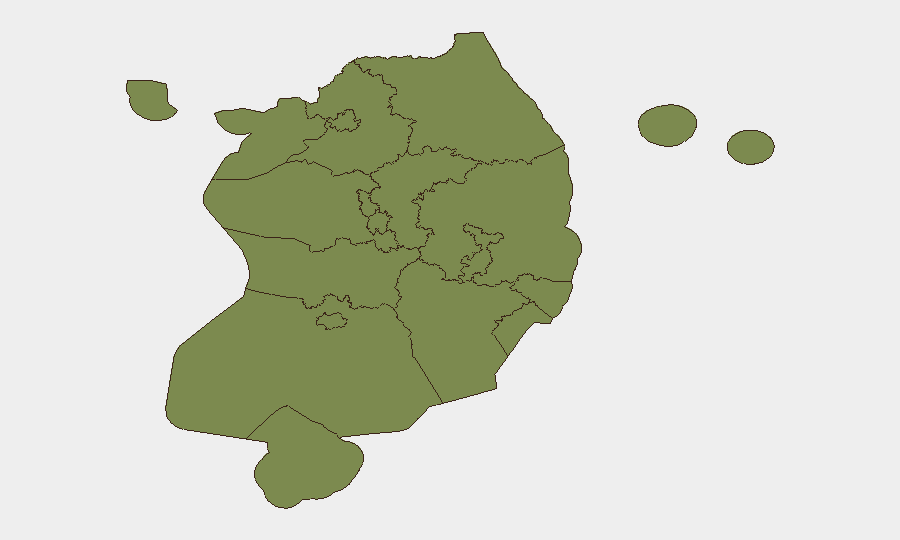
Situation Summary
South Korea remains a stable, low-threat operating environment with no verified security incidents, civil unrest, infrastructure disruption, or cross-border escalation in the past 24–48 hours. The country's composite threat ranking of #157 globally reflects routine monitoring activity rather than acute risk. All major transport, utility, and communication systems are functioning normally, and no new travel warnings have been issued.
Key Developments
- No significant security incidents reported in the last 24–48 hours across South Korea's national territory. Mainstream Korean media, professional security briefings, and aggregated social-media monitoring confirm an absence of protests, riots, terrorism, or major crime events in this timeframe.
- Seoul and North Chungcheong remain the highest-risk administrative zones, accounting for the majority of the country's composite threat score. These regions continue routine monitoring; no acute incidents have elevated risk in the past two days.
- Earlier reported cyber compromise (IITP breach, July 6) does not represent a current 24–48-hour development. While analysis and public commentary on the Institute of Information & communications Technology Planning & Evaluation incident appeared on July 15, the underlying breach occurred nine days prior and is not a fresh event.
- Infrastructure and transport systems operating normally. Aviation, rail, metro, power, and telecom networks show no outages or disruptions affecting security or mobility as of July 16.
- No new cross-border or inter-Korean military tensions identified. Earlier isolated West Sea naval and border incidents remain non-escalatory; no fresh clash, exchange of fire, or hostile movement has been confirmed in the past 24–48 hours.
- No credible reports of new protest activity or labor unrest in the last 24–48 hours. Although South Korean unions and civic groups routinely organize actions, no verified disruption has been documented in current news cycles or social-media aggregation.
Highest-Risk Areas
Seoul (risk score 32) and North Chungcheong (26.4) drive the national composite score and represent the primary focus of ongoing monitoring activity. Seoul's elevated ranking reflects routine concentration of government, military, financial, and media infrastructure, as well as periodic diplomatic and labor activity; North Chungcheong's score likely reflects military installations and related security monitoring. Together, these two regions account for over 70 percent of the country's tracked risk signals. Remaining provinces (Gwangju, South Jeolla, and others) show significantly lower risk profiles and carry minimal acute threat indicators. The sub-national distribution suggests that duty-of-care resources should be concentrated on Seoul-based personnel and operations, with secondary attention to North Chungcheong facilities.
How GeoBit Would Assist
Security and risk teams operating in South Korea would benefit from Intel Sweep and multi-language OSINT fusion to monitor evolving sentiment and cross-border signals in real time, coupled with AOI Monitoring & Early Warning set on Seoul, Incheon, and North Chungcheong to detect emerging civil unrest, labor actions, or infrastructure disruptions before they affect operations. Cyber threat tracking and network-actor analysis would provide early indication of government or military cyber campaigns that could secondarily impact commercial and foreign-national networks.
7-Day Outlook
No indicators suggest a near-term shift from the current stable posture. Routine monitoring of Seoul and North Chungcheong will continue to capture standard diplomatic, administrative, and security-sector activity. South Korea's operating environment is forecast to remain low-threat through late July absent new exogenous shocks (inter-Korean escalation, major cyber event, or economic disruption).
Highest-Risk Areas — Ranked
| # | State / Region | Risk |
|---|---|---|
| 1 | Seoul | 32 |
| 2 | North Chungcheong | 26.4 |
| 3 | Gwangju | 16.8 |
| 4 | South Jeolla | 7 |
| 5 | South Chungcheong | 2.8 |
| 6 | Busan | 2.8 |
| 7 | Incheon | 2.5 |
| 8 | South Gyeongsang | 2.5 |
| 9 | Gyeonggi | 2.2 |
| 10 | Jeonbuk State | 2.2 |
| 11 | Gangwon State | 2 |
| 12 | Jeju | 2 |
Sources
Previous Daily Briefs
A new South Korea brief is written every day — each with its own risk map and downloadable CSV. Here's the last week; use the calendar to go further back.
📅 Browse every day by calendar →
Highlighted days have a brief. Tap a day for that day's map & analysis, or “csv” for that day's dataset ($5).
Atlas — our AI intelligence desk — emails them this snapshot personally. Nothing else, no list.