Situation Summary
The United States remains at composite threat rank #51 globally with an elevated multi-vector security environment spanning critical infrastructure cyber operations, law enforcement incidents with public visibility, and operational disruptions to municipal services. Texas, California, and New York drive the highest sub-national risk scores, reflecting concentrated threats in energy, technology, and financial sectors alongside broader governance and public safety concerns. The threat trajectory reflects concurrent Iranian-linked operational technology attacks, domestic law enforcement friction, and ransomware impact on essential services, with no immediate de-escalation indicators across these domains.
Key Developments
- U.S. Critical Infrastructure (Multi-location) – July 22, 2026: CISA, FBI, and NSA issued a joint advisory detailing Iranian-affiliated cyber actors who have disrupted programmable logic controllers at multiple U.S. critical infrastructure sites, manipulating SCADA data, disabling alarms and shutdown logic, and causing operational and financial losses; organizations nationwide advised to report suspicious activity to 24/7 CISA channels.
- Foster City, California – July 22, 2026 (ongoing): Municipal government services remain significantly degraded following a ransomware attack that suspended nearly all public operations except emergency response; officials warn of potential resident personal data compromise with recovery efforts still in progress.
- Madison, Wisconsin – July 22, 2026: Madison police fatally shot a man resisting arrest after he allegedly injured an officer with a knife; bystander video circulated widely and triggered local protests continuing into the evening, elevating visibility of police use-of-force incidents.
- U.S. Cybercrime – July 22, 2026: Hackers leaked names, email addresses, phone numbers, passwords, and financial information from two large U.S.-based online platforms, increasing account-takeover and fraud risk for affected users nationwide.
- U.S. Travel & Health Screening – July 22, 2026: State Department "Worldwide Caution" and CDC/DHS Ebola screening requirements remained in effect, mandating U.S. citizens returning from DRC, Uganda, or South Sudan within 21 days to enter only via designated airports, affecting travel routing and screening operations.
Highest-Risk Areas
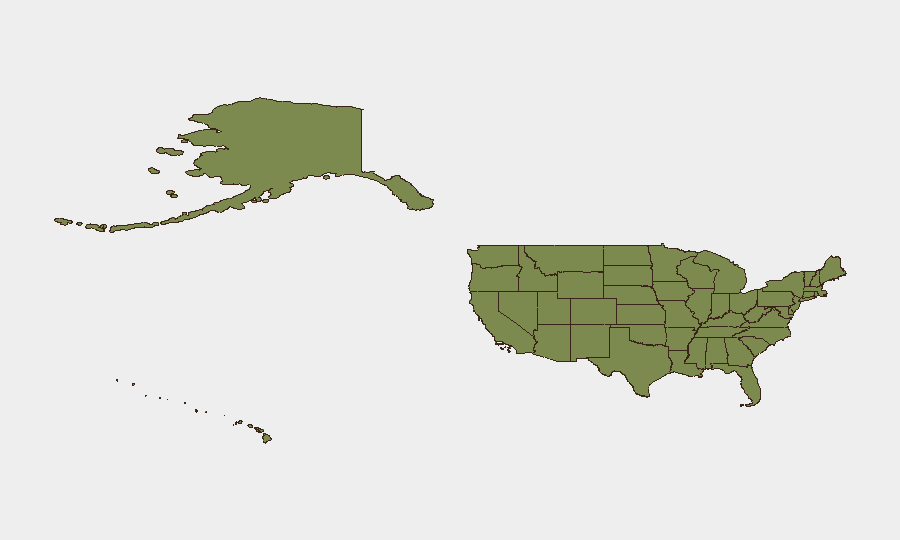
Texas, California, and New York collectively account for the largest share of tracked events and composite risk, driven by concentration of critical infrastructure (energy, ports, tech), population density, and governance complexity. Texas (33.4) faces elevated energy-sector cyber and border-related risks; California (29.1) faces dual exposure to cyber attacks (ransomware, supply-chain), port security, and tech-sector incidents; New York (26.6) faces financial-sector and infrastructure vulnerability. Pennsylvania, Illinois, and North Carolina follow at 14.8–13.9, reflecting industrial/energy and emerging cyber exposure. Secondary tier (Colorado, Washington, Michigan, Minnesota) shows distributed but moderate risk across logistics, critical infrastructure, and tech assets.
How GeoBit Would Assist
Security teams protecting U.S. assets would deploy AOI Monitoring & Early Warning on critical facilities in Texas, California, and New York to detect indicators of cyber reconnaissance or physical surveillance; Intelligence & OSINT with Shodan, X/Twitter, and multi-language feeds to identify Iranian-linked actor activity, ransomware campaigns, and emerging threats; and Risk & Threat Assessment with temporal and sentiment analysis to flag escalating law enforcement tensions or municipal service disruptions before they impact corporate operations or personnel. Network & Actor Analysis would map Iranian-linked OT attack patterns and ransomware gang affiliations to enable proactive threat intelligence sharing.
7-Day Outlook
Iranian-linked OT attacks are likely to continue targeting energy and water sectors, with organizations in Texas and California at elevated immediate risk; municipal ransomware events are expected to persist given recent payoffs and limited detection/attribution barriers. Law enforcement friction and public protest activity will remain elevated in urban centers, particularly in Wisconsin, California, and New York, affecting personnel movement and supply chain logistics over the near term.
Highest-Risk Areas — Ranked
| # | State / Region | Risk |
|---|---|---|
| 1 | Texas | 33.4 |
| 2 | California | 29.1 |
| 3 | New York | 26.6 |
| 4 | Pennsylvania | 14.8 |
| 5 | Illinois | 14.3 |
| 6 | North Carolina | 13.9 |
| 7 | Colorado | 12.4 |
| 8 | Washington | 12.1 |
| 9 | Michigan | 12 |
| 10 | Minnesota | 12 |
| 11 | Florida | 11.6 |
| 12 | Georgia | 10.9 |
Sources
Previous Daily Briefs
A new United States brief is written every day — each with its own risk map and downloadable CSV. Here's the last week; use the calendar to go further back.
📅 Browse every day by calendar →
Highlighted days have a brief. Tap a day for that day's map & analysis, or “csv” for that day's dataset ($5).
Atlas — our AI intelligence desk — emails them this snapshot personally. Nothing else, no list.