Situation Summary
Pakistan remains at #27 global threat ranking (composite score 62), driven primarily by active insurgency across multiple regions. The last 48 hours have seen a sharp escalation in high-casualty attacks and coordinated militant operations spanning Khyber Pakhtunkhwa and Balochistan, with both Tehreek-i-Taliban Pakistan (TTP) and Balochistan Liberation Army-linked groups conducting or attempting major strikes. Security forces have responded with intensive counter-operations, but the frequency and lethality of recent attacks signal either increased militant capability or renewed operational tempo that will likely sustain elevated risk through the near term.
Key Developments
- Tank district, KP (Night of 27–28 July): Suicide vehicle-borne improvised explosive device detonated at Manji Khel police check post on Tank–Dera Ismail Khan Road, killing 14–15 people (11–12 military, 2 police, 1 civilian) and wounding over a dozen. Attack attributed to TTP elements; authorities launched follow-on clearance and pursuit operations along the corridor.
- South Waziristan, KP (28 July): Security forces interdicted a second suicide assault on a check post, destroying an explosives-laden vehicle before breach and killing four militants including the bomber. No security-force casualties; military linked this attempt to the preceding Tank attack.
- Mastung district, Balochistan (27 July): Unidentified gunmen shot dead a district-and-sessions judge and his security guard on the national highway; a second judge and another civilian were seriously wounded. Assailants remain at large as of reporting.
- Mastung, Balochistan (28 July): In response to the judges' killing, security forces conducted intelligence-based operation in Khad Kocha area, killing four militants attributed to Balochistan Liberation Army-linked groups and establishing intensive checkpoints along the highway corridor.
- Surab and Mastung, Balochistan (27–28 July): Coordinated counter-terror sweeps across both districts killed 10 militants (7 in Surab, 3 in Mastung) and resulted in arrest of two female suicide bombers and their facilitator. Operations ongoing as part of larger counter-insurgency campaign.
- Mastung–National Highway corridor (27–28 July): Following the judges' attack, authorities sealed and heavily policed the corridor with checkpoints, cordons, and search operations to locate perpetrators and prevent follow-on strikes.
- Tank–Dera Ismail Khan Road (28 July): Intensified security posture and military presence reported along corridor following Manji Khel bombing; reinforcement of nearby posts and clearance operations underway.
Highest-Risk Areas
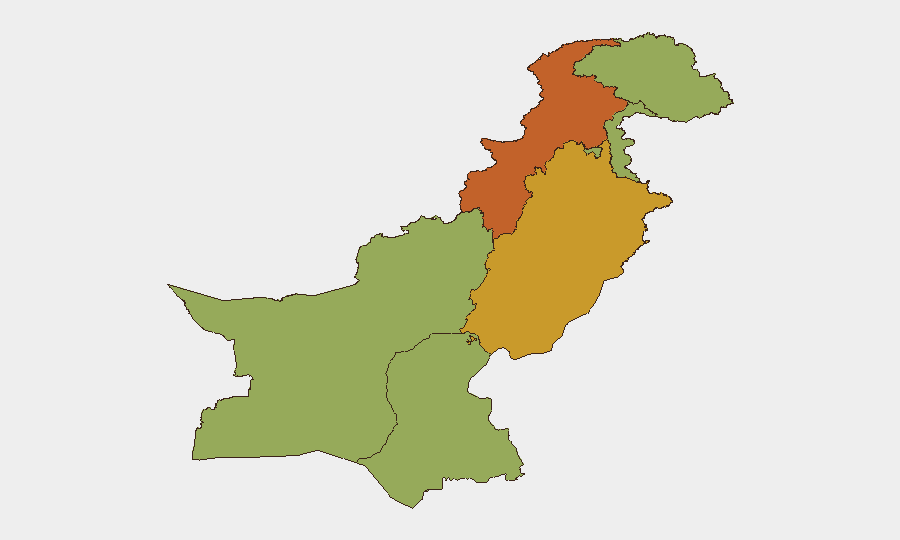
Khyber Pakhtunkhwa and Punjab occupy the top two risk tiers (73.1 and 72.6 respectively), with KP's ranking driven by persistent TTP activity in border districts (Tank, South Waziristan) and established militant sanctuaries. Balochistan ranks 6th overall (51.0) but is experiencing sharp tactical escalation—the coordinated targeting of judicial officials and security posts within 48 hours suggests organized, well-resourced militant cells with political or destabilizing intent. Islamabad Capital Territory and Sindh remain elevated (52.4 and 51.9), reflecting spillover risk and urban militant networks. The concentration of high-casualty attacks in KP and Balochistan over the past two days indicates these regions warrant heightened personnel and asset security measures.
How GeoBit Would Assist
Corporate security teams should deploy AOI Monitoring & Early Warning on high-risk corridors (Tank–DI Khan Road, Mastung highway) to detect militant staging, checkpoint activity, or supply movements before attacks occur. Intel Sweep, multi-language OSINT, and Telegram/X monitoring enable real-time tracking of militant claims of responsibility, threat signals, and security-force responses to anticipate follow-on activity. Routing & Network Analysis supports alternative journey planning for personnel in Balochistan and KP, avoiding compromised corridors during active counter-operations.
7-Day Outlook
Militant groups are likely to sustain or repeat high-profile attacks to maintain momentum and psychological pressure on security forces and judiciary. Security-force intensity will remain elevated, meaning checkpoints, cordons, and travel disruptions will persist in KP and Balochistan through at least early August. Organizations with personnel or assets in these regions should assume extended movement friction and consider temporary relocation or shelter-in-place protocols for non-essential staff.
Highest-Risk Areas — Ranked
| # | State / Region | Risk |
|---|---|---|
| 1 | Khyber Pakhtunkhwa | 73.1 |
| 2 | Punjab | 72.6 |
| 3 | Azad Kashmir | 54.9 |
| 4 | Islamabad Capital Territory | 52.4 |
| 5 | Sindh | 51.9 |
| 6 | Balochistan | 51 |
| 7 | Gilgit-Baltistan | 48.1 |
Sources
Previous Daily Briefs
A new Pakistan brief is written every day — each with its own risk map and downloadable CSV. Here's the last week; use the calendar to go further back.
📅 Browse every day by calendar →
Highlighted days have a brief. Tap a day for that day's map & analysis, or “csv” for that day's dataset ($5).
Atlas — our AI intelligence desk — emails them this snapshot personally. Nothing else, no list.