Situation Summary
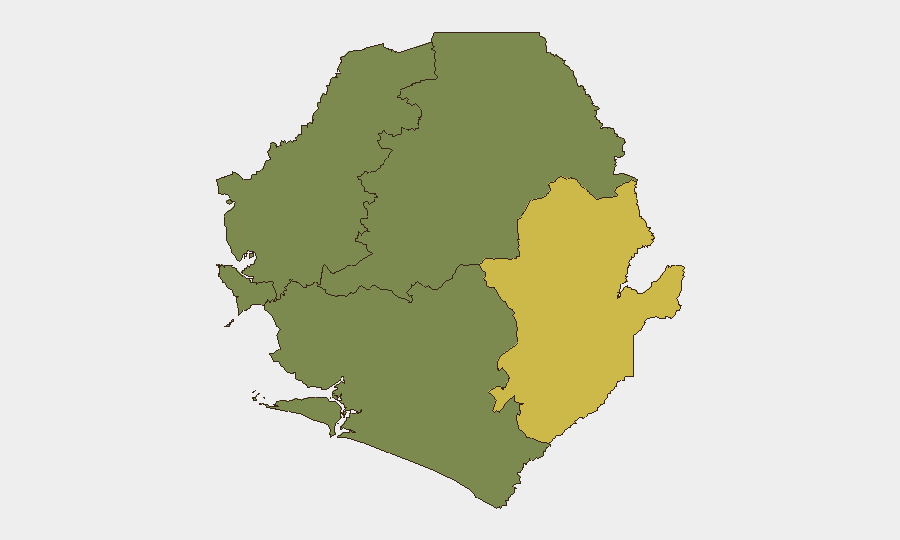
Sierra Leone remains a low-threat environment globally (#138, composite score 11) with no recorded security events in the past week. The country's risk profile is highly localized, concentrated in the Eastern Province and Western Area, driven by historical instability and resource-conflict dynamics rather than active, ongoing violence. The security trajectory remains stable; however, election-related tensions and governance issues warrant continued monitoring in specific regions.
Key Developments
- Across Sierra Leone — 23 September 2026: The All People's Congress announced voting centres for rescheduled district elections scheduled for 26 September, following an earlier election-related incident that reportedly resulted in injuries to election and security personnel and one reported security fatality. Independent corroboration of casualty figures remains pending.
- Freetown — 24 September 2026: Senior APC political figure Samura Kamara issued a public statement mourning veteran BBC correspondent Mark Doyle. This was a routine political/public-affairs statement with no security or unrest dimension.
- Sierra Leone (national) — 26 September 2026: European diplomatic pressure reportedly increased concerning government handling of a convicted Dutch drug trafficker (Jos Leijdekkers). No new arrest, court action, or operational security incident was confirmed during this reporting window; this remains a developing political and legal matter.
- Post-election period (26 September onwards): District elections proceeded as rescheduled; no reports of organized violence, disruptions to polling, or mass unrest have been verified for the 26–29 September period.
Highest-Risk Areas
Eastern Province (risk score 68) is the primary concern and accounts for the majority of Sierra Leone's sub-national threat profile. Western Area (score 35) presents secondary risk, primarily linked to Freetown's role as the capital and administrative hub. The remaining provinces (Northern, North West, and Southern) show negligible composite risk. Eastern Province's elevated score reflects a combination of historical resource-conflict vulnerabilities, remoteness, weaker state presence, and legacy tensions; Western Area's score is driven by urban concentration, border dynamics, and administrative density. Neither province is currently reporting active armed conflict or organized violence; the rankings reflect structural and residual vulnerability rather than imminent operational threats.
How GeoBit Would Assist
Corporate security teams should employ AOI (Area-of-Interest) Monitoring & Early Warning capabilities focused on Eastern Province and Western Area to detect emerging tensions, election-related unrest, or resource disputes with minimal latency. Multi-language web and social-media OSINT (X/Twitter, Telegram, local news sources) combined with sentiment and temporal analysis would provide early signals of localized instability before they escalate. For teams with personnel or assets in high-risk areas, routing and network analysis capabilities can identify real-time alternative transit routes and safe corridors, reducing exposure during periods of civil tension.
7-Day Outlook
No significant security deterioration is anticipated in the coming week. Election-related tensions may persist at low levels as results are finalized and district governance transitions consolidate; however, the absence of reported post-election violence suggests institutional acceptance of the process. Monitoring should remain focused on Eastern Province for any delayed or secondary unrest, and on Western Area for governance-related friction as administrative capacity is tested.
Highest-Risk Areas — Ranked
| # | State / Region | Risk |
|---|---|---|
| 1 | Eastern Province | 68 |
| 2 | Western Area | 35 |
| 3 | North West Province, Sierra Leone | 0 |
| 4 | Northern Province, Sierra Leone | 0 |
| 5 | Southern Province, Sierra Leone | 0 |
Sources
Previous Weekly Briefs
A new Sierra Leone brief is written every Monday, covering the week — each with its own risk map and downloadable CSV. Use the calendar to go further back.
- September 22, 2026
- September 15, 2026
- September 8, 2026
- September 1, 2026
- August 30, 2026
- August 28, 2026
- August 26, 2026
📅 Browse past briefs by calendar →
Highlighted days have a brief. Tap a day for that day's map & analysis, or “csv” for that day's dataset ($5).
Atlas — our AI intelligence desk — emails them this snapshot personally. Nothing else, no list.