Situation Summary
South Korea remains a stable, low-threat operating environment with no verified high-impact security, civil-unrest, infrastructure, or travel-risk incidents reported in the last 24–48 hours. The national composite threat score of 4 (ranked #153 globally) reflects routine legal, political, and cyber activity rather than acute instability. Recent developments—including a Supreme Court ruling, routine criminal sentencing, a financial-sector interest-rate adjustment, and a disclosed cybersecurity incident at a government research institute—carry legal or operational significance but pose no immediate danger to personnel or assets.
Key Developments
- Seoul (Supreme Court) – Jul 16, 2026: The Supreme Court upheld a suspended prison sentence for former Unification Minister Cho Myoung‑gyon in a political abuse-of-power case; reflects ongoing elite-level legal friction with no associated civil unrest or violence.
- Cheongju (Cheongju District Court) – Jul 16, 2026: Court sentenced a man in his 60s to two years in prison for homicide (strangulation); routine criminal matter with no wider public-order implications.
- Changwon (Police / Shopping Center) – Jul 16, 2026: Police opened investigation into alleged animal abuse at a local shopping center, targeting a restaurant owner, mall manager, and city official under the Animal Protection Act; no protests or disorder reported.
- Nationwide (Bank of Korea) – Jul 16, 2026: Bank of Korea raised the base interest rate by 0.25 percentage points (2.50% to 2.75%), citing inflation and growth recovery; economically significant but no immediate civil-unrest or operational-disruption linkage identified.
- Daejeon (IITP) – Incident Jul 6, Disclosure Jul 15, 2026: Cybersecurity incident affecting the Institute of Information & Communications Technology Planning & Evaluation's personal-information access-log system exposed R&D data; authorities report no broader operational outages or public-safety impacts, but underscores ongoing cyber-risk to government-linked research infrastructure.
Highest-Risk Areas
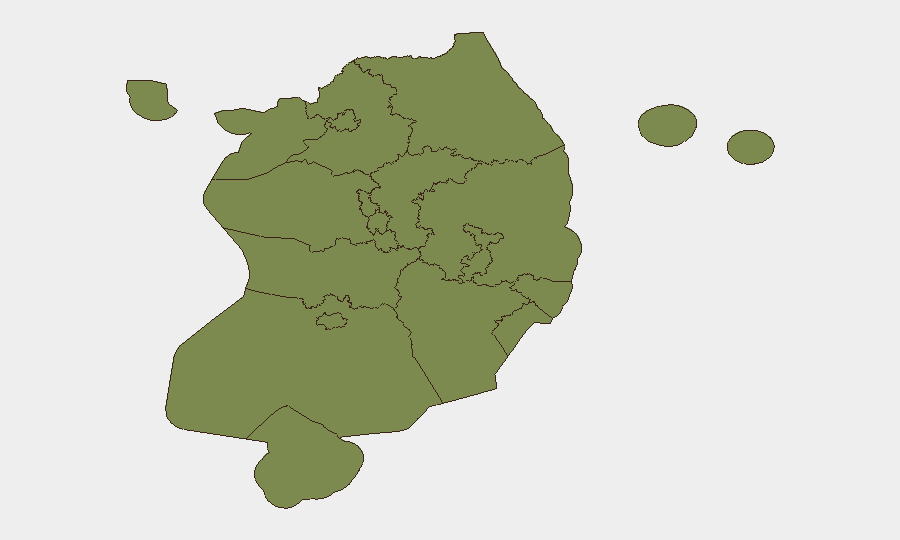
Seoul dominates the sub-national risk ranking (score 32), driven by capital-city concentration of political, financial, and administrative activity; North Chungcheong (22.4) ranks second, though without specific recent event attribution. Together these two regions account for the majority of tracked event signals. Remaining regions—Gwangju, South Jeolla, Jeju, and others—show significantly lower composite scores (8.9 down to 2.2), indicating that risk is geographically concentrated in the capital and select central provinces. The ranking reflects event frequency and type rather than imminent threat; no region shows signs of acute instability.
How GeoBit Would Assist
Security teams should employ Intel Sweep and multi-language OSINT (including X/Twitter and Telegram feeds) to maintain real-time awareness of political-legal developments and protest activity around Seoul's government district and financial sector. Cybersecurity monitoring and network analysis should track government and defense-research infrastructure (such as IITP and affiliated agencies) for ongoing vulnerability disclosure and incident patterns. AOI Monitoring & Early Warning on Seoul's major business districts, ports (Incheon), and transportation hubs would provide persistent alerting if unrest, labor action, or supply-chain disruption emerges.
7-Day Outlook
No near-term escalation in security risk is anticipated. Routine political-legal proceedings, economic policy adjustments, and isolated criminal or cyber incidents are likely to continue without systemic impact. Personnel and asset movements should proceed under standard operating procedures; no heightened alert or itinerary modification is warranted at present.
Highest-Risk Areas — Ranked
| # | State / Region | Risk |
|---|---|---|
| 1 | Seoul | 32 |
| 2 | North Chungcheong | 22.4 |
| 3 | Gwangju | 8.9 |
| 4 | South Jeolla | 5.9 |
| 5 | Jeju | 4.7 |
| 6 | Gangwon State | 3.7 |
| 7 | South Chungcheong | 3.2 |
| 8 | Incheon | 2.4 |
| 9 | South Gyeongsang | 2.4 |
| 10 | Gyeonggi | 2.2 |
| 11 | Jeonbuk State | 2.2 |
| 12 | North Gyeongsang | 2.2 |
Sources
Previous Daily Briefs
A new South Korea brief is written every day — each with its own risk map and downloadable CSV. Here's the last week; use the calendar to go further back.
📅 Browse every day by calendar →
Highlighted days have a brief. Tap a day for that day's map & analysis, or “csv” for that day's dataset ($5).
Atlas — our AI intelligence desk — emails them this snapshot personally. Nothing else, no list.