Situation Summary
The United Arab Emirates remains a stable, low-threat operating environment with no verified security incidents, terrorist attacks, civil unrest, or infrastructure damage recorded within UAE territory during the last 24–48 hours. However, regional conflict around the Strait of Hormuz—specifically US–Iran hostilities—is indirectly affecting UAE-linked aviation and maritime operations through flight delays, cancellations, and route disruptions rather than direct threats to UAE soil. The UAE government has condemned hostile Iranian actions targeting neighboring states and called for de-escalation, signaling concern about spillover risk, but current open-source assessment indicates no imminent direct threat to people or assets inside UAE borders.
Key Developments
- Strait of Hormuz maritime incident (July 26, 2026): An oil tanker exploded after reportedly striking a naval mine in the Strait of Hormuz following deviation from a Tehran-designated shipping route, adding to maritime security risk in a corridor critical for UAE trade and energy flows.
- IRGC warning shots (July 26, 2026): Iran's Islamic Revolutionary Guard Corps fired warning shots at six vessels transiting the Strait of Hormuz over a 24-hour period, increasing regional tension and potential delays for ships linked to UAE ports.
- Regional flight disruptions (July 26, 2026): Airlines operating from Dubai and Abu Dhabi issued passenger advisories for regional routes, citing conflict-related airspace and scheduling disruptions rather than direct security incidents on UAE soil; airports remain operational.
- US–Iran ceasefire talks (July 26–27, 2026): US officials and regional media reported that the United States and Iran have agreed to halt recent hostilities and resume negotiations over Strait of Hormuz management, described as a potential de-escalation breakthrough.
- Iran–Oman diplomatic engagement (late July 26–27, 2026): Parallel talks between Iran and Oman on managing traffic through the Strait of Hormuz are reported, which if sustained could reduce immediate maritime and energy-security risk for the UAE.
- UAE Ministry of Foreign Affairs statement (last 24–48 hours): The UAE "strongly condemned the latest hostile attacks by Iran targeting Bahrain, Kuwait, and Jordan" and called for immediate de-escalation and regional stability, reflecting concern about spillover but not indicating direct attacks on UAE territory.
Highest-Risk Areas
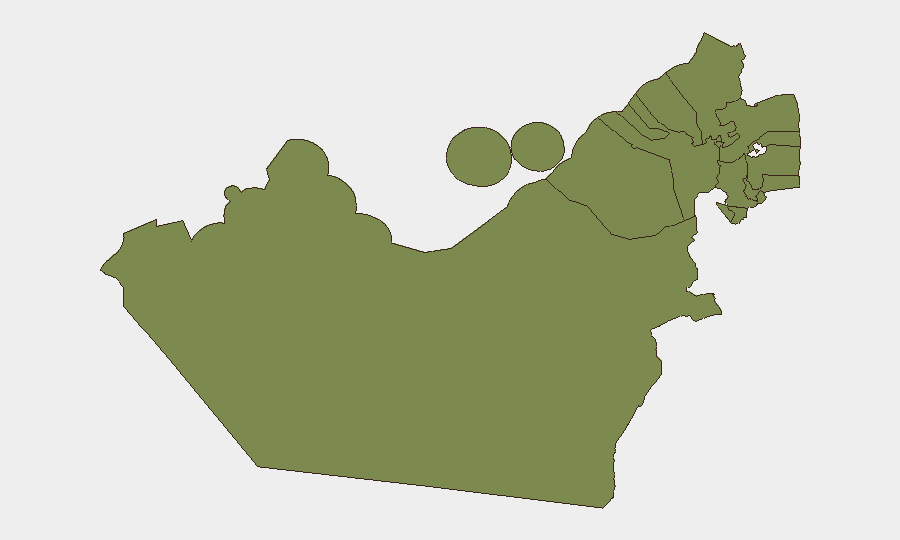
Dubai's risk score (31.3) significantly outpaces all other emirates, primarily due to its status as the UAE's largest commercial and aviation hub; any regional disruption affecting Gulf shipping or air traffic disproportionately impacts Dubai's economy and transiting populations. The remaining six emirates register minimal individual risk (1.3 each), indicating that security concerns are concentrated in Dubai and reflect indirect exposure to regional conflict dynamics rather than localized internal threats. Sharjah, as a secondary commercial and port center, shares exposure to Strait of Hormuz disruptions but at lower operational scale. Risk elevation across all emirates is driven by proximity to and economic dependence on the Strait of Hormuz corridor rather than active violence or civil unrest within UAE borders.
How GeoBit Would Assist
Corporate security teams operating in the UAE should use GeoBit's Maritime & Aviation tracking and AOI Monitoring & Early Warning capabilities to monitor real-time flight schedules, shipping routes, and Strait of Hormuz corridor activity, enabling rapid notification of disruptions affecting personnel transit or supply chains. Conflict & Military and Intel Sweep functionality—including X/Twitter OSINT, multi-language search, and sentiment analysis—provide continuous monitoring of US–Iran hostilities, Iranian naval activity, and regional diplomatic developments to anticipate spillover risk. Routing & Network Analysis allows duty-of-care teams to preemptively identify alternative air and sea routes for personnel movement and cargo, reducing exposure to conflict-affected corridors.
7-Day Outlook
Near-term trajectory depends on durability of reported US–Iran ceasefire and Strait of Hormuz negotiations; if talks collapse, maritime and aviation disruptions could intensify within 48–72 hours, escalating indirect risk to UAE-linked operations. Absent fresh escalation, the UAE's internal security environment is expected to remain stable, with risk concentrating on regional travel and shipping logistics rather than ground-level threats to people or assets within UAE territory.
Highest-Risk Areas — Ranked
| # | State / Region | Risk |
|---|---|---|
| 1 | Dubai | 31.3 |
| 2 | Sharjah Emirate | 1.3 |
| 3 | Ajman Emirate | 1.3 |
| 4 | Ras al-Khaimah | 1.3 |
| 5 | Fujairah Emirate | 1.3 |
| 6 | Umm al-Quwain | 1.3 |
| 7 | Abu Dhabi Emirate | 1.3 |
Sources
Previous Daily Briefs
A new United Arab Emirates brief is written every day — each with its own risk map and downloadable CSV. Here's the last week; use the calendar to go further back.
📅 Browse every day by calendar →
Highlighted days have a brief. Tap a day for that day's map & analysis, or “csv” for that day's dataset ($5).
Atlas — our AI intelligence desk — emails them this snapshot personally. Nothing else, no list.