Situation Summary
The United States faces a multifaceted security environment characterized by concurrent cyber infrastructure threats, election-administration tensions, and heightened foreign-actor targeting of critical operational technology. Federal agencies are actively responding to intrusions into information-sharing networks, criminal botnet infrastructure, and Iranian-affiliated probing of industrial control systems. Political and legal friction over election procedures, coupled with recent Supreme Court constraints on investigative geofencing, is reshaping law-enforcement operational capacity. Overall threat posture remains elevated but geographically concentrated, with California, New York, and Texas driving the majority of tracked risk events.
Key Developments
- Washington, D.C., July 23 – DHS is investigating a cyber intrusion into a U.S. federal information-sharing network used for threat and incident data, affecting how security and law-enforcement entities coordinate intelligence domestically.
- Nationwide, July 23 – FBI disrupted a large residential proxy network supporting criminal botnet operations, removing a significant piece of cybercrime infrastructure used to mask malicious activity.
- Nationwide, July 23 – CISA, FBI, and NSA issued an updated joint advisory warning U.S. organizations of active Iranian-affiliated exploitation of internet-connected operational technology (OT) devices, including programmable logic controllers, in critical-infrastructure sectors.
- Nationwide, July 23 – Department of Justice sent letters to all 50 states warning election officials of potential criminal exposure if non-citizens remain on voter rolls, escalating federal-state tensions over election administration ahead of upcoming electoral events.
- Nationwide, July 23 – U.S. Supreme Court ruling established that geofence searches generally require traditional warrants, immediately constraining law-enforcement mass location-data collection practices and altering criminal investigation protocols.
- Nationwide, July 23 – U.S. government announced a $10 million reward for information on Russian state-sponsored hackers, signaling heightened concern over Russian-linked operations targeting U.S. networks and likely prompting increased investigative activity.
- Nationwide, July 23 – AdaptHealth disclosed a healthcare-sector data breach affecting patient information, raising privacy and fraud risk across a major U.S. home medical equipment and services provider.
- Nationwide, July 23 – DHS and CDC reaffirmed mandatory entry screening for U.S. travelers from Ebola-affected African states (DRC, Uganda, South Sudan), affecting international-gateway logistics and travel risk management.
Highest-Risk Areas
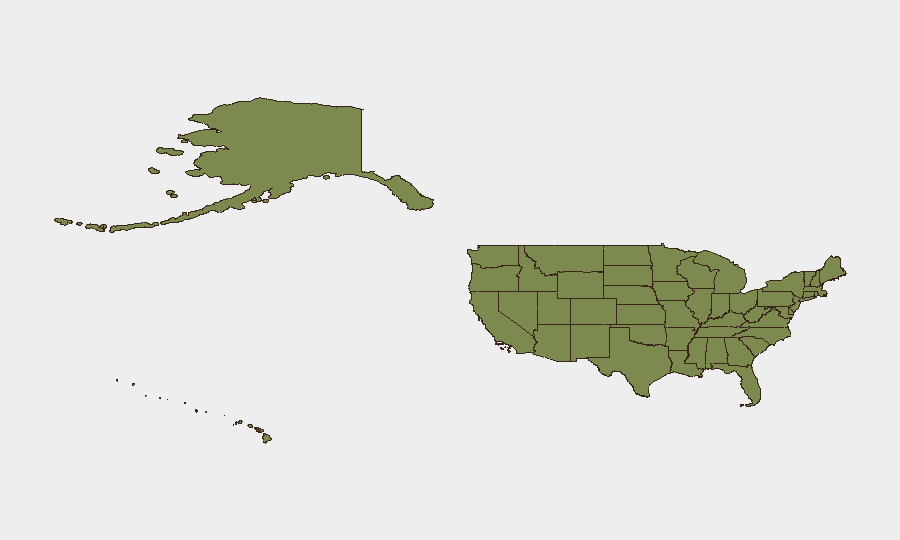
California, New York, and Texas account for approximately 49% of the composite threat score among U.S. sub-national jurisdictions (risk scores 33.3, 32.5, and 30.8 respectively). These three states concentrate dense urban populations, major financial and technology infrastructure, international transportation hubs, and disproportionate federal law-enforcement and political activity. Wisconsin and Minnesota rank fourth and fifth, reflecting emerging threats in the upper Midwest. Risk concentration in coastal and major metropolitan areas reflects both asset density and the presence of critical infrastructure, cyber targets, and international threat-actor interest; security teams with personnel or assets in California, New York, Texas, and secondary metros (Miami, Chicago, Boston, Denver) face elevated exposure.
How GeoBit Would Assist
Security teams monitoring United States exposure would deploy Intel Sweep and global event feeds for continuous monitoring of federal agency actions, state-level law-enforcement responses, and critical-infrastructure alerts; Network & Actor Analysis to track Iranian and Russian state-affiliated cyber campaigns and their operational overlap with U.S. targets; and AOI Monitoring & Early Warning on highest-risk sub-national jurisdictions (California, New York, Texas) to flag emerging incident clusters, civil tensions, or infrastructure vulnerabilities. Cyber threat search and multi-language OSINT fusion would detect emerging Iranian OT exploitation or botnet reactivation signaling before they reach mainstream reporting.
7-Day Outlook
Cyber-threat intensity is likely to remain elevated, with Iranian OT targeting and Russian state-actor operations continuing to drive federal advisory activity and corrective measures across energy, water, and manufacturing sectors. Election-administration tensions will deepen as state officials navigate DOJ criminal warnings and compliance deadlines. Federal investigative capacity will contract temporarily as agencies adjust to the Supreme Court geofence ruling, potentially creating investigative gaps in fast-moving civil-unrest or crime scenarios through early August.
Highest-Risk Areas — Ranked
| # | State / Region | Risk |
|---|---|---|
| 1 | California | 33.3 |
| 2 | New York | 32.5 |
| 3 | Texas | 30.8 |
| 4 | Wisconsin | 18.1 |
| 5 | Minnesota | 16.8 |
| 6 | Florida | 14.7 |
| 7 | Pennsylvania | 14.5 |
| 8 | North Carolina | 14 |
| 9 | Illinois | 12.8 |
| 10 | Colorado | 11.9 |
| 11 | Washington | 11.6 |
| 12 | Massachusetts | 11.4 |
Sources
Previous Daily Briefs
A new United States brief is written every day — each with its own risk map and downloadable CSV. Here's the last week; use the calendar to go further back.
📅 Browse every day by calendar →
Highlighted days have a brief. Tap a day for that day's map & analysis, or “csv” for that day's dataset ($5).
Atlas — our AI intelligence desk — emails them this snapshot personally. Nothing else, no list.