Situation Summary
China's security environment remains stable at the national level, with no significant civil unrest, political instability, or military escalation reported in the last 24–48 hours. Current operational risk is concentrated in severe weather impacts (Typhoon Bavi) and routine law-enforcement activity, rather than acute security threats. Underlying tensions in maritime disputes and cross-border cybercrime investigations continue but have not escalated into active incidents affecting mainland territory or major population centers in this reporting period.
Key Developments
- Chongqing Municipality landslide (July 19–20): Search-and-rescue operations ongoing following a landslide in a southwestern county; central government directing response with Xi Jinping calling for scientific rescue protocols. Indicates localized infrastructure and personnel safety risk.
- Typhoon Bavi coastal impact (July 19–20): Storm system degraded to severe tropical storm but bringing heavy rain and strong winds to eastern and northeastern coastal provinces; more than 2 million people evacuated. Transportation and infrastructure disruption primary concern for operations in affected regions through 72 hours.
- South China Sea incident (July 20): Philippines accused Chinese coast guard personnel of striking a Philippine navy officer with a wooden baton during an encounter in disputed waters. Reflects ongoing maritime friction; poses risk to shipping, fishing, and foreign personnel operating in contested areas.
- Cross-border cybercrime custody transfer (July 20): Task force based in Shandong (Ministry of Public Security), coordinating with Vietnamese police and Chinese Embassy in Hanoi, took custody of "Pan," alleged ringleader in computer systems sabotage case, and escorted suspect to China. Indicates active multinational cybercrime investigation with cross-border enforcement.
- Limited domestic unrest (last 24–48 hours): No credible multi-sourced reports of significant civil unrest, terrorism, large-scale crime waves, or regime-stability incidents inside China during this window.
Highest-Risk Areas
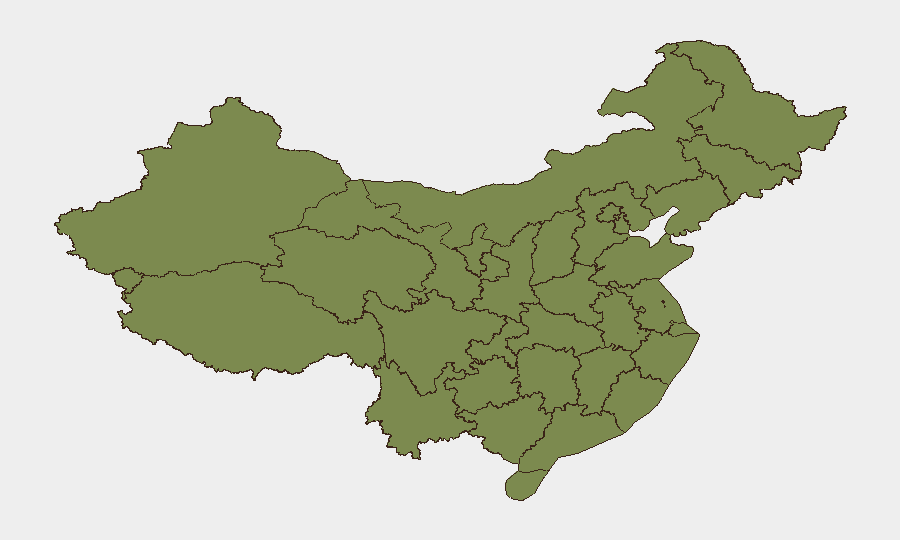
Gansu and Beijing dominate the sub-national risk ranking (32.7 and 31.8 respectively), though current open-source intelligence does not show acute active incidents in these regions during the last 48 hours; ranking reflects cumulative event frequency and underlying structural factors rather than immediate crisis. Shanghai ranks third (10.6), with Heilongjiang and Guangdong following; these concentrations likely reflect higher population density, economic activity, and event reporting density in major urban and coastal zones. Immediate operational priority should focus on eastern and northeastern coastal provinces affected by Typhoon Bavi and Chongqing Municipality for weather-related infrastructure and travel disruption, rather than on the high-ranking northern/central provinces currently showing no acute incidents.
How GeoBit Would Assist
Security teams should deploy Intel Sweep and multi-language OSINT feeds to monitor Gansu and Beijing for emerging civil unrest or political signals, and maintain persistent AOI Monitoring & Early Warning on coastal provinces and Chongqing to track typhoon recovery and infrastructure restoration timelines. Routing & Network Analysis tools can generate real-time alternative transport and supply-chain routes around weather-affected areas. For personnel and asset protection in South China Sea operations or maritime trade routes, Maritime tracking and sentiment/temporal analysis on regional diplomatic statements would provide early warning of escalation in coastal friction.
7-Day Outlook
Typhoon Bavi's weakening trajectory suggests infrastructure disruption will peak within 24–48 hours, with recovery and restoration operations dominating coastal provinces through early week. Chongqing rescue operations will continue as primary local focus. No indicators suggest escalation in political unrest, cross-border military activity, or regime-stability risks over the next 7 days; maritime tensions in the South China Sea will likely remain at current elevated baseline without major new incidents.
Highest-Risk Areas — Ranked
| # | State / Region | Risk |
|---|---|---|
| 1 | Gansu | 32.7 |
| 2 | Beijing | 31.8 |
| 3 | Shanghai | 10.6 |
| 4 | Heilongjiang | 7.6 |
| 5 | Guangdong Province | 7.5 |
| 6 | Fujian | 5.4 |
| 7 | Hubei | 5.3 |
| 8 | Jiangxi | 4.9 |
| 9 | Jiangsu | 3.8 |
| 10 | Liaoning | 3.5 |
| 11 | Anhui | 3.3 |
| 12 | Sichuan | 3.2 |
Sources
Previous Daily Briefs
A new China brief is written every day — each with its own risk map and downloadable CSV. Here's the last week; use the calendar to go further back.
📅 Browse every day by calendar →
Highlighted days have a brief. Tap a day for that day's map & analysis, or “csv” for that day's dataset ($5).
Atlas — our AI intelligence desk — emails them this snapshot personally. Nothing else, no list.