Situation Summary
Russia faces sustained large-scale drone attacks on civilian and logistics infrastructure across 19+ regions, with the night of July 19–20 marking one of the highest-volume attack waves since the 2022 escalation. Casualties and infrastructure damage are mounting; civilian facilities including warehouses, energy infrastructure, and residential areas are being targeted systematically. The conflict trajectory remains actively kinetic with no near-term de-escalation signals, and secondary effects—evacuation of hospitals, fires at logistics hubs, energy disruption—are now affecting civilian populations distant from the frontline.
Key Developments
- Kotovsk, Tambov Region (July 19, 2026): Ukrainian drone strike on major Wildberries logistics warehouse killed 7 night-shift workers, injured ~25, and sparked major fire. Tambov Oblast is now ranked #3 sub-national risk zone (72.8).
- Elektrostal & Noginsk, Moscow Region (July 19, 2026): Second Wildberries warehouse struck overnight; simultaneous Ukrainian drone hit on oil depot in Noginsk forced evacuation of nearby maternity hospital and residential building, contributing to 80+ casualties across Moscow Region strikes.
- Moscow Region overnight barrage (July 19–20, 2026): Russian air defenses reported intercepting majority of drone attacks; 61 people injured (40 hospitalized, at least 1 fatality), fire at kindergarten building extinguished. Debris confirmed hitting civilian infrastructure.
- Nationwide drone intercept claim (July 19–20, 2026): Russia's Defense Ministry stated air defenses intercepted 379 Ukrainian drones across 19 Russian regions, Crimea, Sea of Azov, and Black Sea—described as one of largest overnight waves to date.
- Vladimir Region (July 19, 2026): Ukrainian drone struck residential building in Vladimir city; brief fire with no casualties reported by regional governor.
- Belgorod Region (July 19, 2026): Cross-border drone attack killed 1, wounded 1, consistent with broader escalation pattern near Ukraine border.
- Maritime & logistics targeting (July 19–20, 2026): Ukrainian forces conducted simultaneous strikes on 13 Black Sea vessels alongside infrastructure attacks, indicating coordinated multi-domain operation.
Highest-Risk Areas
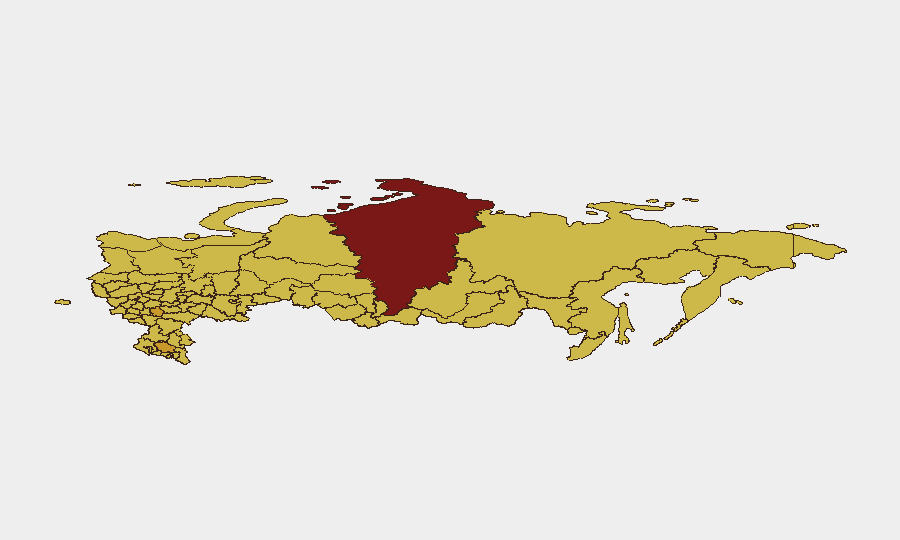
Krasnoyarsk Krai (96.8) leads sub-national rankings, driven by distance from Ukrainian territory but proximity to critical Russian infrastructure and ongoing military operations. Moscow (91.1) and Moscow Region (70.5) face acute risk from drone strikes on civilian logistics and energy assets within metropolitan areas; events of July 19–20 validate this ranking. Tambov Oblast (72.8), Kursk Oblast (70.6), and border regions (Belgorod, Stavropol, Krasnodar, Dagestan) show elevated risk due to direct proximity to conflict zone, cross-border attack exposure, and military staging. Kaliningrad (68.3) remains vulnerable to maritime and air interdiction despite distance from primary theater.
How GeoBit Would Assist
Security teams should deploy AOI Monitoring & Early Warning on Moscow, Moscow Region, Tambov, and Kursk to capture drone attack patterns and trigger real-time alerts before secondary effects (evacuations, fires, supply disruption) cascade. Conflict & Military battle mapping and Maritime & Aviation tracking enable continuous visibility on Ukrainian strike tempo, targets, and timing to anticipate follow-on waves. Economic & Trade analysis paired with Satellite & Imagery assessment can track logistics-hub damage and energy-infrastructure outages to model supply-chain and utility disruption affecting operations and personnel.
7-Day Outlook
Large-scale drone attacks on Russian civilian and logistics infrastructure are expected to continue; Moscow Region and Tambov remain high-probability targets given demonstrated Ukrainian capability and strategic value of logistics hubs. Energy-infrastructure strikes may trigger localized power disruptions and secondary evacuations. No ceasefire signals are visible; heightened alert posture and contingency activation for Moscow, Moscow Region, and border oblasts should remain in effect.
Highest-Risk Areas — Ranked
| # | State / Region | Risk |
|---|---|---|
| 1 | Krasnoyarsk Krai | 96.8 |
| 2 | Moscow | 91.1 |
| 3 | Tambov Oblast | 72.8 |
| 4 | Stavropol Krai | 71.1 |
| 5 | Kursk Oblast | 70.6 |
| 6 | Moscow Oblast | 70.5 |
| 7 | Krasnodar Krai | 70.4 |
| 8 | Dagestan | 70 |
| 9 | Kabardino-Balkaria | 69.4 |
| 10 | Kaliningrad | 68.3 |
| 11 | Rostov Oblast | 68.2 |
| 12 | Primorsky Krai | 67.7 |
Sources
Previous Daily Briefs
A new Russia brief is written every day — each with its own risk map and downloadable CSV. Here's the last week; use the calendar to go further back.
📅 Browse every day by calendar →
Highlighted days have a brief. Tap a day for that day's map & analysis, or “csv” for that day's dataset ($5).
Atlas — our AI intelligence desk — emails them this snapshot personally. Nothing else, no list.