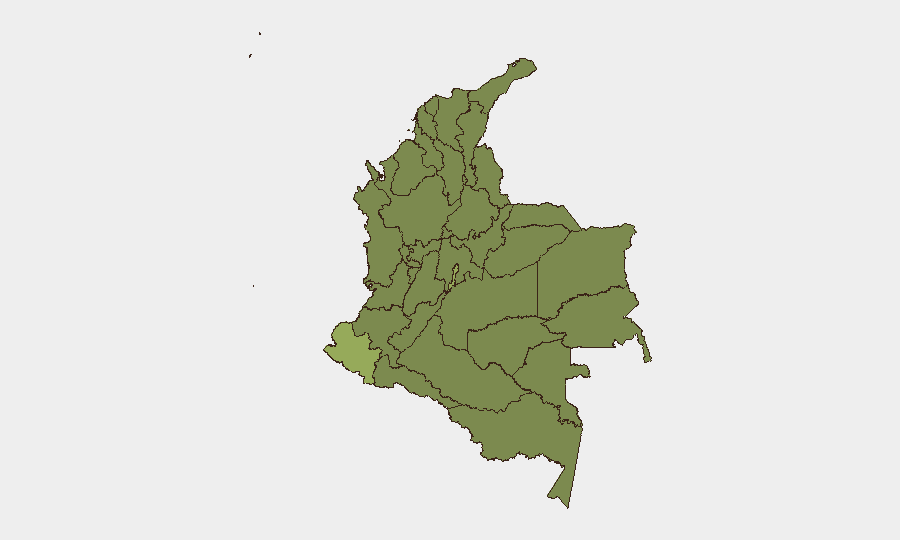
Situation Summary
Colombia remains at moderate global threat rank (#31, composite score 53) with 278 tracked events, reflecting persistent criminal organization activity, guerrilla operations, and state security responses concentrated in southwestern and border regions. The Capital District and Nariño Department dominate the risk profile, driven by narcotics trafficking, extortion networks, and armed group competition for territorial control. Political and institutional statements on 27–28 July signal ongoing policy debate and potential shifts in security or governance posture, though current incident velocity does not indicate imminent nationwide escalation.
Key Developments
- Capital District / National level (27–28 July): Presidential and administrative public statements, including a statement involving religious leadership, followed by a presidential vs. religious entity statement on 28 July. Nature and policy implications require source corroboration; no confirmed security incident reported.
- Guerrilla activity (28 July): Assassination event attributed to guerrilla actors targeting Colombian nationals or interests. Specific location and casualty count not yet detailed in available reporting.
- Unconventional violence incident (27 July, Venezuela border): Event flagged in GEOBIT tracking; potential cross-border dimension or Venezuelan actor involvement requires urgent clarification on Colombian soil impact.
- Military/Authority operations (27 July): Conventional military force deployment by Colombian authorities; likely response to armed group activity in southwestern departments (Nariño, Valle del Cauca, or Cauca).
- Sub-national governance friction (26–27 July): Mayor rejection of directive; college rejection of action; and government disapproval of politician; municipal-level policy or resource disputes, secondary to armed threat but indicative of institutional strain.
- Criminal organization activity (26 July): Small arms combat involving criminal boss actors; consistent with cartel or extortion gang territorial disputes in high-risk zones (likely Cali area, Valle del Cauca).
- Corporate/community relations deterioration (26 July): Company reduction of ties with neighborhood; possible security concern or extortion pressure driving disengagement.
Highest-Risk Areas
Capital District (54.7) and Nariño (54.1) are the primary drivers of national risk, reflecting competition among trafficking organizations, guerrilla dissidents, and state forces in Bogotá's periphery and the southwestern border zone. Valle del Cauca (33.7)—centered on Cali—remains a critical nexus for cocaine production and distribution networks, with violent turf wars between criminal gangs and security force engagement. Cundinamarca (32.6) and Santander (29.4) show elevated secondary risk tied to guerrilla presence, kidnapping-for-ransom activity, and extortion. Border departments (La Guajira, Arauca) and Atlantic-facing regions reflect Venezuelan displacement, drug-trafficking routes, and illicit armed group sanctuary zones.
How GeoBit Would Assist
Persistent AOI monitoring on Nariño, Valle del Cauca, and Capital District peripheries with real-time alerting would flag armed activity and casualty events within hours of occurrence. Multi-language OSINT fusion (X, Telegram, local news, radio SIGINT) combined with entity extraction and actor network analysis would disambiguate political statements, armed-group claims, and security operations—enabling duty-of-care teams to separate noise from actionable threat signals. GIS mapping and alternative route/journey planning would support safe movement of personnel and assets away from active conflict zones and extortion hotspots.
7-Day Outlook
Near-term trajectory suggests continued low-to-moderate intensity guerrilla and criminal violence in southwestern and border zones, with periodic military/police responses. Presidential and institutional messaging on 27–28 July may signal policy shifts (e.g., security posture, peace-process engagement, or governance reform); operational impact on ground-level threat will emerge over 5–10 days. No indicators of nationwide unrest or sudden escalation; however, cartel-related violence in Cali and armed-group activity in Nariño warrant sustained watch-level monitoring for multinational corporate and expatriate populations.
Highest-Risk Areas — Ranked
| # | State / Region | Risk |
|---|---|---|
| 1 | Capital District | 54.7 |
| 2 | Nariño | 54.1 |
| 3 | Valle del Cauca Department | 33.7 |
| 4 | Cundinamarca Department | 32.6 |
| 5 | Santander Department | 29.4 |
| 6 | La Guajira | 28.5 |
| 7 | Sucre Department | 28.2 |
| 8 | Arauca Department | 28.2 |
| 9 | Atlántico Department | 27.6 |
| 10 | Bolívar Department | 26.3 |
| 11 | Cauca | 25.9 |
| 12 | Boyacá Department | 25.6 |
Sources
Previous Daily Briefs
A new Colombia brief is written every day — each with its own risk map and downloadable CSV. Here's the last week; use the calendar to go further back.
📅 Browse every day by calendar →
Highlighted days have a brief. Tap a day for that day's map & analysis, or “csv” for that day's dataset ($5).
Atlas — our AI intelligence desk — emails them this snapshot personally. Nothing else, no list.