Situation Summary
South Korea remains in a low-threat security posture with no major confirmed incidents, attacks, or civil unrest in the past 24–48 hours. The country ranks #153 globally (composite threat score 4) and is characterized as stable for operations and travel. However, three concurrent risk vectors merit monitoring: elite-level political-legal instability tied to martial-law investigations, elevated cyber activity targeting defense infrastructure, and severe weather creating localized infrastructure hazards through the weekend.
Key Developments
- Seoul – 18–19 July 2026 | Administrative sanctions and investigative actions reported by Seoul-based authorities and the Secretariat, reflecting ongoing institutional friction around prosecution-police investigative authority and martial-law inquiry procedures. No associated street protests or violence confirmed.
- Central Korea – 19–20 July 2026 | National meteorological services forecast over 300 mm torrential monsoon rain through the weekend, with heat-wave advisories persisting (apparent temperatures to 35°C). Korean media report hazards in underpasses and mountain areas; localized flooding and mudslide risk elevated.
- Nationwide – 19 July 2026 | Country-level security assessment confirms absence of large-scale civil unrest, infrastructure failures, or major attacks in the past 48 hours; environment characterized as stable and low-threat for corporate operations.
- National (cyber domain) – current as of 19 July 2026 | Elevated cyber-threat activity against South Korean defense and critical-infrastructure targets noted in recent analytical reporting; no specific new breaches or outages disclosed in past 24–48 hours, but vector remains active.
- South Korea–U.S. relations – 17–19 July 2026 | Regulatory dispute over Coupang data-security fine and broader questions on South Korea's investment rules for U.S. tech firms; represents live data-security and political-economic risk to foreign corporate operations, not a physical-security incident.
- Nationwide – ongoing through 24 July 2026 | Special-counsel investigation into martial-law issues continues with additional legal moves expected; elite-level political uncertainty persists but no mass arrests or large public demonstrations recorded in past 24–48 hours.
Highest-Risk Areas
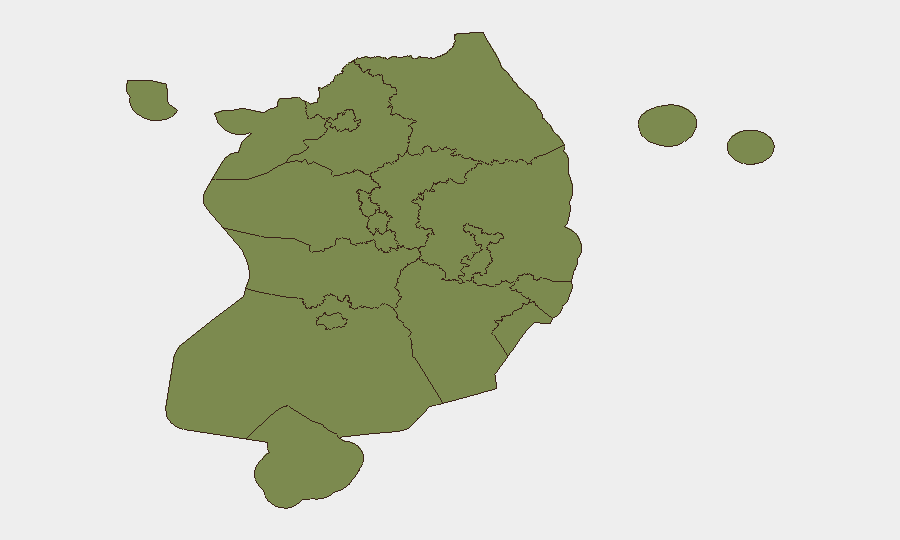
Seoul dominates the sub-national ranking at risk score 31.9, reflecting concentration of political-legal activity, institutional friction, and administrative action in the capital. North Chungcheong (16.9) is the second-highest risk area, though the specific drivers are not granularly detailed in current signals. All other provinces fall below risk score 6, with the majority below 2. The Seoul concentration is consistent with the national pattern of elite-level political volatility rather than dispersed civil unrest; Gyeonggi and Busan, despite their population and economic significance, register low scores, suggesting risk is administrative and legal rather than operationally dispersed.
How GeoBit Would Assist
Security teams should employ AOI Monitoring & Early Warning to track Seoul and North Chungcheong for escalation in protests, legal proceedings, or institutional action; Intel Sweep and multi-language OSINT (Korean-language media, X/Telegram, domestic outlets) to monitor prosecution-police tensions and martial-law inquiry developments in real time; and Cyber threat and critical-infrastructure monitoring capabilities to assess ongoing defense-sector cyber risk and any degradation of transport, power, or telecommunications during the heavy-rain period. Routing & Network Analysis should be applied to identify alternative routes and journey plans around forecast flooding zones in central Korea through 21 July.
7-Day Outlook
Weather-related infrastructure disruption is the most probable near-term operational hazard, with heavy rain and mudslide risk peaking through the weekend in central regions. Political-legal developments will likely continue at an elite level; the special counsel's investigation deadline (24 July) may trigger additional arrests or statements but is not expected to spark mass public disorder based on current trajectory. Cyber activity against defense infrastructure will persist as a baseline risk but does not indicate imminent national-security crisis.
Highest-Risk Areas — Ranked
| # | State / Region | Risk |
|---|---|---|
| 1 | Seoul | 31.9 |
| 2 | North Chungcheong | 16.9 |
| 3 | South Jeolla | 5.5 |
| 4 | Jeju | 4.7 |
| 5 | Gyeonggi | 4 |
| 6 | Busan | 2.6 |
| 7 | Gwangju | 2.2 |
| 8 | Incheon | 1.9 |
| 9 | Gangwon State | 1.9 |
| 10 | South Chungcheong | 1.9 |
| 11 | Sejong | 1.9 |
| 12 | Jeonbuk State | 1.9 |
Sources
Previous Daily Briefs
A new South Korea brief is written every day — each with its own risk map and downloadable CSV. Here's the last week; use the calendar to go further back.
📅 Browse every day by calendar →
Highlighted days have a brief. Tap a day for that day's map & analysis, or “csv” for that day's dataset ($5).
Atlas — our AI intelligence desk — emails them this snapshot personally. Nothing else, no list.