Situation Summary
Afghanistan remains ranked #21 globally for composite security threat (score 67), with 24 tracked events in the current assessment period. The most significant recent activity centers on a brief armed challenge to Taliban authority in Badakhshan Province, followed by a large-scale personnel reshuffle across multiple districts—signaling both an operational security response and potential instability in Taliban governance structures. No major attacks or civil unrest have been reported in Kabul or other major urban centers in the immediate past 24 hours, but baseline risk remains elevated across multiple provinces.
Key Developments
- Yaftali Sufla district, Badakhshan (July 19–20, 2026): The Sepahiyan‑e Mihan Front briefly seized the district, disarmed Taliban forces, and announced itself publicly before Taliban security forces retook control within hours. Ongoing clearance operations and arrests were still in progress as of the last 24–48 hours.
- Badakhshan Province, multi-district reshuffle (July 19–20, 2026): Taliban leadership removed and replaced district officials, police commanders, and intelligence officers across Yaftali Sufla, Nusay, Shekay, Jurm, Shahr‑e Buzurg, Kishm, and Argo districts. New appointees including Samiullah Rasouli (Nusay governor), Hayatullah Almas (Nusay police chief), and Shamsullah Khalid (Jurm police chief) had assumed office by the reporting date (Monday, July 21).
- Nusay district, Badakhshan (July 19–20, 2026): Taliban authorities summoned dissident commander Juma Khan Fateh to Kabul and removed the sitting district governor and police chief as part of the broader Badakhshan reorganization.
- Khost Province, Nadir Shah Kot district (July 18, 2026): Provincial police arrested an armed robber and seized a large cache of weapons and ammunition in crime-control operations.
- Badakhshan Province, high-level military attention (recent, within current cycle): Afghanistan's Defence Minister Mawlawi Mohammad Yaqoob Mujahid visited multiple border and strategic areas in northeastern Badakhshan, indicating sustained central government focus on the province's stability.
Highest-Risk Areas
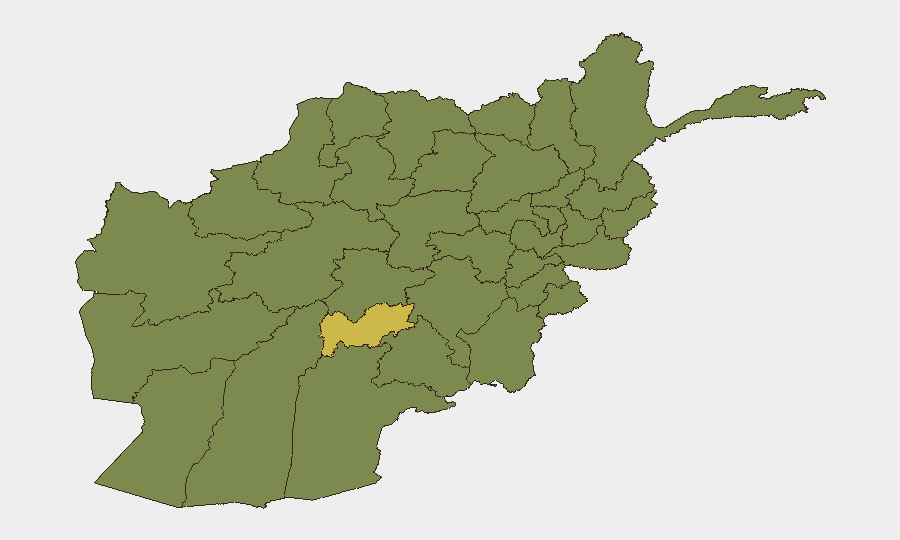
Uruzgan Province dominates the risk ranking (63.4), driven by ongoing low-intensity conflict and criminal activity. Nuristan and Kabul Provinces follow (38.3 and 37.3 respectively), with Kabul's elevated score reflecting both governance vulnerabilities and assassination activity against representatives. A cluster of southern and southeastern provinces—Zabul, Kandahar, Ghazni, Paktika, Farah, Nimruz, and Helmand—all register at 33.4, indicating endemic instability linked to criminal networks, residual anti-Taliban resistance, and tribal fragmentation. The recent Badakhshan events, while dramatic, have not yet elevated that province into the top-five ranking, suggesting the reshuffle may be containing the challenge.
How GeoBit Would Assist
Security teams monitoring Afghanistan should employ AOI Monitoring & Early Warning on Badakhshan Province and other high-risk districts to track follow-on arrests, command changes, or renewed armed activity; Network & Actor Analysis to map Taliban faction coherence and dissident commander movements; and OSINT fusion (X/Twitter, Telegram, and local media feeds) to corroborate official narratives and detect emerging opposition groups before they conduct operations. Conflict & Military force-structure tracking would help identify whether the Badakhshan reshuffle reflects genuine Taliban consolidation or deepening internal fracture.
7-Day Outlook
The Taliban's swift response and personnel changes suggest short-term containment of the Badakhshan challenge, but the emergence of a named opposition group (Sepahiyan‑e Mihan Front) and the removal of multiple commanders indicates underlying dissent within Taliban ranks or its allied forces. Monitor Badakhshan for secondary attacks, further defections, or intelligence leaks over the next week; assess whether similar personnel instability spreads to other provinces.
Highest-Risk Areas — Ranked
| # | State / Region | Risk |
|---|---|---|
| 1 | Uruzgan Province | 63.4 |
| 2 | Nuristan Province | 38.3 |
| 3 | Kabul Province | 37.3 |
| 4 | Zabul Province | 33.4 |
| 5 | Kandahar Province | 33.4 |
| 6 | Ghazni Province | 33.4 |
| 7 | Paktika Province | 33.4 |
| 8 | Farah Province | 33.4 |
| 9 | Nimruz Province | 33.4 |
| 10 | Helmand Province | 33.4 |
| 11 | Jowzjan Province | 33.4 |
| 12 | Balkh Province | 33.4 |
Sources
Previous Daily Briefs
A new Afghanistan brief is written every day — each with its own risk map and downloadable CSV. Here's the last week; use the calendar to go further back.
📅 Browse every day by calendar →
Highlighted days have a brief. Tap a day for that day's map & analysis, or “csv” for that day's dataset ($5).
Atlas — our AI intelligence desk — emails them this snapshot personally. Nothing else, no list.