Situation Summary
Pakistan faces sustained militant pressure across its northwestern and southwestern border regions, with a marked surge in coordinated attacks on security infrastructure during late July 2026. Intelligence-based counter-operations by Pakistan's military and provincial police are ongoing, but casualty rates among security personnel remain elevated. The country's composite threat score (68, ranking #17 globally) is driven primarily by persistent border conflict and insurgency, with 194 tracked events recorded. Current trajectory indicates sustained operational tempo rather than de-escalation.
Key Developments
- Hangu district, Khyber Pakhtunkhwa – Night of 29–30 July 2026: Islamist militants mounted a coordinated assault on Khazina Banda police checkpoint using IED-equipped quadcopter drones and ground ambush, resulting in approximately 10 police deaths, 28 injured personnel, and 15 militant casualties over several hours of sustained fighting.
- Khyber district, Khyber Pakhtunkhwa – Night of 28–29 July 2026: Pakistan military (ISPR) reported killing 24 militants during intelligence-led area sanitization and targeted operations; weapons and IEDs were seized.
- Nushki district, Balochistan – 28–29 July 2026: Security forces killed 8 militants in an intense engagement; additional weapons and explosive devices were recovered or destroyed.
- Nationwide (KP and Balochistan) – 29 July 2026: Pakistan's military confirmed 32 militants killed across combined northwestern and southwestern operations over a single 24-hour period, indicating elevated counter-militant activity across major security corridors.
- Northwest Pakistan trend – Late July 2026: Multiple media sources document a tactical surge in militant attacks on police and security checkpoints in Khyber Pakhtunkhwa over the past week, with the Hangu assault representing a significant escalation in coordination and lethality compared to routine incidents.
Highest-Risk Areas
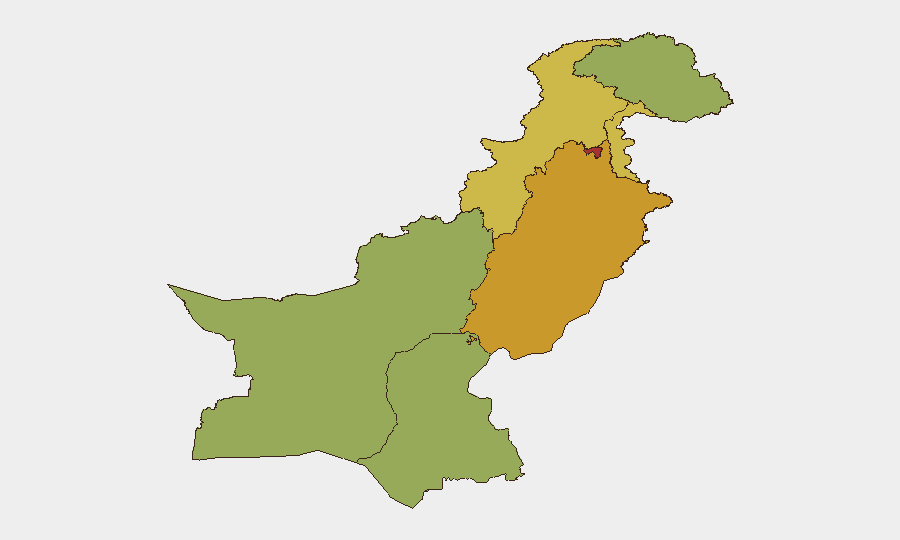
Islamabad Capital Territory (77.5) and Punjab (71) carry the highest composite risk scores, reflecting both political volatility and potential for secondary effects from border instability. However, Khyber Pakhtunkhwa (64.1) and Balochistan (55.9) remain the primary operational theaters: both regions have hosted the majority of tracked militant activity and security force engagement over the 48-hour reporting window. KP's proximity to the Afghanistan border and Balochistan's ungoverned spaces create persistent sanctuaries for insurgent groups; the coordinated drone-augmented assault in Hangu and concurrent operations in Nushki indicate capability maturation and cross-regional coordination among militant networks.
How GeoBit Would Assist
Corporate security and risk teams should employ AOI Monitoring & Early Warning for persistent watch on Hangu, Khyber, and Nushki districts, with alerting thresholds calibrated to checkpoint/base-proximity events and personnel movements. Network & Actor Analysis combined with multi-language OSINT fusion (X, Telegram, YouTube) can track emerging militant claims of responsibility, tactical innovations (drone integration), and messaging indicating future target zones. Conflict & Military tracking and GIS & Spatial Analysis enable near-real-time corroboration of military claims and mapping of engagement clusters to inform route planning and site-level risk assessment for corporate assets and personnel.
7-Day Outlook
Militant tempo is likely to remain elevated through early August, with high probability of follow-on attacks on security infrastructure in KP and Balochistan within 5–7 days. Security force counter-operations will generate temporary disruption but are unlikely to achieve sustained suppression without strategic policy changes. Organizations with personnel or assets in Hangu, Khyber, Nushki, and surrounding districts should implement heightened duty-of-care protocols, restrict non-essential movement, and activate contingency evacuation plans.
Highest-Risk Areas — Ranked
| # | State / Region | Risk |
|---|---|---|
| 1 | Islamabad Capital Territory | 77.5 |
| 2 | Punjab | 71 |
| 3 | Khyber Pakhtunkhwa | 64.1 |
| 4 | Azad Kashmir | 60.1 |
| 5 | Balochistan | 55.9 |
| 6 | Sindh | 51.4 |
| 7 | Gilgit-Baltistan | 47.5 |
Sources
Previous Daily Briefs
A new Pakistan brief is written every day — each with its own risk map and downloadable CSV. Here's the last week; use the calendar to go further back.
📅 Browse every day by calendar →
Highlighted days have a brief. Tap a day for that day's map & analysis, or “csv” for that day's dataset ($5).
Atlas — our AI intelligence desk — emails them this snapshot personally. Nothing else, no list.